Meyu Changkiri
My first steps into Singapore were marked by an immediate sense of ease. After a long journey, I passed through immigration with a smoothness I had not experienced elsewhere. There was no confusion or delay - only quiet efficiency. In that moment, I sensed that this visit would offer more than I had anticipated.
For many years, Singapore was a place I knew only through the stories of friends. Since the 1990s, I have had friends from there, and over time I quietly hoped that one day I might visit this small island nation myself.
Even before I entered full-time ministry, I had written down a few things I wished to do in life under the title, “Things I Want to Do Before I Die.” One of them was to travel and see some of the places God has created. Looking back, I can only thank God for how He has answered those prayers. By His grace, I have been able to visit a few countries outside India. Yet when I finally visited Singapore, it left a deeper impression than I expected.
I came with simple curiosity - to see for myself what I had heard for many years. I also carried a few small items from home for my friends. After many years of friendship, it felt meaningful to bring something as a quiet expression of affection.
Very soon, I began to notice what makes Singapore distinctive. It is modern and busy, yet also green, orderly, and respectful of tradition. Tall buildings stand beside trees and gardens. New technology exists alongside long-standing customs with ease.
Coming from North East India, some aspects felt familiar - relationships, food, and community life. Yet what stood out most was the discipline and careful planning that shape daily living.
First Impressions at Changi Airport
Changi Airport is not only large and modern; it is calm, clean, and thoughtfully designed. Signs are clear, staff are courteous, and everything functions smoothly. Even after a long journey, I felt neither tired nor unsettled.
As I travelled from the airport into the city, one thing became immediately clear. Singapore looks highly developed, yet it remains deeply green. Buildings, roads, and flyovers exist alongside trees and parks in a way that feels balanced.
This is not accidental. It reflects a deliberate choice - to grow without losing care for the environment.
My Stay at Village Hotel Changi
From the airport, I made my way to Village Hotel Changi, where I stayed during my visit. Located away from the busy city centre, it offered a quiet and restful environment.
Its proximity to the airport - about 12 kilometres - was a great convenience. After a long journey, it was a relief to reach my destination without travelling far.
The hotel stands close to the seashore, with open spaces and a calm atmosphere. There are many pleasant areas to walk and reflect quietly.
I especially valued the mornings. Walking along the shore, listening to the gentle sound of the waves, and breathing the fresh sea air brought a sense of peace that stayed with me throughout the day.
The surroundings are clean and well maintained, with trees and open spaces that invite rest. It was easy to travel around the city, yet always comforting to return to a place of quiet at the end of the day.
A Culture of Cleanliness
As I moved around the city, another feature became clear - cleanliness is not just enforced; it is lived.
Since the “Keep Singapore Clean” campaign in the 1960s, this has become part of daily life. Roads, footpaths, transport systems, and public spaces are well maintained. There is hardly any litter.
What stood out most was the sense of personal responsibility. Clean surroundings are the result of consistent habits, not occasional effort.
For us in North East India, where we still face challenges in this area, this offers an important lesson. Change does not begin with systems or leadership alone. It begins with everyday choices.
Everyday Life Made Simple
Singapore is also highly technology-enabled. Payments are mostly digital, and public systems function efficiently. Many aspects of daily life are made simpler through thoughtful use of technology.
At the same time, there is a practical balance. It is still wise to carry some cash for smaller needs.
A Memorable Visit to Trinity Theological College
One of the most meaningful moments of my visit was going to Trinity Theological College.
My connection with the college goes back many years. Mrs. Simon Chan, an international choir director and voice teacher, taught many of us from North East India.
During my student days at Eastern Theological College in Jorhat in the late 1990s, she taught my friends and me vocal music, chorals, and biblical worship. Her teaching shaped not only our skills, but also our understanding of discipline, humility, and heartfelt worship.
Many churches and institutions continue to benefit from her influence in shaping standards of music and worship.
Her husband, Dr. Simon Chan, also visited the college as a faculty member. His teaching contributed significantly to our theological formation. Together, their ministry has influenced many across the region.
Over the years, I had opportunities to assist in programmes involving them. After the Covid lockdown, they even visited our home, strengthening our relationship further.
During this visit, Mrs. Chan invited me to the college. Walking through the campus and meeting again after many years was simple, yet deeply meaningful.
Friendships that Gave Meaning to the Journey
On the day I arrived, my friend Chin Yee came to receive me at the hotel. We have been friends for more than twenty years, since my student days in Jorhat. Her presence reminded me that true friendships continue to grow across time and distance.
She took me around the city using public transport, allowing me to experience Singapore as part of its daily rhythm. We stopped at Hillview station, where Dr. and Mrs. Chan joined us for lunch. Later, Carol Ling joined us and generously hosted the meal.
Afterwards, Chin Yee and Carol showed me around Trinity Theological College. There, I met Sentiaküm from Nagaland, who has completed his doctoral studies in the New Testament. It was encouraging to meet someone from home in such a setting.
Another memorable experience came through Calvin Kang, a well-known Singaporean athlete who has represented his country at major international events, including the Olympics, and his wife Atila Jamir. It was a joy to meet them again, as I had the privilege of officiating their wedding reception in Nagaland last year, following their marriage in Singapore.
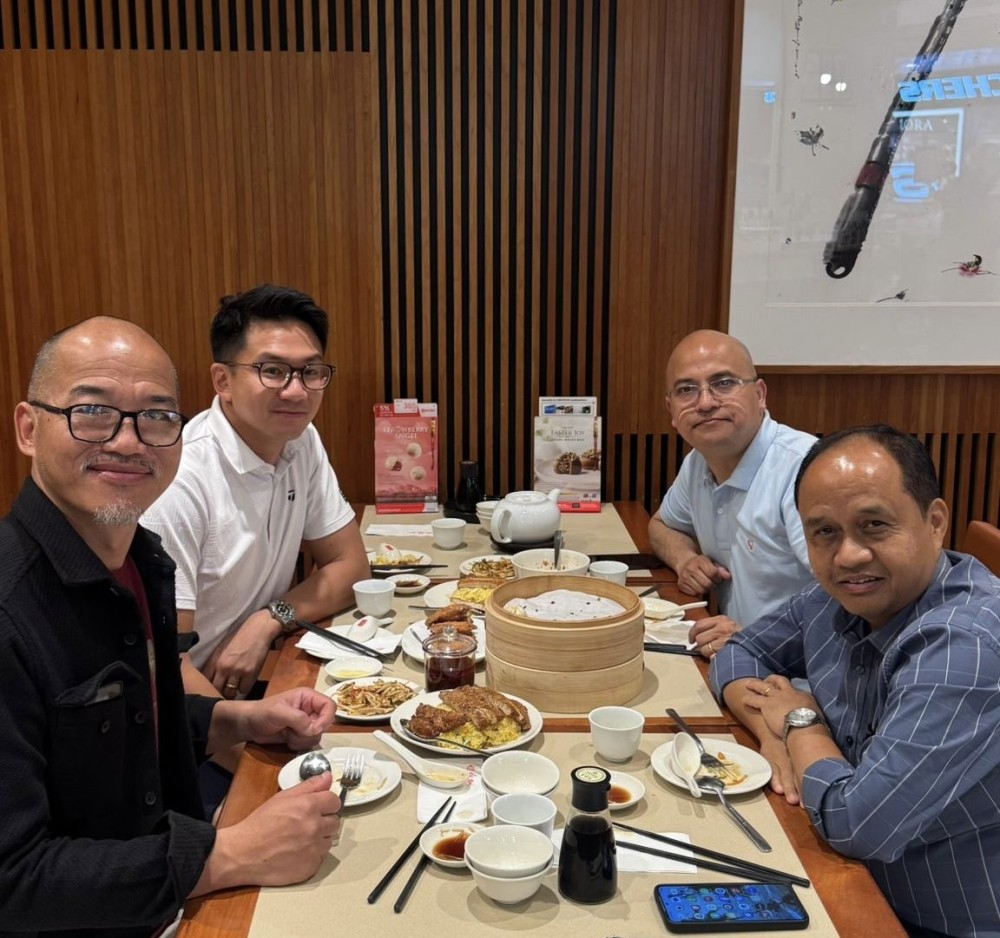
Calvin took me and my friends from Shillong on a city tour. His warmth and hospitality made us feel at ease. We stopped at City Square Mall and had dinner at Din Tai Fung, where we experienced new flavours and styles of food.
Later, Atila joined us after her work, and together they took us around parts of the city, including Chinatown and Gardens by the Bay. Through their kindness, the city felt welcoming and familiar.
These moments reminded me that travel is not only about places - it is about people. It is through relationships that journeys gain their deepest meaning.
Discovering Singapore Through Food
Singapore’s hawker centres offered another glimpse into its life. These are places where people from different backgrounds come together.
They reminded me of tea stalls and small eateries back home - places where people gather not only to eat, but also to share life. The difference lies in the organisation and cleanliness. Everything is well managed, and the environment remains welcoming.
Food, I realised, carries the story of a people - their culture, habits, and everyday life.
Where Tradition Meets Modern Life
Singapore shows that tradition and modern life can coexist in harmony. In one part of the city, there are modern buildings and busy streets. In another, there are places of worship and long-standing traditions.
People of different backgrounds live together with mutual respect. This balance reflects a shared commitment to harmony and order.
A Journey Beyond Sight
As my visit came to an end, I realised that this journey was about more than travel.
Singapore impressed me not only with its development, but with the values behind it - discipline, responsibility, and a shared concern for the common good.
At the same time, it was the people who gave the journey its true meaning. Friendships, kindness, and shared moments reflected God’s grace in quiet but powerful ways.
For us in North East India, there is much to learn. We are blessed with strong communities and deep faith, yet we also face challenges. Change does not begin with systems or leadership alone. It begins with individuals who choose to live responsibly each day.
As I returned home, one question stayed with me:
If such transformation is possible in one place, what might be possible for us, if we also choose discipline, unity, and a shared vision for the common good?