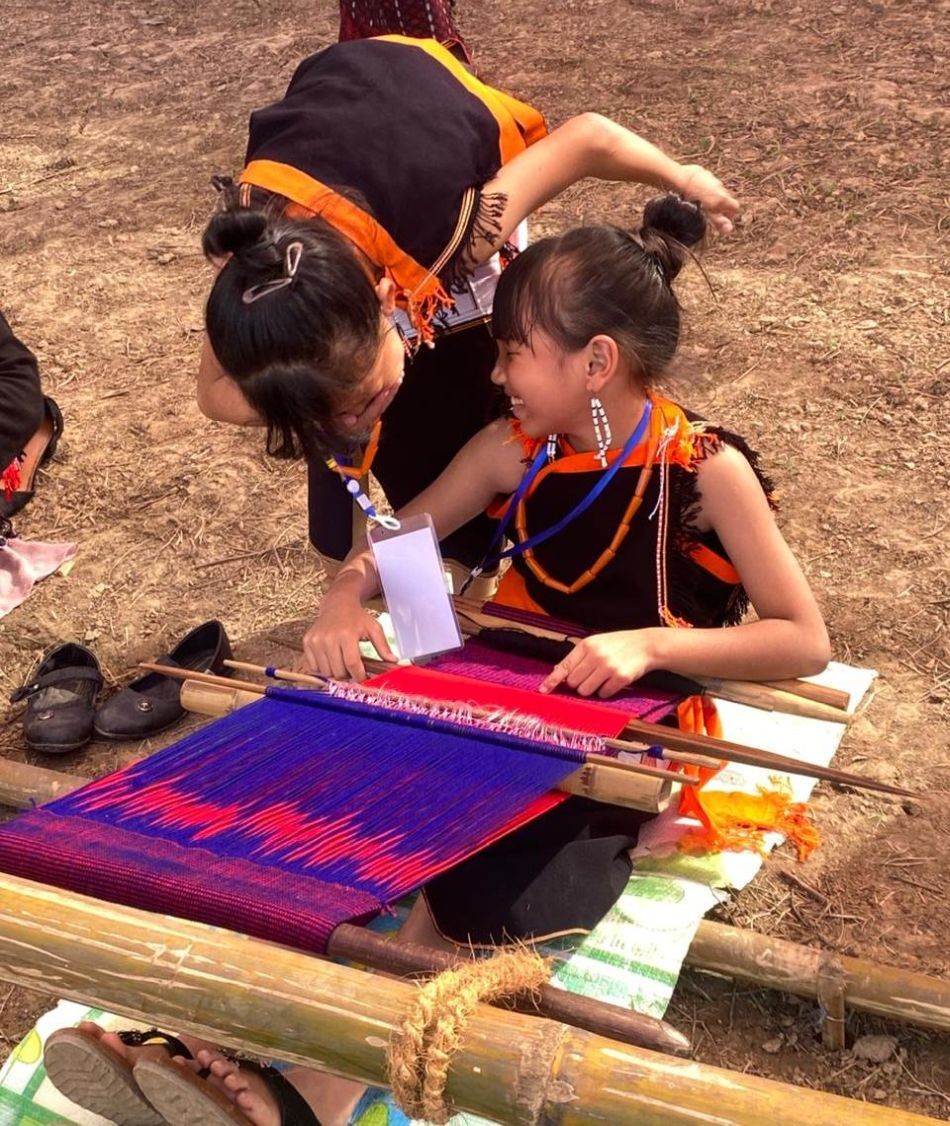
Nine-year-old Nürülu Rhakho and 11-year-old Veritolu Lohe share a quick laugh during a live demonstration of loinloom weaving at the 11th Naga Loinloom Festival at Weaver’s Place, Diezephe Village, on December 8. (Morung Photo)
Morung Express News
Diezephe | December 8
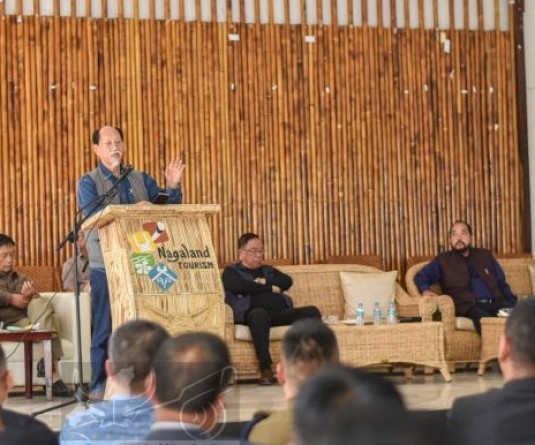
Men taking up weaving continues to be treated as a taboo in Nagaland and in the Northeast region, said Biswajit Das, Assistant Director of the Weavers’ Service Centre (WSC), Toluvi during the 11th Naga Loinloom Festival which began today at Weaver’s Place, Diezephe Handicrafts Village. This edition was held under the theme ‘Preserving Naga Heritage: The Art of Loinloom Weaving.’
Sharing personal experiences, he recalled how pursuing handloom studies once drew ridicule, even from family acquaintances, reflecting a deeply rooted mindset that associates weaving solely with women and with lack of employment choices. “This mentality must change,” he asserted, urging society to value weaving as a cultural and economic contributor.
Das highlighted the unique significance of the loin loom, a portable traditional loom central to Naga identity. He noted that while fly-shuttle frame looms are promoted for large-scale production, the loin loom remains unparalleled for customisation and intricate narrow-width fabrics. “Many new faculty members request us not to adulterate the loin loom. It has a uniqueness of its own,” he said, stressing the need to differentiate end-use before pushing for mechanised alternatives.
A major concern, Das warned, is the declining number of young weavers across the Northeast. Handloom, he said, is more than a profession, “it is tradition and cultural identity.” Festivals and platforms that bring youth into the craft are therefore crucial. “Our traditional dresses come from handloom. If the younger generation doesn’t join, the craft will suffer,” he addressed.
Das outlined several government initiatives under the National Handloom Development Programme (NHDP), including skill-upgradation training, provision of both fly-shuttle and loin looms at subsidised rates, financial guidance such as Mudra loans, and welfare measures. He highlighted the importance of obtaining the pahchan card for accessing benefits, and further encouraged weavers to apply for state and national awards, which are linked to pension eligibility. He also highlighted a scholarship scheme reimbursing up to INR 2 lakh for children of weavers pursuing technical education in handloom and textiles.
As the NHDP undergoes revision in 2026, Das said proposals are underway to extend minimum incentives to all genuine weavers above 60 years of age. He reiterated the need for collective pride and continuity in the craft. “Earlier, festivals were tied to agriculture. Today, we are celebrating Loinloom Festival. It shows how far this tradition has come and why we must keep it alive,” he added.
New faces mark 11th edition
The 11th Naga Loinloom Festival this year witnessed a notable presence of young weavers, with participants as young as nine taking part in live demonstrations. Among them, trainee Nürülu Rhakho drew particular attention as she deftly worked the loom. 11-year-old Veritolu Lohe also took turns weaving, while six-year-old Serano Lohe, fully clad in her Chakhesang traditional attire, stood beside her mother eagerly nudging to be taught. When asked, Serano said she will definitely join weaving classes next year.
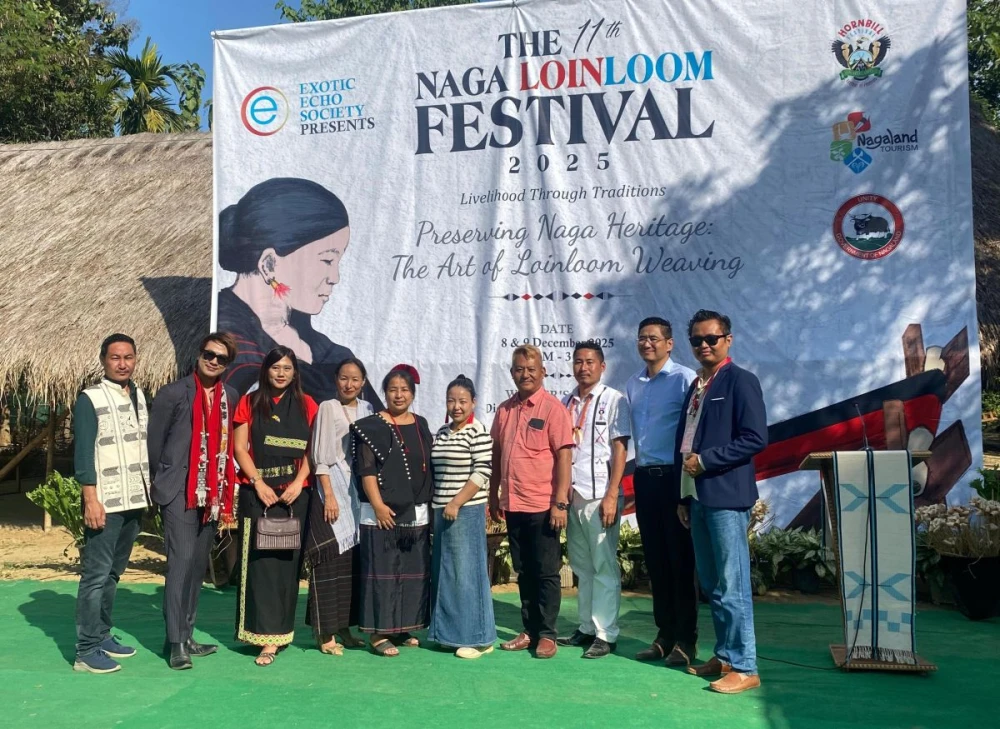
A total of fourteen children participated in the weaving demonstration on the opening day. All of them are students of the Exotic Echo Society, which has been training children from the age of eight and above. Speaking to The Morung Express, Jemule, President of the Exotic Echo Society, Diezephe Village, said more young people are showing interest in learning the craft. “After our younger sisters, there will be no one left to pass on the art of weaving and our traditional crafts,” she said, explaining the Society’s commitment to training anyone willing to learn, free of cost.
A warping competition highlighted the day’s events, with Sekhotolu from Yoruba Village securing the first prize, followed by Nekhonelu and Vethivolu, both from Bade Village.
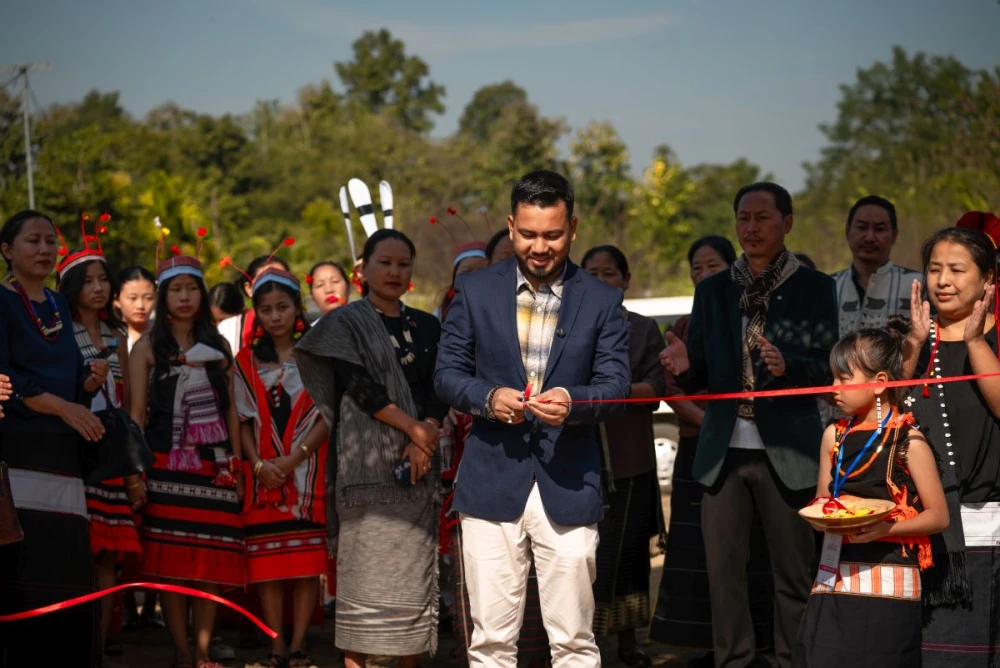
Earlier, Biswajit Das, Assistant Director of WSC Toluvi, formally opened the festival with a ribbon-cutting ceremony. Narola Alemba Jamir, General Manager of NHHDC Dimapur, also addressed the gathering, while Vezota Chuzho, Village Council Secretary of Diezephe , delivered the greetings.