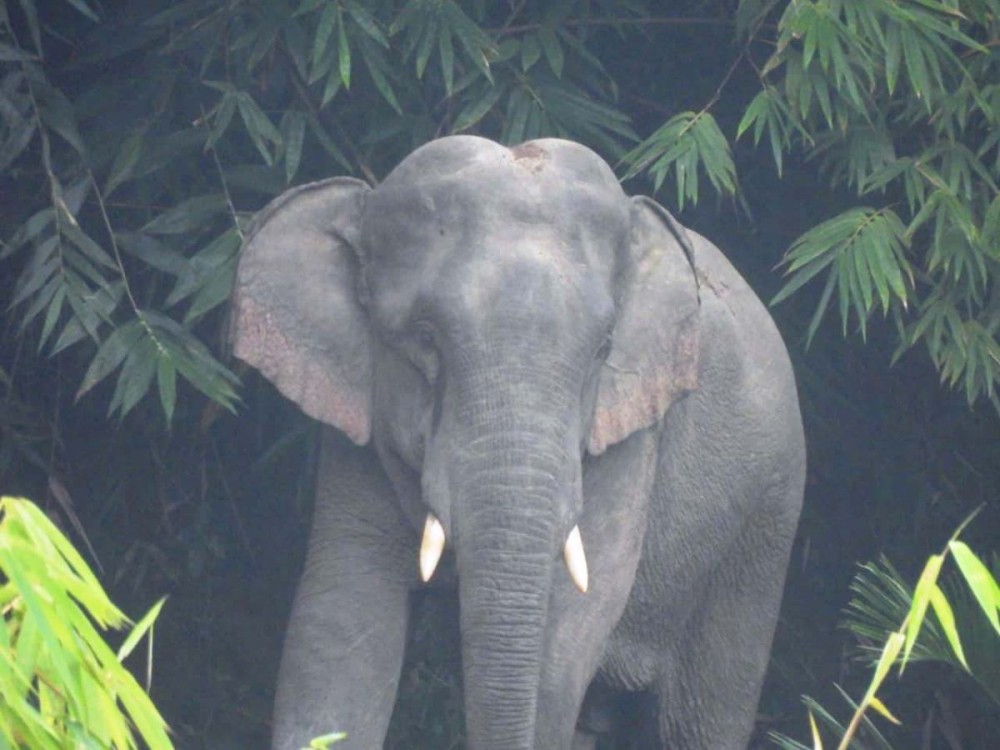
An elephant documented in an undisclosed location within Wokha district. (Photo Courtesy: Rishi Basumatary)
District receiving over half of total relief disbursed since 2018
Morung Express News
Wokha | May 31
Wokha district has emerged as the worst-affected area in Nagaland under human-wildlife conflict, accounting for over half of all relief disbursed in the state since 2018, with 256 beneficiaries receiving Rs 49,10,320 out of a total of Rs 70,88,880 distributed across 13 districts, a disaster management official said on May 30.
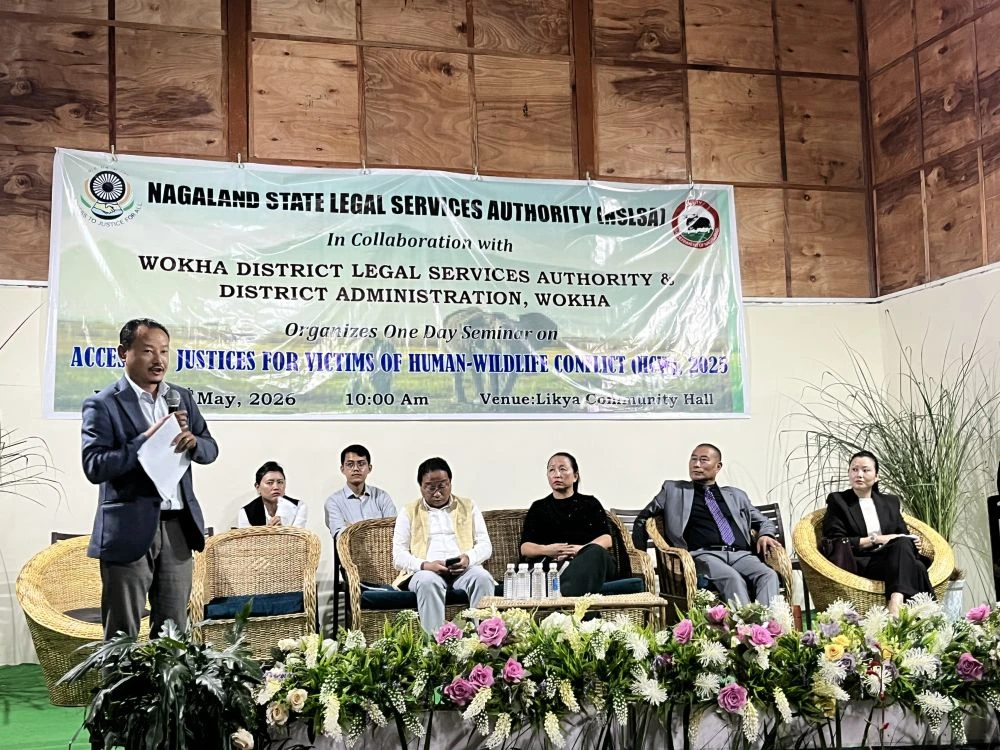
The figures were presented by L Jonjibemo Odyuo, Assistant Manager (Relief, Recovery and Mitigation) and Nodal Officer for Wokha and Shamator under the Nagaland State Disaster Management Authority (NSDMA), at a one-day seminar on “Access to Justice for Victims of Human-Wildlife Conflict (HWC)” organised by the Nagaland State Legal Services Authority (NSLSA) in collaboration with the Wokha District Legal Services Authority (WDLSA) and the District Administration at Likya Community Hall, Wokha on May 30.
Presenting cumulative data from 2018 to 2026, Odyuo said a total of 483 beneficiaries across 13 districts received relief amounting to Rs 70,88,880 under wild animal-related disasters. Wokha district recorded the highest number of beneficiaries at 256 and received Rs 49,10,320, followed by Mokokchung with 165 beneficiaries receiving Rs 12,35,580.
He pointed out that Wokha and Mokokchung together accounted for Rs 61,45,900, constituting 86.79 per cent of the total relief disbursed in the state under wild animal-related disasters.
Providing district-specific figures for Wokha, Odyuo said relief was distributed across various categories, including ex gratia for four deceased persons amounting to Rs 16,00,000, ex gratia for two injured persons (Rs 20,000), kutcha house damage for 27 beneficiaries (Rs 1,87,600), agricultural crop damage for 106 beneficiaries (Rs 6,01,620), plantation damage for 16 beneficiaries (Rs 91,800), horticulture crop damage for 15 beneficiaries (Rs 88,200), hut damage for 32 beneficiaries (Rs 2,00,300), and hut along with plantation or crop damage for 54 beneficiaries (Rs 4,37,800).
He also informed that 150 bags of rice relief were recently provided to Old and New Changsu villages.
Odyuo clarified that disaster relief is not compensation but “minimal assistance of basic support” provided to affected persons to cope with damages and losses caused by natural disasters, with assistance based on the nature and extent of damages following SDRF norms revised periodically.
On the procedural aspects, he explained that reports are received through affected persons, administrative officers, or line department officials, followed by verification by competent authorities. Prescribed SDRF forms are submitted with supporting documents including geo-tagged photographs, Aadhaar card, and bank account details, before applications are uploaded to the NSDMIS portal for state-level scrutiny, approval, and disbursement through the Direct Benefit Transfer system.
Odyuo recalled that wild animal-related disasters were recognised as State Local Specific Disasters by the Nagaland government on May 26, 2017, alongside windstorm, soil erosion, and lightning, enabling relief assistance under the State Disaster Response Fund (SDRF). African Swine Fever (ASF) and other emerging diseases were subsequently declared local specific disasters on November 24, 2025.
He noted that wild animal-related disasters are not limited to human-elephant conflict alone but also include damages caused by wild boars and other wild animals affecting paddy fields, crops, plantations, and properties.
Emphasising the need for a broader approach, Odyuo stressed that while human-elephant conflict has been recognised as a notified state-specific local disaster for relief purposes, such measures are not long-term solutions. He called for improved coordination between the Disaster Management Authority, Wildlife Department, local authorities, and communities, along with stronger awareness programmes and mitigation strategies.