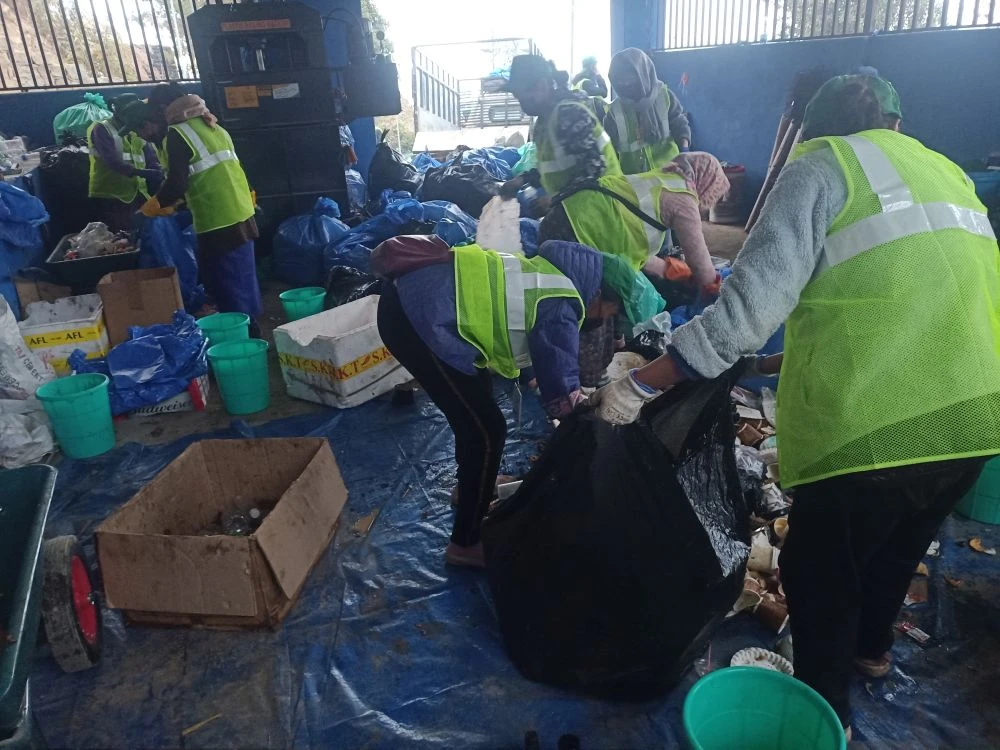
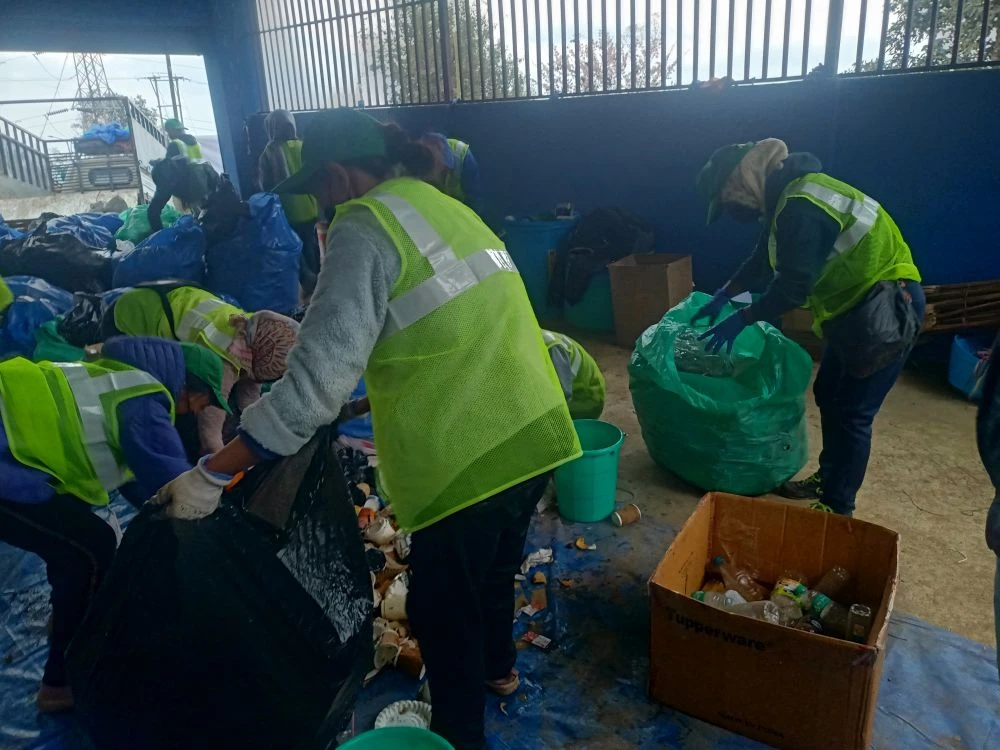
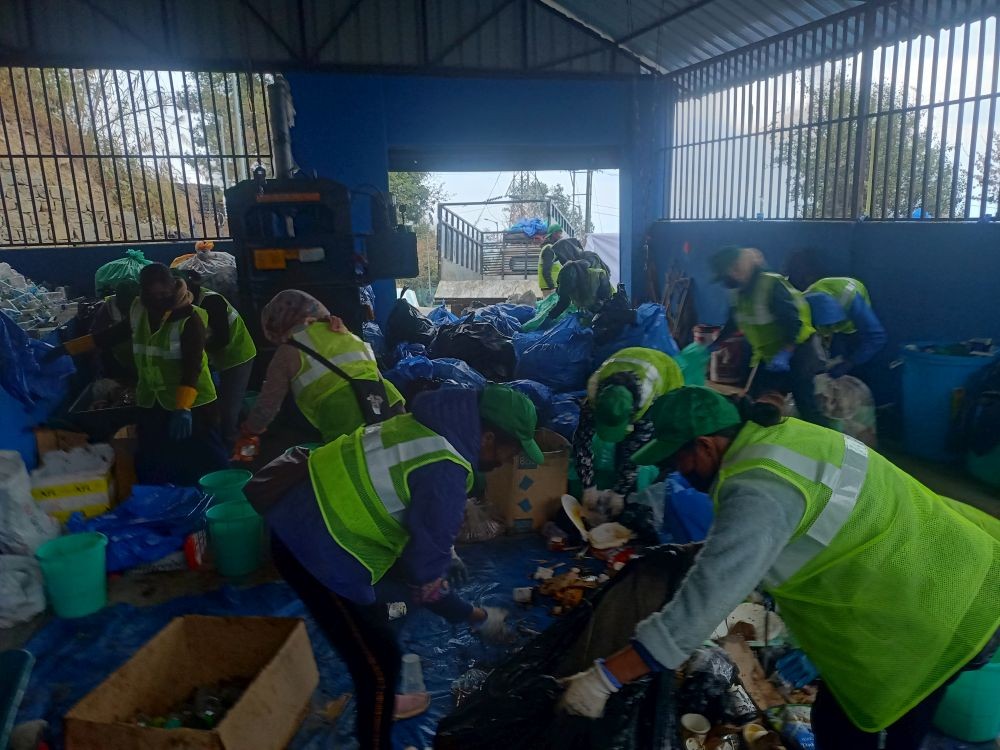
Waste Management team segregation the waste on December 2. (Morung Photo)
Morung Express News
Kohima | December 4
As Hornbill Festival in Nagaland draws thousands, a dedicated community team is transforming festival cleanliness into a grassroots movement for environmental education. With a structured waste segregation system and nearly 100 volunteers, local youths and mothers are ensuring that the venue of the festival – Naga Heritage Village in Kisama remains pristine.
The responsibility has not been outsourced; instead, it has been entrusted to youths and mothers from few neighbouring villages, creating a grassroots model of sanitation management.
Speaking to The Morung Express, Wapang Jamir, a member of the sanitation team, explained that the initiative aims not only to keep the festival grounds clean but also to educate the community on the importance of proper waste management.
“We want our youth and families to understand that our life is not confined only to paddy fields or agriculture,” he said. “Waste management is a responsibility we must carry everywhere, especially in public spaces.”
The team arrives at the site by 5:30 am, with cleaning work officially starting at 6:00 am. “We clean all areas, including the morungs, before visitors begin to arrive,” Jamir shared. Their efforts ensure that the heritage village maintains a neat and welcoming environment for thousands of festival-goers.
A structured waste management system is in place, with waste segregated into dry and wet categories to distinguish biodegradable from non-biodegradable materials. Jamir noted that while the Kohima Municipal Council collects the wet waste, plastic and other dry waste are stored separately and sent to recycling partners for proper processing.
Each of the 18 morungs has been provided with two dustbins—one for wet waste and one for dry waste. However, the team intentionally avoids placing dustbins in open tourist zones. “We do not want dustbins to interfere with the visual appeal of the festival,” Jamir said. “Instead, our volunteers move around frequently to collect waste and keep the area clean.”
Nearly 100 volunteers work throughout the day, with the community-led team taking full charge of ensuring the cleanliness and hygiene of the Naga Heritage Village. Although the Tourism Department funds the initiative, the spirit behind the effort remains deeply community-driven.
“We are keeping records of this work for educational purposes,” Jamir added. “Everyone—from the youth to the mothers—is giving their best to show that Nagaland is a clean and hygienic place.”
According to the record, the breakdown of waste collected on Date 1 is as follows: Plastic Bottles: 11,821 kg; Wet Waste: 3,420 kg; Plastic (other): 2,780 kg; Glass Bottles: 132 kg; Carton Paper: 50 kg; Cans: 34.2 kg; Other Tins: 4.2 kg.