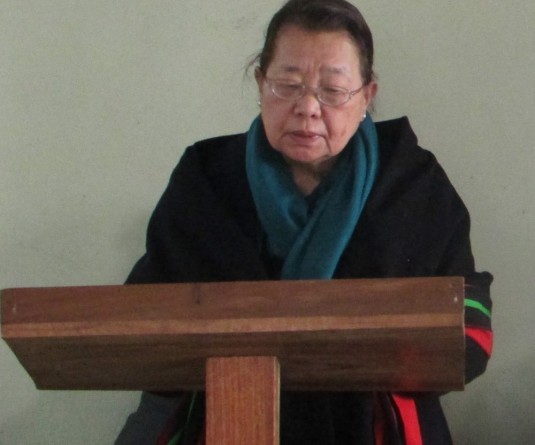
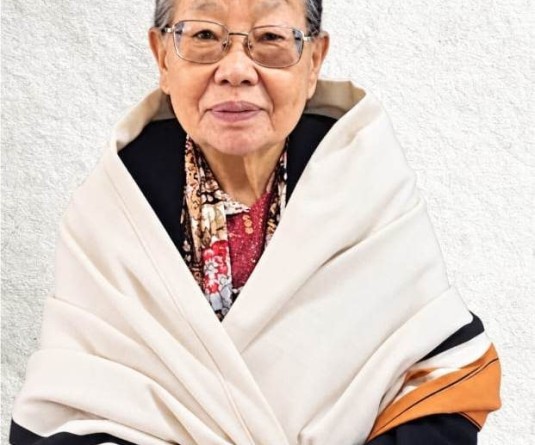
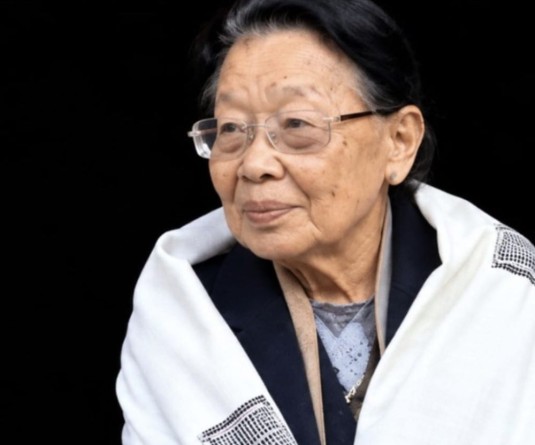
Author Dr A Nshoga along with others during the launch of the book at Hotel Saramati in Dimapur on August 29.
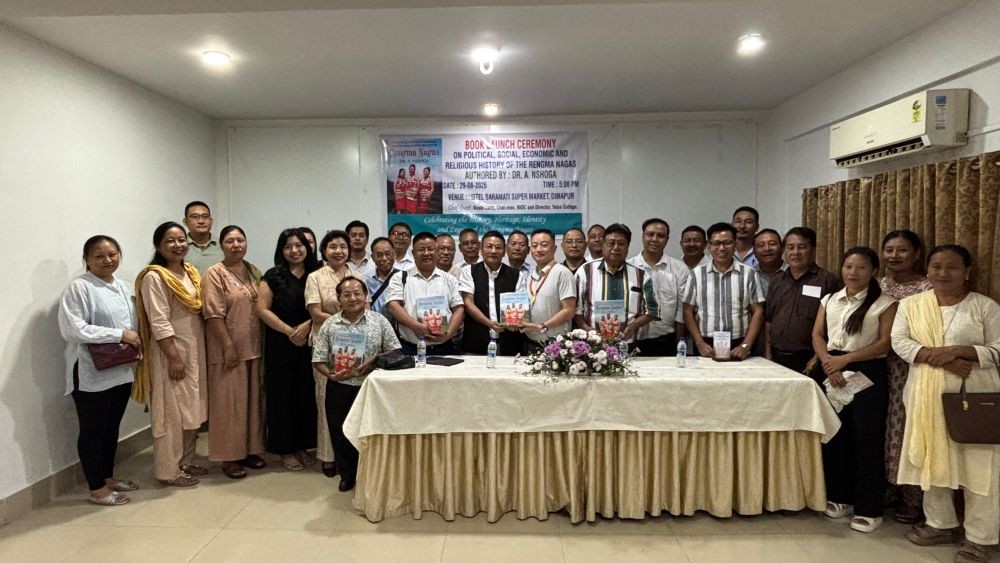
Dimapur, August 29 (MExN): A book documenting the political, social, economic and religious history of the Rengma Nagas was launched at Hotel Saramati in Dimapur on August 29.
The book, titled Political, Social, Economic and Religious History of the Rengma Nagas, was released by Kvulo Lorin, Chairman, Nagaland Industrial Development Corporation (NIDC) and Director, Tetso College.
The programme was chaired by Dr A Nshoga, while Penlole Nyenthang delivered the vote of thanks. The book launch was attended by research scholars, intellectuals and well-wishers.
Speaking as the chief guest, Lorin encouraged the younger generation to learn about their history and culture to understand their roots and where they came from.
Congratulating author Dr A Nshoga for undertaking the extensive work, Lorin said considerable time and effort had gone into documenting the political, social, economic and religious history of the Rengma Nagas in the volume.
He expressed hope that the author would bring out more such books in the future to document and preserve the community’s history before it is lost.
Introducing the book, author Dr A Nshoga said the volume was an attempt to preserve, study and pass on aspects of Rengma history to future generations.
He said the Rengma Nagas have a rich cultural history shaped by their traditions, community life, political institutions, economic practices and religious beliefs.
Nshoga said he considered it important to put aspects of the community’s history into written form so that they could be preserved and made available for future generations.
The book brings together different dimensions of Rengma life, including political organisation, social customs, economic activities and religious traditions.
The author noted that these aspects were closely interconnected and could not be viewed in isolation while understanding the history of the community.
He said history was not merely about the past but was also connected to identity in the present and the direction of the future.
“A people who know their history can better understand…” Nshoga said, emphasising the importance of historical knowledge in understanding the community’s identity and heritage.