Moa Jamir
Dimapur | April 19
India has one of the most comprehensive legal frameworks for child protection, built on constitutional guarantees, specialised laws, and institutional mechanisms. Yet, the challenge lies not in the absence of laws, but in their uneven implementation, often shaped by gaps in awareness, institutional capacity, and social practices.
In Nagaland, child protection is often closely shaped by community action. While this reflects collective responsibility, such responses can at times create inadvertent friction with the broader legal framework, often arising from gaps in awareness and the interface between community practices and formal law.
To bridge this gap, Prodigals’ Home supported by DKA Austria, has undertaken efforts to strengthen public legal literacy and promote ethical engagement.
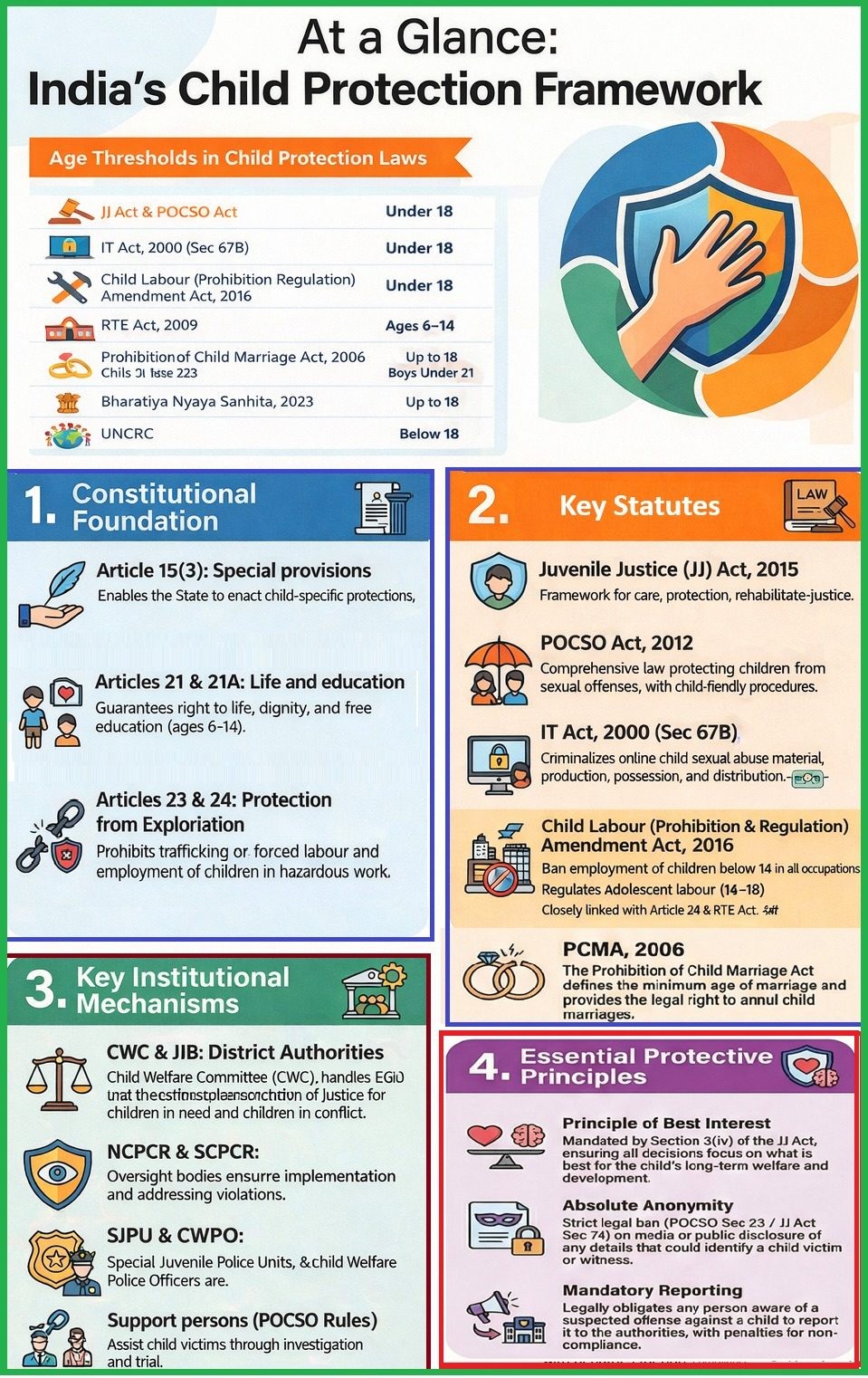
This report, the first in a foundational series, presents an overview of child protection from the Constitution of India to the courtrooms and community spaces, with each aspect to be examined in greater detail in subsequent parts.
I. The Constitutional Mandate
The protection of children in India is not merely a matter of policy; it is a constitutional guarantee. The Constitution recognises children as a vulnerable group requiring special care and safeguards, placing a responsibility on the State to ensure their well-being and development.
This protection is reflected in key provisions. Article 15(3) enables special laws for children and women. Article 21 guarantees the right to live with dignity, which for children includes safety from abuse, neglect, and exploitation. Article 21A provides for free and compulsory education for children aged 6 to 14, recognising education as a foundation for protection and development. Articles 23 and 24 prohibit trafficking, forced labour, and hazardous child labour.
These provisions are guided by the doctrine of parens patriae, under which the State acts as guardian for those unable to protect themselves, ensuring not only protection from harm but also conditions for safe and dignified development.
II. Two Statutory Pillars: JJAct and POCSO
India’s child protection framework rests on two interconnected laws: the Juvenile Justice (Care and Protection of Children) Act, 2015 and the Protection of Children from Sexual Offences (POCSO) Act, 2012.
The JJ Act adopts a reformative approach focused on care, protection, and rehabilitation. It defines a child as any person below 18 and distinguishes between children in need of care and protection—such as those orphaned, abused, or at risk—and children in conflict with law, emphasising reform and reintegration rather than punishment.
Complementing this, the POCSO Act is a specialised, gender-neutral law addressing sexual offences against children. It introduces child-friendly procedures from reporting to trial to minimise trauma and ensure dignity.
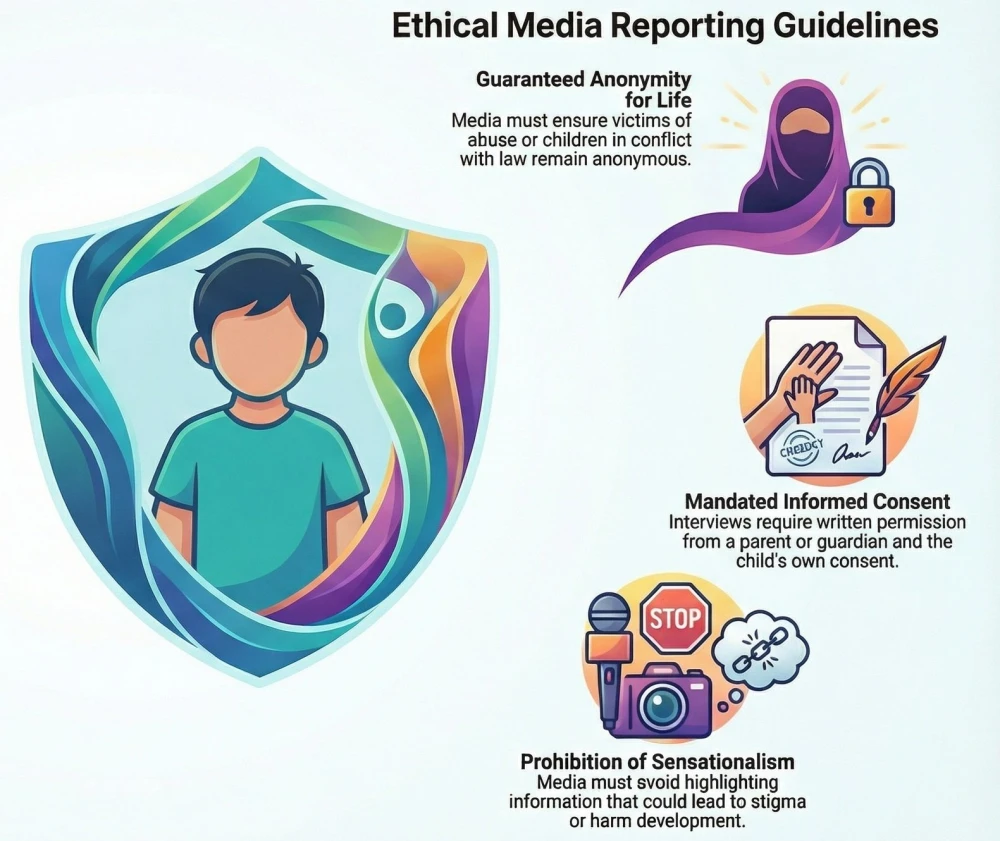
A central safeguard under POCSO is strict confidentiality. The identity of a child victim cannot be disclosed under any circumstances, including after death or with parental consent. This has been upheld by the Supreme Court in Nipun Saxena v. Union of India, which ruled that no information leading to identification may be revealed. At the same time, thelegal obligation of any person to report knowledge of a sexual offence against a child to the police or relevant authorityunder Section 19, distinguishes legal reporting from prohibited public disclosure.
Importantly, the two laws are closely linked. A child victim under POCSO is automatically recognised as a child in need of care and protection under the JJ Act, ensuring immediate support such as medical care, counselling, shelter, and rehabilitation. Together, they form the core of India’s child protection system, combining care and accountability and prioritising the best interests of the child at every stage of the legal process.
III. The Institutional Chain: From Village to Courtroom
For child protection to be effective, the system must function as a coordinated chain.
At the first point of contact are the police, particularly Special Juvenile Police Units and Child Welfare Police Officers, trained to handle cases involving children with sensitivity. Mandatory reporting under Section 19 of POCSO places a legal obligation on all individuals to report sexual abuse, an important provision relevant to Nagaland, where cases often tend to surface within community networks.
At the district level, the Child Welfare Committee serves as the final authority for children in need of care and protection, deciding on rehabilitation, shelter, or restoration. In Nagaland, CWCs exist across districts, but awareness and access remain uneven, sometimes leading to delays. The Juvenile Justice Board addresses children in conflict with law, focusing on reform, while Special POCSO Courts ensure child-friendly trials and prevent direct confrontation with the accused.
Oversight is provided by the State and National Commissions for Protection of Child Rights, along with the judiciary, which ensures accountability and strengthens implementation.
In Nagaland, while the framework exists, its effectiveness depends on how well it connects with community systems, making this linkage a key challenge.
Community response and the ‘identity trap’
In Nagaland’s socio-cultural landscape, child protection is deeply shaped by community action, with tribal institutions, student bodies, civil society, and faith-based groups playing significant roles.
While this reflects a strong sense of collective responsibility, it also raises important questions about how such responses align with formal legal safeguards.
Well-intentioned interventionssuch as public condemnations or the identification of parties in community forumsare often, among others, aimed at ensuring accountability and solidarity. However, in doing so, they can inadvertently come into conflict with legal protections, particularly those relating to confidentiality.
One of the most critical challenges that emerges in this context is the inadvertent disclosure of identity. Community responses may involve sharing details such as a child’s name, school, locality, or family background. Under Section 23 of the POCSO Act and Section 74 of the JJ Act, however, any disclosure, direct or indirect, that could lead to identification, is strictly prohibited and is punishable under the law.
This protection is absolute and lifelong. In the digital age, the risk is further amplified, as sharing such information on platforms like WhatsApp or Facebook constitutes “publication” under law, making both individuals and organisations liable. In closely connected communities, even limited or indirect details can quickly lead to identification, exposing children to stigma, social exclusion, and lasting psychological harm.
V. Beyond POCSO and JJA: a wider legal framework
Child protection extends beyond two laws and is supported by a broader legal framework addressing multiple forms of vulnerability.
The Child Labour (Prohibition and Regulation) Amendment Act, 2016 prohibits employment of children below 14 years, stating that “no child shall be employed or permitted to work”, while restricting hazardous work for adolescents.
The Information Technology Act, 2000 criminalises the publication or transmission of sexually explicit material involving children, making even the forwarding of such content online a punishable offence.
General criminal law, now under the Bharatiya Nyaya Sanhita, 2023, addresses offences such as rape, assault, and trafficking, operating alongside POCSO.
The Right of Children to Free and Compulsory Education Act, 2009 ensures access to schooling, a key protective factor, while the Immoral Traffic (Prevention) Act, 1956 addresses organised sexual exploitation.
Together, these laws highlight that harm to children is rarely confined to a single offence—it often spans multiple domains.
Notably, the definition of a “child” is not uniform across all laws as illustrated in Table 1. While international instruments such as the United Nations Convention on the Rights of the Child provide a broad framework, national legislation and judicial interpretation shape its contours.
Accordingly, Handbook on Child Rights and the Law (2025) by the Supreme Court of India noted that although 18 years is generally accepted as the upper limit of childhood, multiple statutory definitions, and even recognition of the rights of the unborn child, have created a complex legal mosaic. For child protection to be effective, it added, the law must move towards greater consistency and clarity, ensuring that no child, born or unborn, falls through the gaps of definitional ambiguity.
A Collective Responsibility
As observed by the Supreme Court in Sampurna Behura v. Union of India, children are the foundation of society.
In Nagaland, protecting children requires more than community vigilance; it demands an informed understanding of the law. Community institutions remain vital, but their actions must align with legal safeguards, particularly on dignity, privacy, and confidentiality.
Ultimately, the law and the community must work together to ensure that the rights and well-being of every child are upheld, without exception.
Disclaimer: This report is part of the ‘Media Fellowship Initiative on Child Protection Awareness and Ethical Public Discourse’ series, supported by DKA Austria and implemented by Prodigals’ Home. The content is intended for public legal literacy and preventive awareness and does not constitute legal advice.
Comparative Explainer: Defining A ‘Child’ In Indian Law | |||
Framework/ Statute | Relevant Provision | Definition | Prescribed Age
|
Juvenile Justice (Care and Protection of Children) Act, 2015 | Section 2(12) | “Child” means a person who has not completed eighteen years of age | Under 18 |
Protection of Children from Sexual Offences (POCSO) Act, 2012 | Section 2(d)
| “Child” means any person below the age of eighteen years | Under 18 |
Indian Majority Act, 1875 | Section 3 | Legal adulthood is attained at 18 years; extended to 21 years where a court-appointed guardian manages the minor’s person or property, or where property is under a Court of Wards | 18 years (general); 21 years (in specified cases) |
Information Technology Act, 2000 | (Section 67B) | For the purposes of this section, "children" means a person who has not completed the age of 18 years | Under 18 |
Child Labour (Prohibition and Regulation) Amendment Act, 2016 | Section 2 (i) &(ii)
| [(i) “Adolescent” means a person who has completed his fourteenth year of age but has not completed his eighteenth year (ii) “Child” means a person who has not completed his fourteenth year of age or such age as may be specified in the Right of Children to Free and Compulsory Education Act, 2009 (35 of 2009), whichever is more | Under 14 (child); 14–18 (adolescent) |
Factories Act, 1948 | Section 2 (c) | “Child” means a person who has not completed his fifteenth year of age | Under 15 |
Mines Act, 1952 | Section 40 (1) | No person below eighteen years of age shall be allowed to work in any mine or part there | Under 18 |
Right of Children to Free and Compulsory Education (RTE) Act, 2009 | Section 2(C)
| “Child” means a male or female child of the age of six to fourteen years | 6–14 years |
Prohibition of Child Marriage Act, 2006 | Section 2(a)
| “Child” means a person who, if a male, has not completed twenty-one years of age, and if a female, has not completed eighteen years of age | Female: under 18; Male: under 21 |
The Bharatiya Nyaya Sanhita, 2023
| Section 2(3)
| “Child” means any person below the age of eighteen years | Upto 18 years |
UN Convention (UNCRC) | Article 1 | A child is any human being below 18 years, unless national law recognises an earlier age of adulthood | Below 18 |
Note: The definition of a “child” in Indian law is not uniform. While 18 years is the general benchmark, different statutes and judicial interpretations create varying thresholds, resulting in a complex legal framework. Greater consistency is essential to ensure no child falls though definitional gaps. (Handbook and Child Rights and the Law, Supreme Court of India 2025)
Some Legal Red Flags |
|
Glossary of Key Terms:
Best interest of child: Any decision taken regarding the children, to ensurefulfilment of their basic rights and needs, identity, social well-being and physical, emotional andintellectual development. (JJ Act)
Child in Conflict with Law (CCL): A child alleged or found to have committed an offence while under 18 years of age (Section 2(13) of JJ Act)
Child in Need of Care and Protection (CNCP): A child who is vulnerable due to abandonment, abuse, neglect, trafficking, or lack of parental care, requiring State intervention (Section 2-14 of JJ Act)
Child Welfare Committee (CWC): A statutory body with the powers of a magistrate to decide matters relating to care, protection, rehabilitation, and restoration of children in need. (JJ Act)
Child Welfare Police Officer (CWPO): A designated police officer in every police station trained to handle cases involving children sensitively. (JJ Act)
Confidentiality / non-disclosure of identity: Prohibition on revealing the identity of a child involved in a case, including name, address, school, or any detail that may lead to identification (Section 23 POCSO)
Juvenile Justice Board (JJB): A judicial body that deals with children in conflict with law, focusing on reform and rehabilitation. (JJ Act)
Mandatory reporting: The legal obligation of any person to report knowledge of a sexual offence against a child to the police or relevant authority (Section 19 of POCSO)
Parens patriae: A legal doctrine under which the State acts as guardian for individuals who cannot protect themselves, especially children.
Publication (legal context): Any form of communication to the public—including print, broadcast, or digital sharing—that may reveal the identity of a child. (Section 23 of the POCSO, Section 74 of the JJ Act, and related provisions under criminal law)
Secondary victimisation: Non-legal term referring to additional harm caused to a child through exposure, stigma, or insensitive handling after an incident.
Special Juvenile Police Unit (SJPU): A specialised police unit in each district responsible for handling cases involving children in a child-friendly manner. (JJ Act)
Special POCSO Court: A designated Sessions Court to try offences under POCSO in a child-friendly manner and ensure speedy trial. (Section 28 POCSO)
Support Person: An individual appointed to assist the child and family through the legal process, ensuring access to care, counselling, and legal aid. (Section 39 POCSO)
Trafficking (of children): Recruitment, transportation, transfer, or harbouring of children for exploitation. (Defined under general criminal law, including the Bharatiya Nyaya Sanhita, 2023)