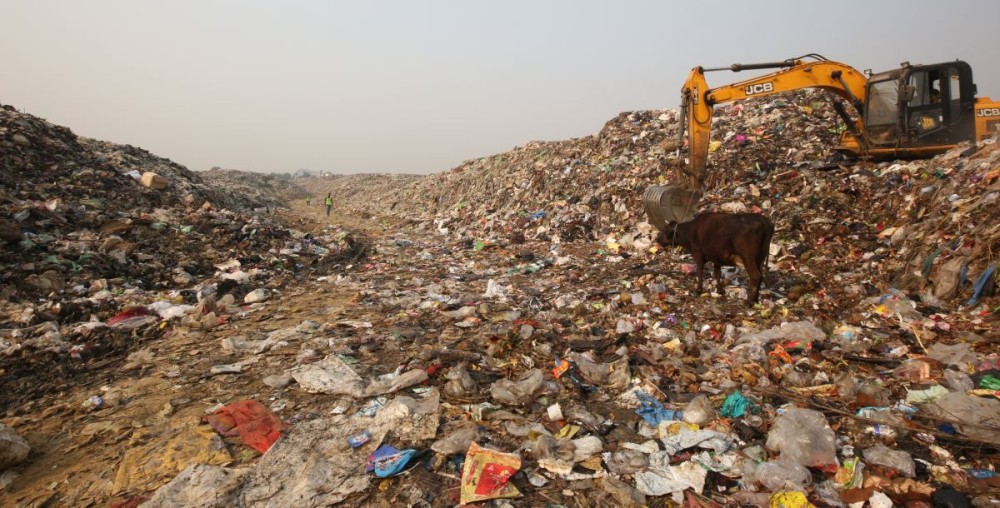
The Dimapur Municipal Council dumpsite at Burma Camp. (Morung file Photo)
Dumpsite overloaded, treatment costs unaffordable
Dimapur, October 16 (MExN): Dimapur produces about 101.6 metric tonnes of waste every day, almost all of it unsegregated, and the Dimapur Municipal Council (DMC) cannot afford to treat it properly, a DMC waste management consultant said on Thursday.
Adrian M Mahung, consultant for waste management at the DMC, said the city’s dumpsite is badly overloaded because households do not separate waste at source, stated an update received here.
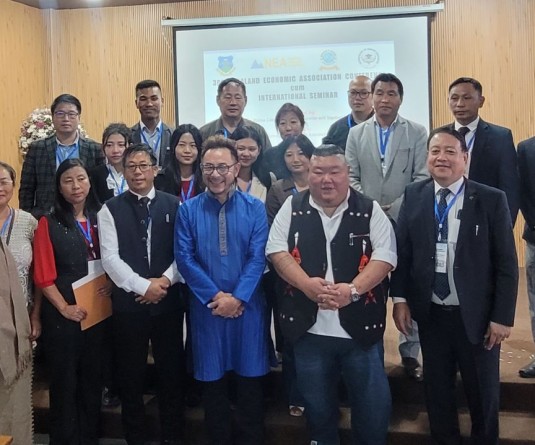
He was speaking at a workshop under the Waste Insect Nexus for Growth & Sustainability (WINGS) initiative organised by ANMA Integrated Development Association (AIDA), Dimapur, in collaboration with Eclose GmbH, at the AIDA campus, Dimapur.
“Dimapur produces about 101 metric tons of waste per day. The problem with this waste is that it is not segregated; it is all mixed,” Mahung said.
According to the DMC’s analysis, about 49 tonnes of the daily waste is organic or kitchen waste. Plastics and single-use plastics, classified as refuse-derived fuel (RDF), account for about 17%. Inert waste that cannot be processed makes up about 4.4%.
An “others” category, which includes material sold to scrap dealers, is the only waste currently being processed properly, Mahung said.
Citing Central Pollution Control Board figures, Mahung said efficiently treating one kilogram of mixed waste costs about Rs 45. At the roughly 10 lakh kg collected daily, the cost of proper treatment would be very high.
“We have to spend almost Rs 14 lakh per day just to manage our waste, which DMC cannot afford,” he said.
Mahung said the city receives about 24 truckloads of waste daily, while the Material Recovery Facility (MRF) is too small to process even one truckload. The DMC is attempting bioremediation of the accumulated waste, but “we have very little scope to work effectively,” he said.
Showing images of the dumpsite, he said the photograph covered only about 40 per cent of the site. “Had we segregated the waste, one-third of it could have been sold to scrap dealers. Another one-third could have decomposed and been converted into manure,” he said.
“But instead, we pack everything into neat little black bags and hand them over to DMC. Perhaps we can change this approach.”
Segregation rules
The Solid Waste Management Rules, 2026, which came into effect on April 1, require waste to be segregated into four streams: kitchen waste, dry or recyclable waste, sanitary waste and “care waste” (earlier termed hazardous waste).
Mahung said Dimapur cannot immediately follow the rules to the letter. After consultations with councillors and the DMC chief executive officer, the civic body opted for a simpler three-way system covering wet waste, recyclables, and waste households do not know how to manage. The DMC will collect the wet waste and the last category, while households can sell recyclables.
Ward 15 pilot
A test phase began four months ago in Ward 15, with a dedicated vehicle for wet waste and a weekly truck for the third category. One scrap dealer has been authorised to buy recyclables in the ward.
Mahung claimed about 95% efficiency, with occasional missed collections forcing some households to hold waste for an extra day.
Collection is held on Mondays, Wednesdays, Fridays and Saturdays. Wet waste collection is highest on Mondays, at about 120 kg from 500 households, and lowest on Saturdays, at 80-90 kg. Friday and Saturday were added because many households clean their kitchens over the weekend.
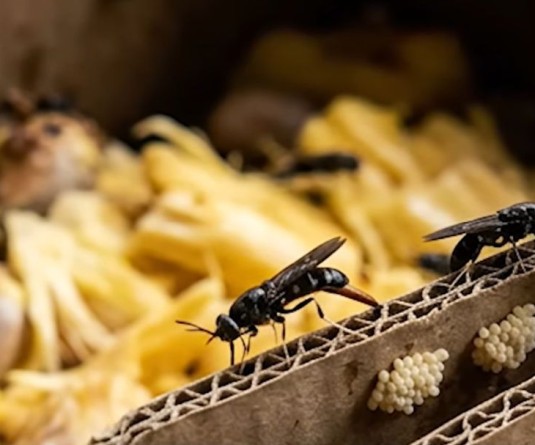
Mahung said a centralised Black Soldier Fly facility is not advisable for Dimapur and recommended a decentralised model. “At present, I see Black Soldier Fly technology as the best solution that Dimapur has,” he said.
He called for AIDA and the DMC to sit together to chart a way forward and assured the DMC’s full cooperation. “All we have to do is enforce the segregation of waste at the household level throughout Dimapur,” he said.
“If I can ensure that I do not receive wet waste mixed with other waste, treating the remaining waste becomes much easier.”