Expresses concern over gaps in Nagaland's mental healthcare infrastructure
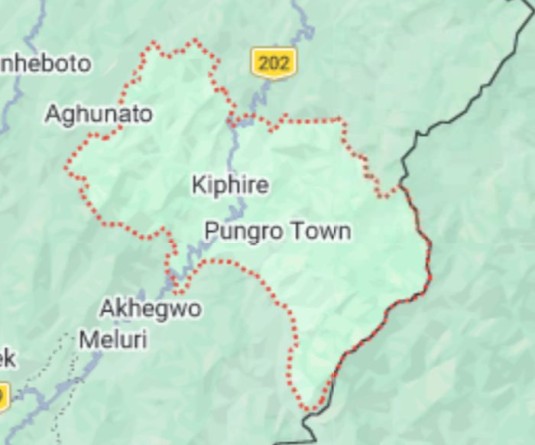
Kohima, June 16 (MExN): In a coordinated multi-agency operation, the District Legal Services Authority (DLSA), Kiphire facilitated the rescue and transfer of a man with a mental health condition from Longbeakru village to the State Mental Health Institute (SMHI) in Kohima for professional treatment.
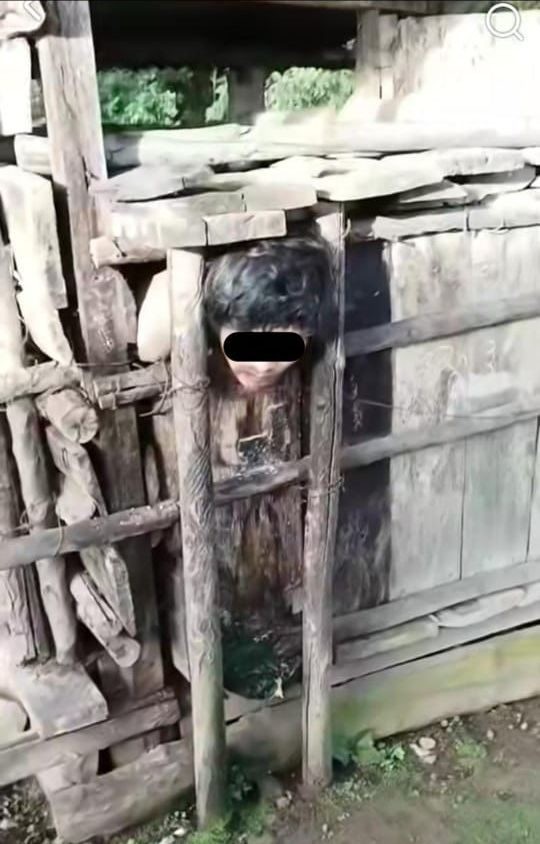
The intervention came after a video clip showing the individual in visible distress and confined within a rudimentary wooden cell went viral on social media on June 9, prompting the DLSA to take immediate cognizance under the NALSA (Legal Services to Persons with Mental Illness and Persons with Intellectual Disabilities) Scheme, 2024.
According to a detailed report released by the Kiphire DLSA, the family had resorted to confining the individual in the small wooden cell adjoining their residence as a measure of last resort, owing to the complete absence of accessible professional mental health support or institutional care in the remote area.
Following initial interactions with the family to understand the full background, the DLSA coordinated a multi-agency response involving Police, District Administration, District Hospital and volunteers.
The planning process was conducted with careful attention to the individual’s condition and the sensitivities of the family’s circumstances, ensuring a safe and dignified extraction.
On June 15, the individual was safely transferred to SMHI, Kohima. The transfer was carried out by a team comprising police personnel and a nursing staff member from the District Hospital under the District Mental Health Programme. The family accompanied the individual to ensure continuity of support and involvement in the treatment process, in line with the Mental Healthcare Act, 2017.
The Kiphire DLSA noted that the individual is currently undergoing assessment and care at the institute.
Concerns over mental health infrastructure
The authority has raised serious concerns over the state’s mental health infrastructure, observing that Nagaland currently has only one government facility - the SMHI, Kohima equipped to provide specialised mental health services, with constraints in funding, infrastructure and trained personnel severely limiting its capacity.
Emphasising that this case is not an isolated occurrence, the Kiphire DLSA pointed to a pattern of “undertreatment and mistreatment of persons with mental illness in the state,” driven by a lack of accessible services in rural areas and limited public awareness of mental illness as a treatable medical condition.
The Kiphire DLSA has called upon relevant government departments and stakeholders to invest in the expansion of mental health infrastructure, the training of community-level health workers, and the implementation of robust public awareness programmes, so that families in remote areas are not left without recourse in such situations.