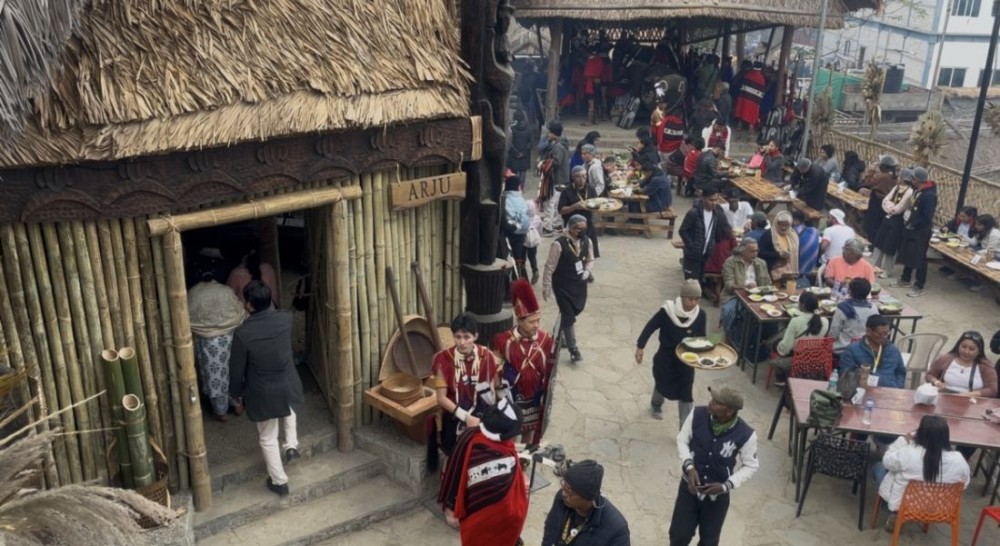
Visitors at the Ao Morung (Arju) at the ongoing Hornbill Festival. This year, the Arju is managed by the Jangpetkong Senso Telongjem Kohima. (Morung Photo)
Morung Express News
Kisama | December 9
At this year’s Hornbill Festival, the Jangpetkong Senso Telongjem Kohima (JSTK) is managing the traditional Ao Morung (Arju) with a dual mission, to showcase authentic culture and to fund the construction of their own community hall in the city.
Convenor Chuba Ozukum told The Morung Express that the group requested the responsibility, seeing it as a proactive way to raise money after a resolution during their union’s Golden Jubilee. “Instead of collecting small contributions... we decided to work hard and manage the Ao Morung this Hornbill. The earnings will go towards fulfilling that resolution,” said Ozukum, Convenor of the JSTK Multipurpose Hall Construction Committee and Convenor of the Ao Morung Kitchen Management Committee.
Ozukum explained that JSTK had approached the Aor Telongjem Kohima, requesting the opportunity to manage the Ao Morung this year. “They acknowledged our request and entrusted us with this responsibility, for which we are deeply grateful.”
He added that their involvement carries a deeper purpose. “Our community members in Kohima still do not have a community hall or even a small plot of land of our own. During our union’s Golden Jubilee, we resolved to construct a small house for our gatherings. Instead of collecting small contributions, a trend that has become common, we decided to work hard and manage the Ao Morung this Hornbill. The earnings will go towards fulfilling that resolution,” he emphasised.
Their team is also committed to offering authentic Ao cuisine, with efforts made to prepare and serve well-known dishes throughout the festival.
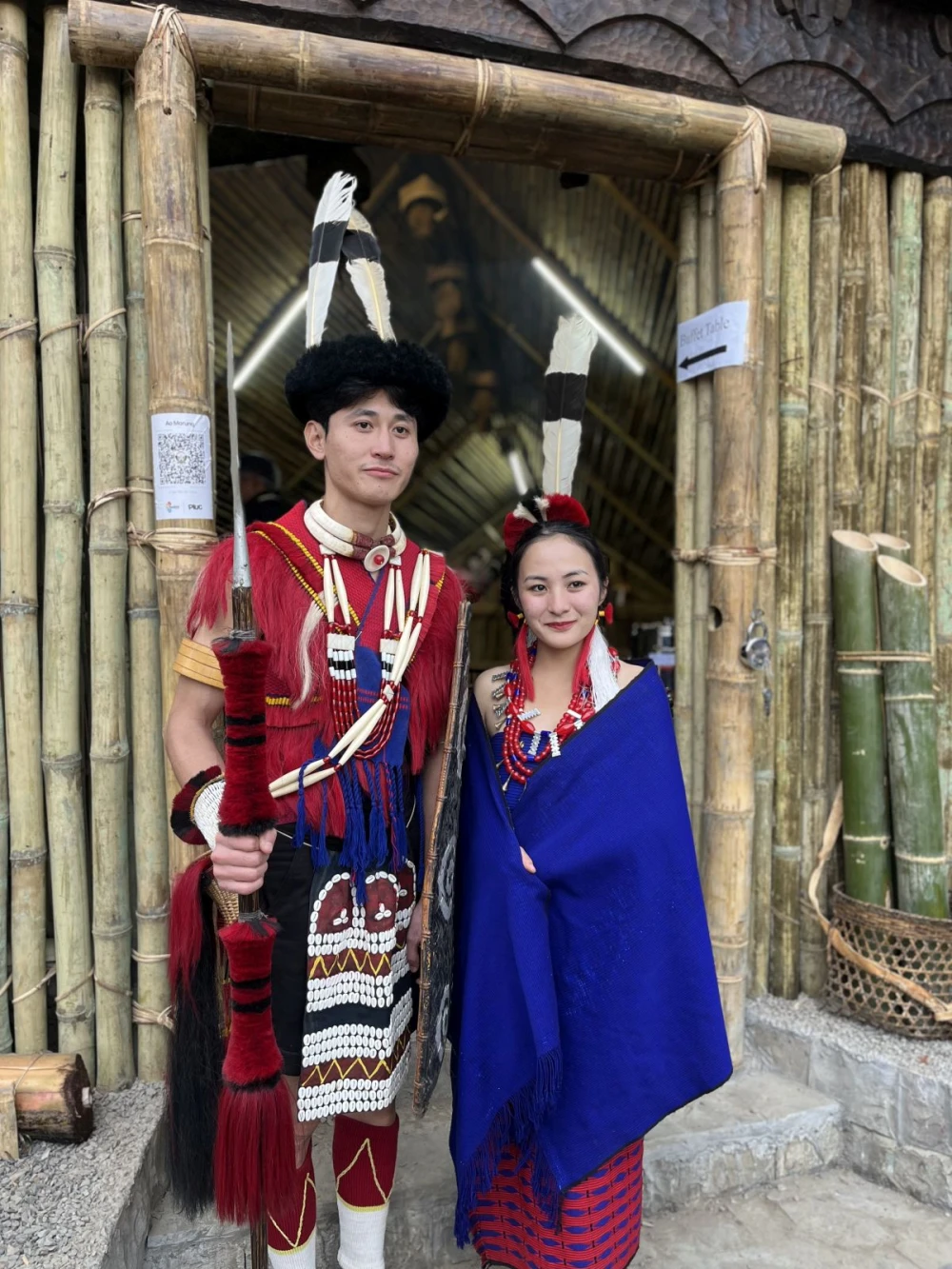
“This year, the Arju showcases the traditions and cultural practices carried by our forefathers,” Ozukum said. Visitors are introduced to folklores, folk songs, and the rich cultural heritage of the Ao Nagas.
Although time constraints limited the scale of preparations, the Jangpetkong Range brought its speciality dishes, including fermented crab, dry fish chutney, various crab items, and the iconic Anishi sourced from Sungratsu village.
Ozukum highlighted the active involvement of young people in running the Ao Morung. “Youths are helping at the counters, assisting at the reception, guiding visitors, and volunteering in the kitchen. They arrive as early as 6:00 am and stay till late at night. Their dedication has been remarkable,” he said.
“This festival brings all Naga tribes together,” he said. Representing the Ao community this year is a 50-member cultural troupe from Süngratsü village, known for their traditional attire and vibrant performances.
“They perform dances, songs, and log drum sessions outside the Morung, showcasing the richness of Ao culture and drawing great interest from tourists and fellow Nagas,” he added.
Looking ahead, Ozukum expressed a desire for more diversity and innovation within Ao cuisine.
“Hornbill is a platform where we share our food and culture. In future editions, whichever group manages the Ao kitchen should include common Ao dishes but also highlight the specialities of different villages and ranges. Each has something unique,” he noted.
He also encouraged modernising traditional dishes. “We have many talented chefs, why not collaborate with them to elevate Ao cuisine, maintaining authenticity while ensuring hygiene and broader appeal?” he suggested.
The union hopes that visitors both locals and tourists alike will leave with a deeper understanding of the Ao Morung. The union hopes visitors leave with a deeper appreciation for Ao heritage, which he said reflects, “the cultures and traditions handed down by our forefathers. We want people to learn this heritage and appreciate its value.”