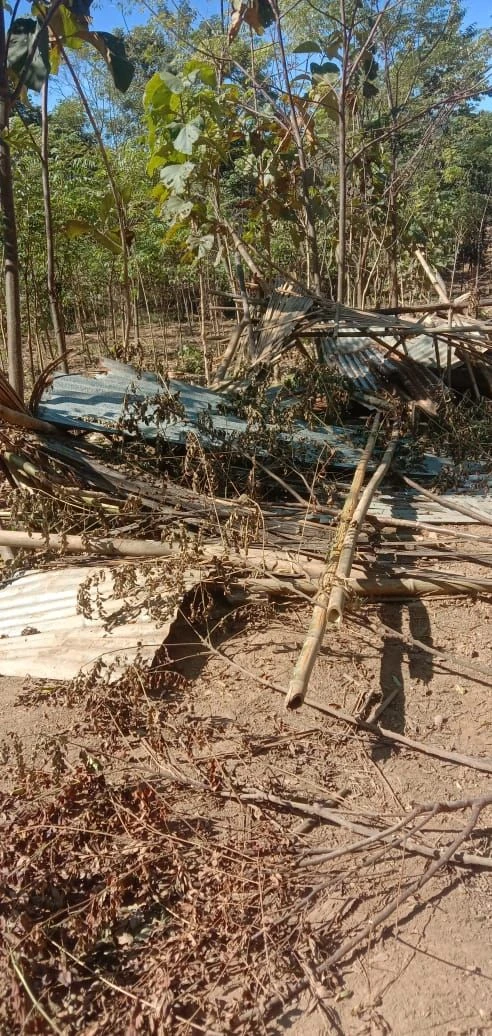
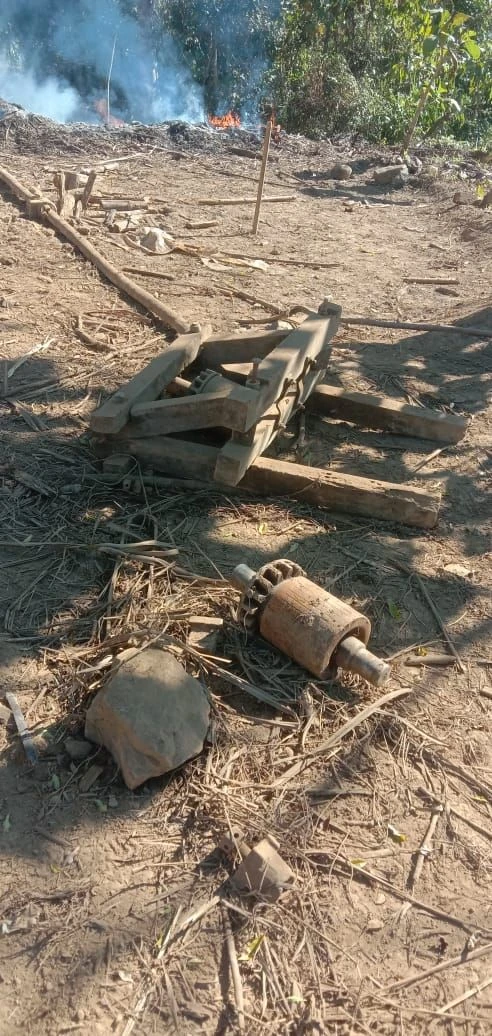
A surge in wild elephant incursions is destroying farmlands and spreading fright in Old Aree village Wokha district.
Morung Express News
Wokha | December 20
Old Aree village under Wokha district, Nagaland has witnessed a surge in wild elephant incursions this month, causing extensive damage to farmlands and triggering fear among residents who depend largely on agriculture for their livelihood.
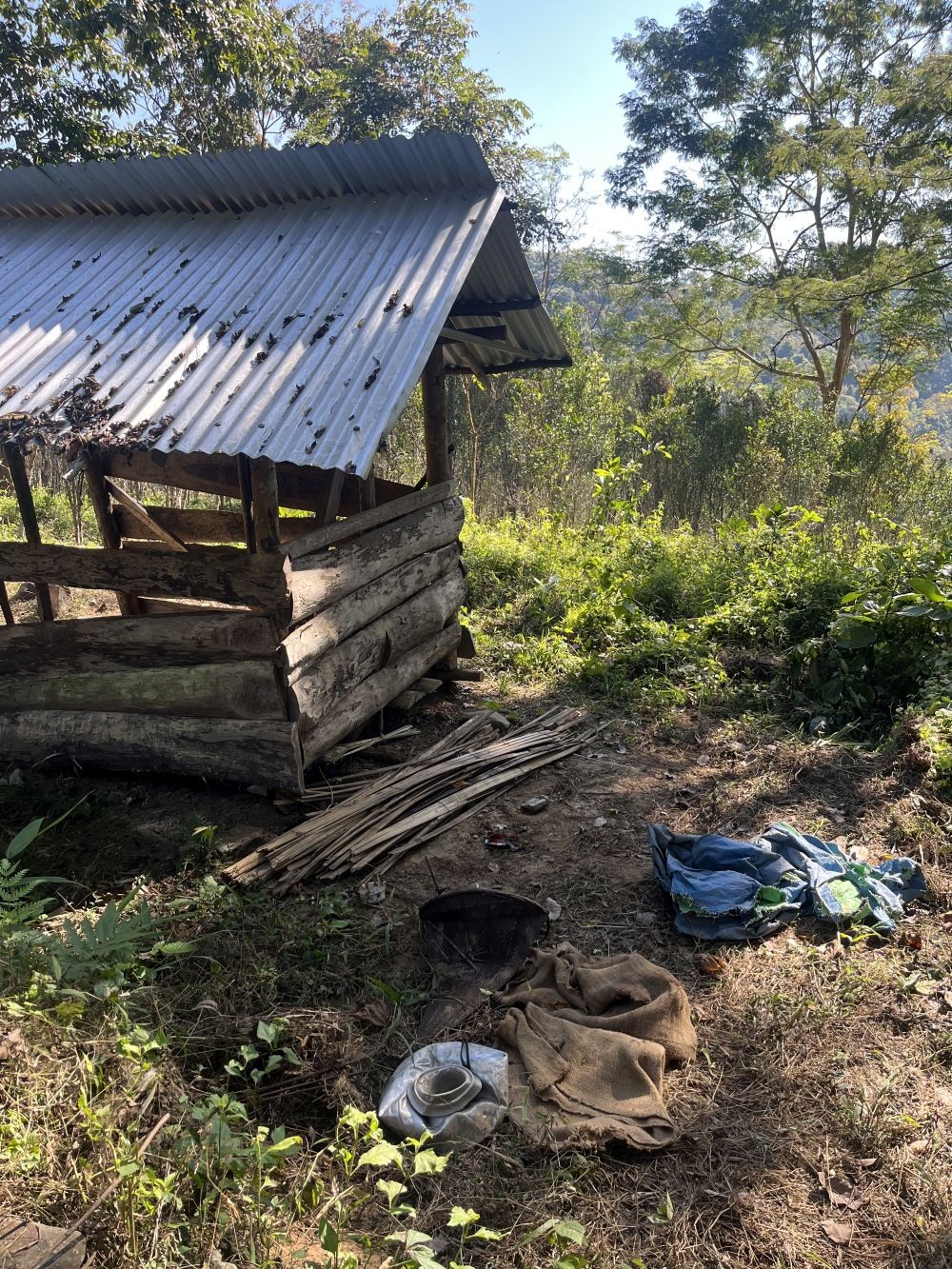
Elephants have destroyed at least five farm huts along with large tracts of sugarcane and tapioca cultivation in recent days, the Old Aree Village chairman Liponthung Lotha informed.
One of the affected farmers, Rikhyothung Kikon stated that his farmhouse and crops including oranges, pineapples and various varieties of tapioca were damaged on December 8, 2025. He said farmers work in the fields during the day, while elephants enter the area in the evening after the farmers return home, making it difficult to prevent the destruction.
Although the elephants were not seen directly, Kikon said footprints left at the site indicate that around ten elephants frequently visit the area. He added that the village chairman informed the concerned department, following which officials visited the affected sites, documented the damage and collected photographs and necessary records.
Emphasising that farming is the backbone of the village economy, Kikon appealed to the concerned department to come up with a permanent solution and provide assistance to the affected farmers.
Another affected farmer, Wodemo Kikon, said that his three-acre sugarcane plantation, estimated to yield an income of around Rs 3 lakh, has been completely destroyed. He added that 300 to 400 teak trees were also damaged.
Wodemo further stated that a jaggery-making machine, which he had borrowed from a friend due to lack of machinery, was destroyed by the elephants, leaving him distressed about compensating the loss. He also pointed out that villagers in the Doyang area have been unable to cultivate their fields for the past 15 to 20 years due to prolonged elephant activity.
According to villagers, elephants are now roaming barely one kilometre away from the settlement, posing a serious threat to both agriculture and human life. Residents believe that around 30 to 40 wild elephants are moving in different groups in and around the village.
The chairman described the situation as “very serious,” stating that wild elephants have severely disrupted the livelihood and safety of villagers. He informed that elephants are currently moving in two separate groups—one near the Longkhum area and another close to the village—making movement unsafe, especially at night.
Lotha said the animals come extremely close to the settlement during night hours, their presence clearly audible, causing fear among residents. He also revealed that an elephant calf was born near the village last month, and the matter had been reported to higher authorities, including the Deputy Commissioner of Wokha.
The villagers have urged the authorities to take urgent measures to address the issue and safeguard both lives and livelihoods.