Officials inspect the material during a one-day workshop on Wildlife Article Identification in Dimapur on August 28.
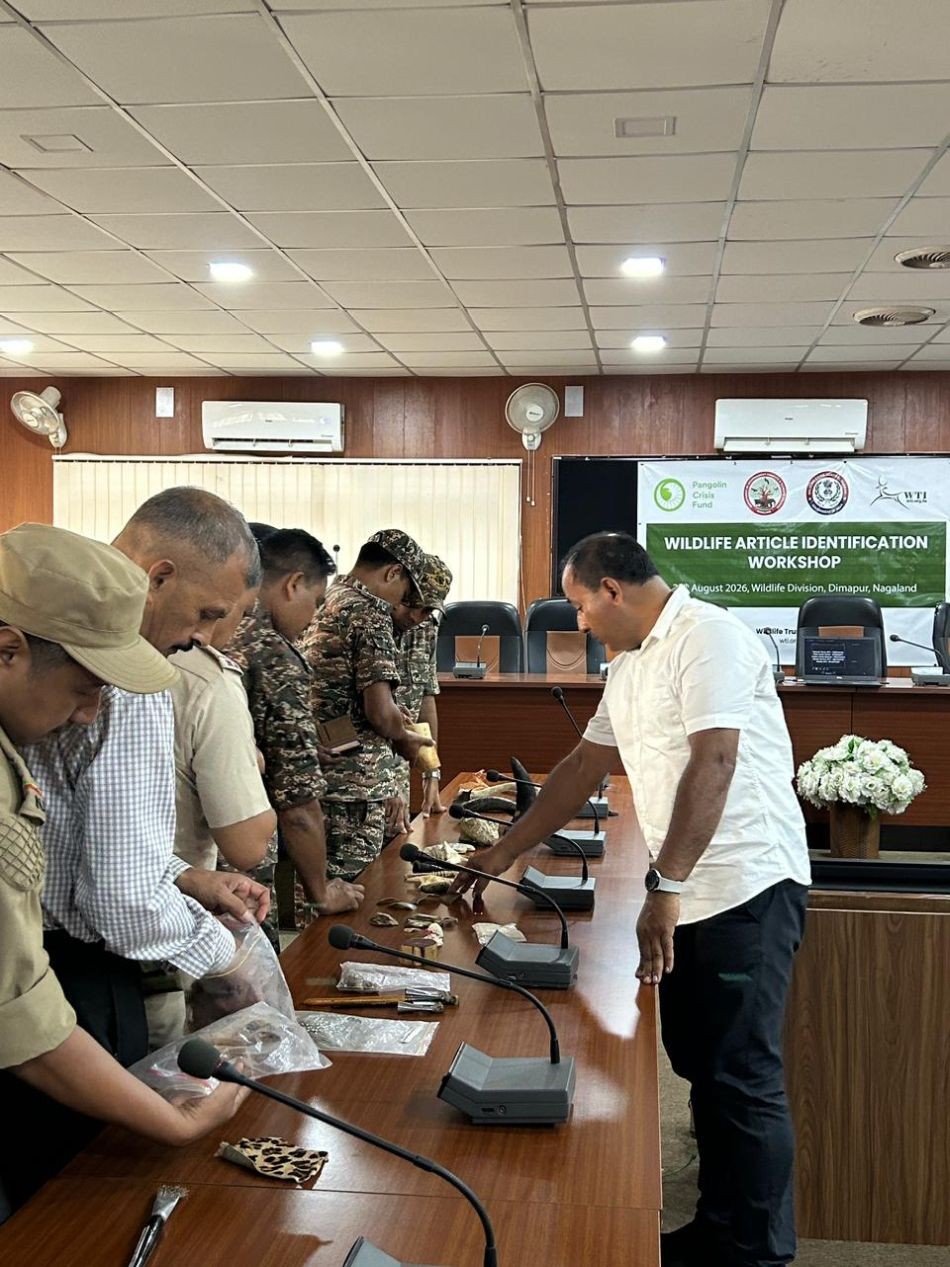
Dimapur, August 29 (MExN): Around 40 enforcement officials from multiple agencies participated in a one-day workshop on Wildlife Article Identification in Dimapur on August 28 to strengthen their capacity to identify commonly traded wildlife and wildlife articles and detect illegal wildlife trade.
Officials from the Forest and Police departments, Excise and Prohibition Department, CISF, CRPF 173 and 78 Battalions, 15 Assam Rifles, Directorate of Revenue Intelligence, Airport Authority and Railway Protection Force attended the workshop.
The programme was organised by the Wildlife Trust of India (WTI) in collaboration with the Wildlife Crime Control Bureau (WCCB) and Department of Environment, Forest and Climate Change, Nagaland, with support from Wildlife Division, Dimapur, and the Wildlife Conservation Network’s Pangolin Crisis Fund.
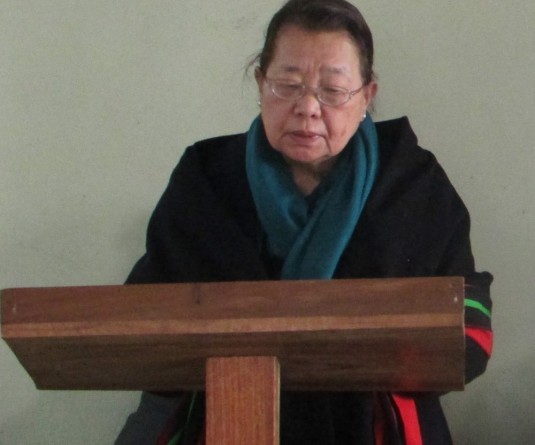
The workshop was inaugurated by Dr C Zupeni Tsanglai, IFS, Wildlife Warden, Dimapur, who stressed the importance of inter-agency collaboration, intelligence sharing and coordinated enforcement in combating illegal wildlife trade in Nagaland.
She said capacity-building programmes were crucial to improving coordination and strengthening the collective response to wildlife crime.
Sessions were conducted by experts from WTI and WCCB. Monesh Singh Tomar, Assistant Manager and Officer-in-Charge, Wildlife Crime Control Division, WTI, briefed participants on wildlife crime and the Wildlife (Protection) Act, 1972.
Nippon Baisnab, Assistant Director, WCCB Eastern Region, Guwahati, conducted a session on identifying commonly traded wildlife articles, while Robin Borah, Head Constable, WCCB Eastern Region, assisted with demonstrations of original wildlife articles, providing participants hands-on experience in identifying wildlife specimens and derivatives.
The organisers said Dimapur holds strategic importance for wildlife crime prevention due to its connectivity with different parts of Nagaland and its role as a transit point for the movement of wildlife and wildlife articles. The participation of multiple enforcement agencies provided an opportunity to strengthen coordination and improve detection and interception of illegal wildlife trade.
Tsanglai said illegal wildlife trade could not be effectively addressed by one agency alone and called intelligence sharing and coordinated enforcement crucial.
Tomar said correct identification of wildlife articles was a critical first step in detecting wildlife crime and stressed the importance of bringing agencies together as wildlife trafficking often involves movement across jurisdictions.
The workshop was coordinated by H Anato Sema, Deputy Ranger, Wildlife Division, and L Nelina Mohbo, WTI field officer.