Officials along with the participants during the food safety awareness drive held at Aoyimchen village in Niuland on May 5.
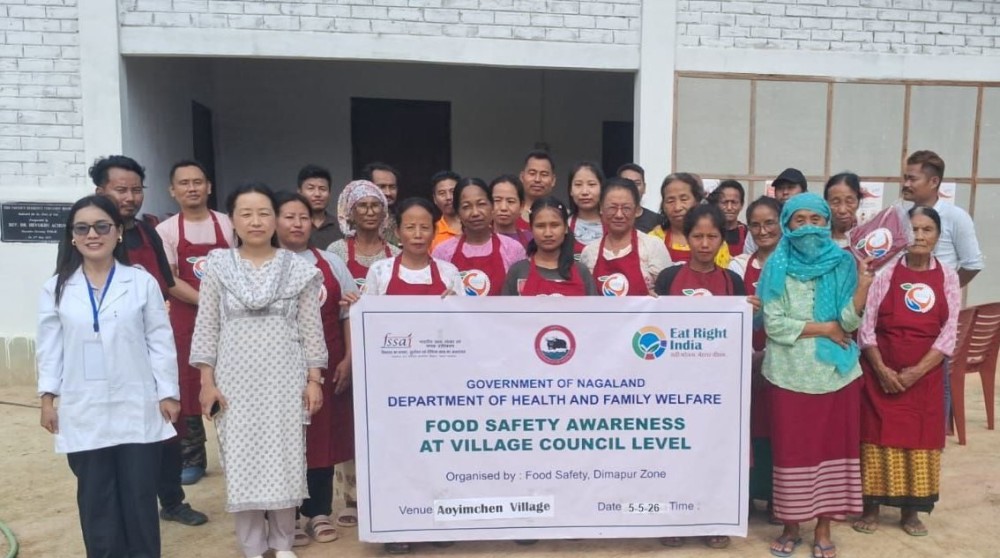
Niuland, May 7 (MExN): In a proactive effort to promote public health and consumer awareness at the grassroots level, a series of batch-wise Food Safety Awareness programmes were conducted across four villages in Niuland district on May 5.
The awareness sessions were held at Shiwoto, L Vihoto, Hevuxu and Aoyimchen villages, with significant participation from local residents, including village elders and homemakers.
The initiative aimed to bridge the information gap on food standards and household health practices. The programme began with an introduction to the Food Safety and Standards Authority of India (FSSAI), highlighting its role in regulating food quality and ensuring safe food consumption.
During the sessions, resource persons stressed the importance of consuming fortified food products enriched with essential vitamins and minerals to combat malnutrition and improve overall community health.
Participants were also cautioned against the practice of reusing cooking oil for repeated frying. The speakers explained the harmful chemical changes that occur in overheated oil and its long-term impact on heart health.
The programme further highlighted the adverse effects of junk food consumption, particularly among children. Participants were advised to avoid giving junk food to children to help prevent obesity and other health-related issues at an early age.
Emphasis was also laid on smart consumer practices, including the importance of reading food labels before purchase. Attendees were taught to check expiry dates, nutritional information and the FSSAI logo to ensure food quality and authenticity.
A major highlight of the programme was a live demonstration on food adulteration conducted by Food Technician Lika Assumi. Using simple methods that can be replicated at home, Assumi demonstrated how to detect common adulterants in everyday food items such as milk, spices and oils.
“Food safety is not limited to large-scale manufacturers; it begins in our own kitchens,” the organisers said, adding that teaching simple detection techniques and healthy cooking habits would enable communities to take charge of their own health.
The programme concluded with an interactive question-and-answer session, during which participants shared concerns and sought advice on maintaining hygiene and food quality standards in their households.