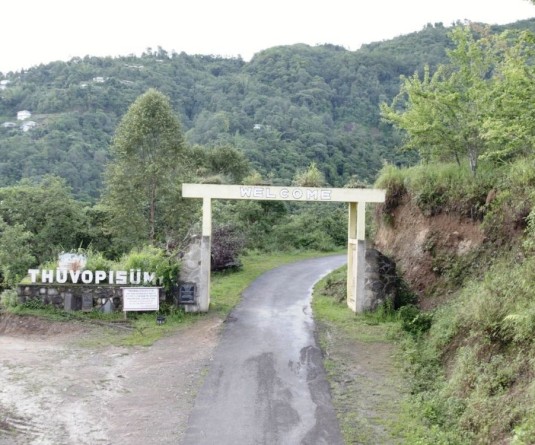
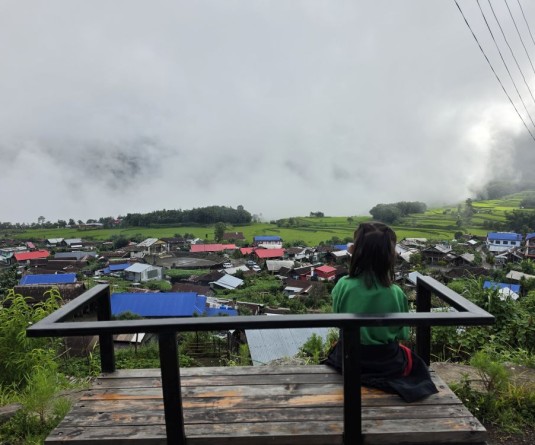
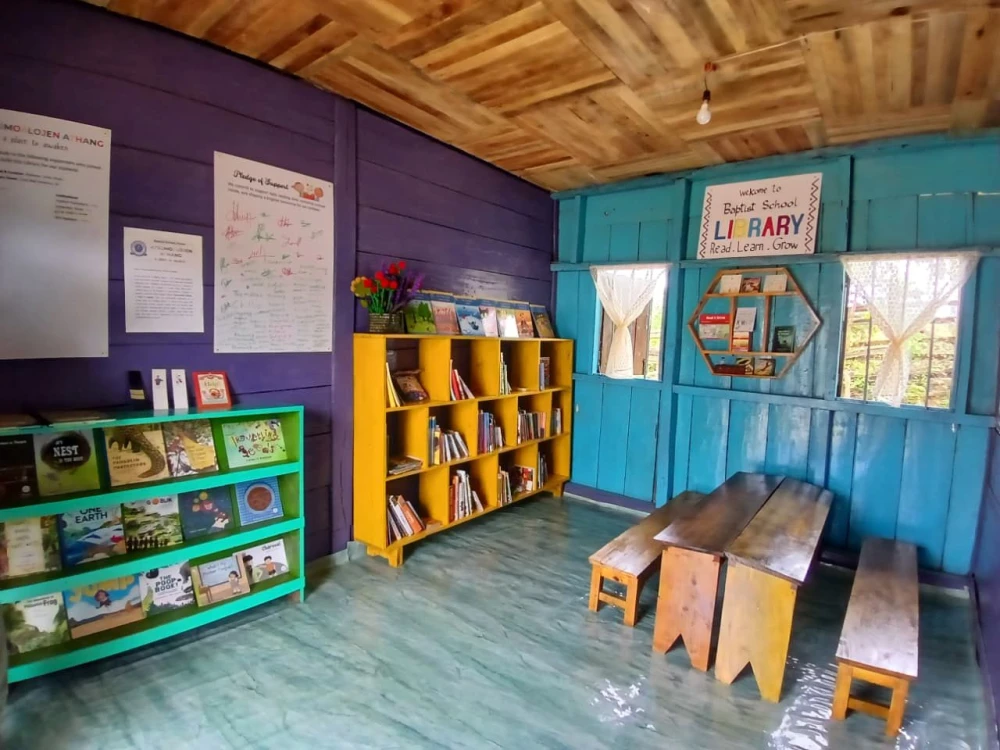
Glimpses of the Library at Baptist School in Panso called “Atsumoalojen Athang” a Khiamniungan phrase meaning “A Place to Awaken.”
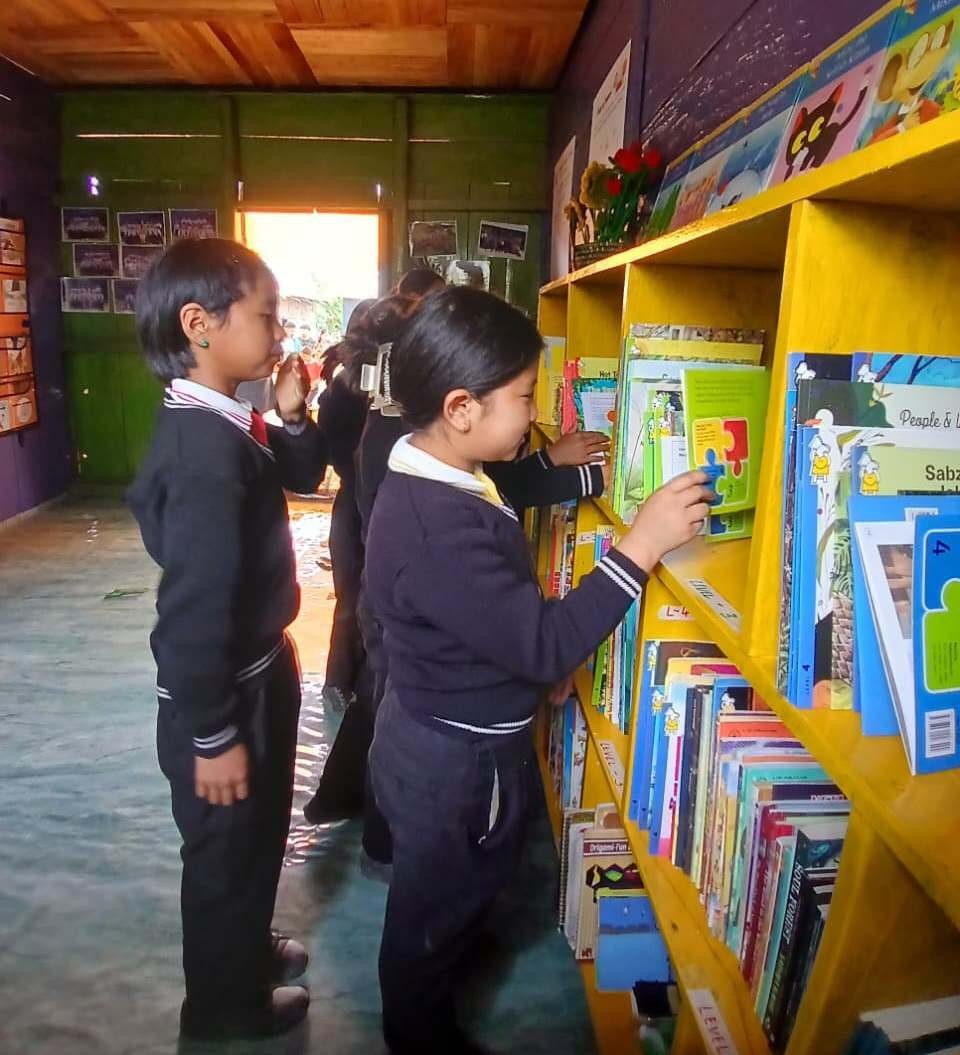
Uplifting people through education in Panso, an area affected by poverty, isolation, gun-making & drug addiction
Vishü Rita Krocha
Kohima | August 31
While Nagaland state boasts a high overall literacy rate of 95.7%, making it the third most literate state in India, deep rural pockets like Panso under Noklak district bordering international Myanmar grapples with severe challenges of infrastructure and accessing quality education owing to several factors that limit a child’s right to quality education.
However, despite the shortage of infrastructure and several public amenities, Wekoweu (Akole) Tsuhah, Community Organiser & Facilitator from Chizami, observed that, “the community here has an intense hunger for learning” while underlining that they see education as their only doorway to a better future.
The first generation of women in her family to go to school, she has been visiting Pathso Nokeng village and Panso area since 2018, and revealed that the place holds a special piece of her heart even as she observed that, “there is an abundance of indigenous wisdom, rich food systems, and genuine warmth here.”
Years of her association with the community eventually resulted into a library at the Baptist School in Panso called “Atsumoalojen Athang” a Khiamniungan phrase meaning “A Place to Awaken,” after musing over “what small thing can we do to spark curiosity and joy here?”
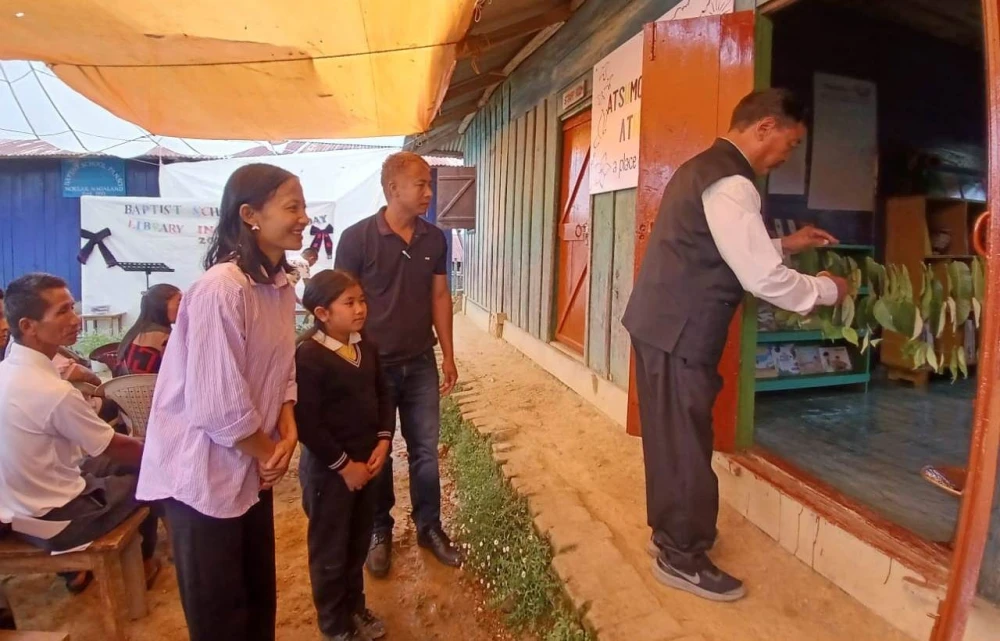
The idea, as she related was born over a simple cup of tea at the founder’s house, listening to their vision, challenges and hopes for their community and the school. Clearly inspired by the spirit of the Panso community and the courage of the Shiu family running the Baptist School, she said, “it was founded in 1993 by Mr Khongo Shiu, a former Member of the Nagaland Legislative Assembly.”
Unlike many in positions of power, she articulated that, “he chose to step away from urban comfort and return to his modest village home, to uplift his people through education in an area affected by poverty, isolation, gun-making, and drug addiction.”
She also highlighted that his daughter, Shongping - a Clinical Psychology post graduate - has followed in his footsteps, leaving behind a promising career in the city to serve as the Head Mistress of the school since 2022.
“Seeing Mr. Khongo and Shongping’s quiet grit - growing the school from 80 to 130 students (from 2022-2026) amidst severe resource constraints and underpaid teachers moved me deeply,” she further related while pointing out that, “anyone else might have chosen ease, but their humility and compassion called them back to serve the most neglected.”
“I simply wanted to stand alongside their purpose and help bring a spark of hope to their children,” she said.
Helping every child find their own doorway to learning
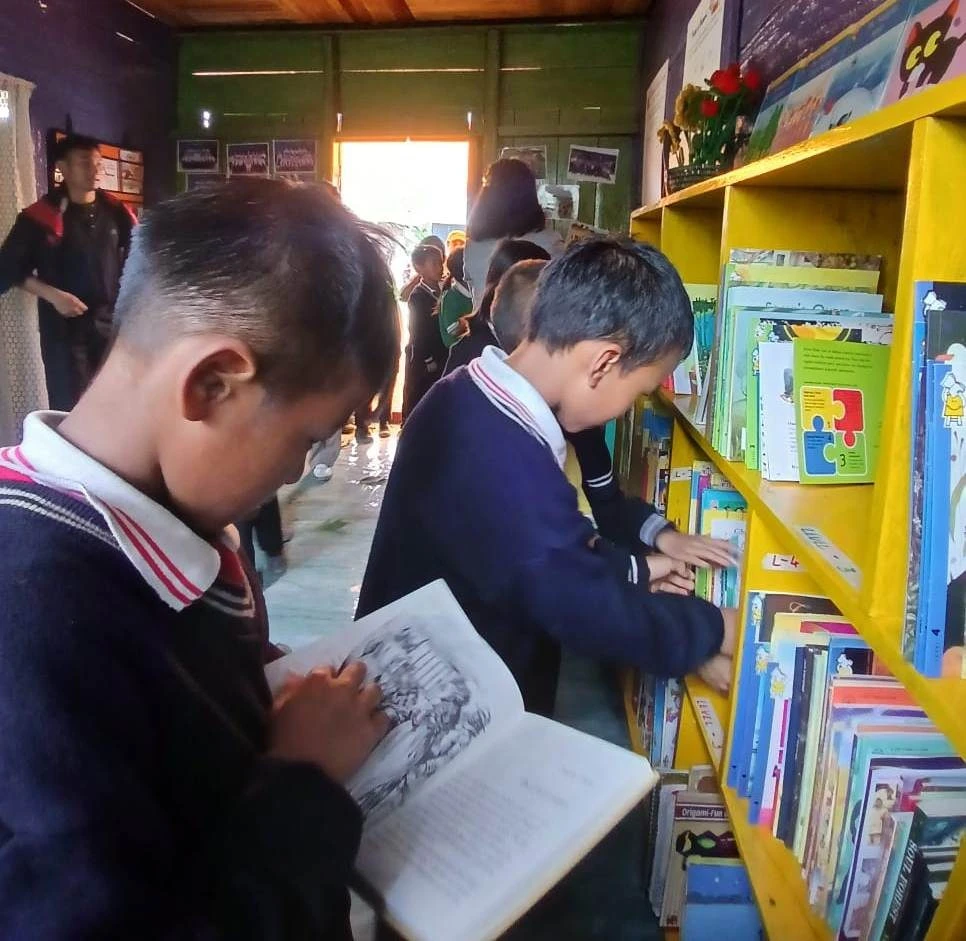
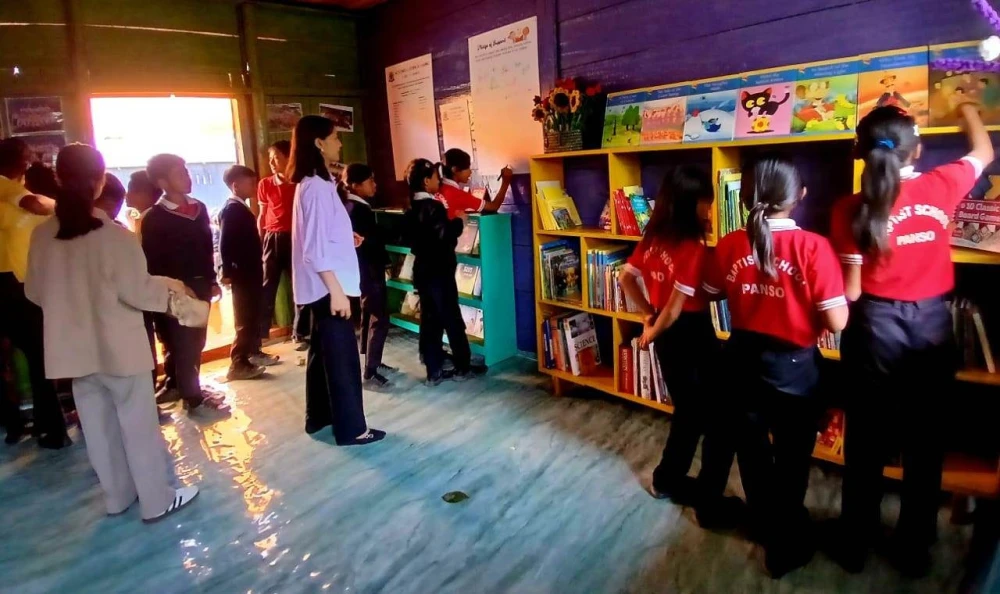
The Library, “A Place to Awaken” will serve 130 students of the School- most of whom are first-generation learners. When it opened on August 12, they also made sure that everyone including students, teachers, parents, elders, and village board members were invited for the community to understand that it wasn’t an outside gift, but theirs to cherish, protect, and sustain.
On the day of the opening, Wekoweu (Akole) Tsuhah also witnessed ‘a mix of quiet awe and pure delight’ even as shared that, “the older students were wonderfully shy at first, stepping softly into the room while the younger ones immediately started opening books, admiring the book illustrations and posters on the walls, and whispering excitedly to one another.”
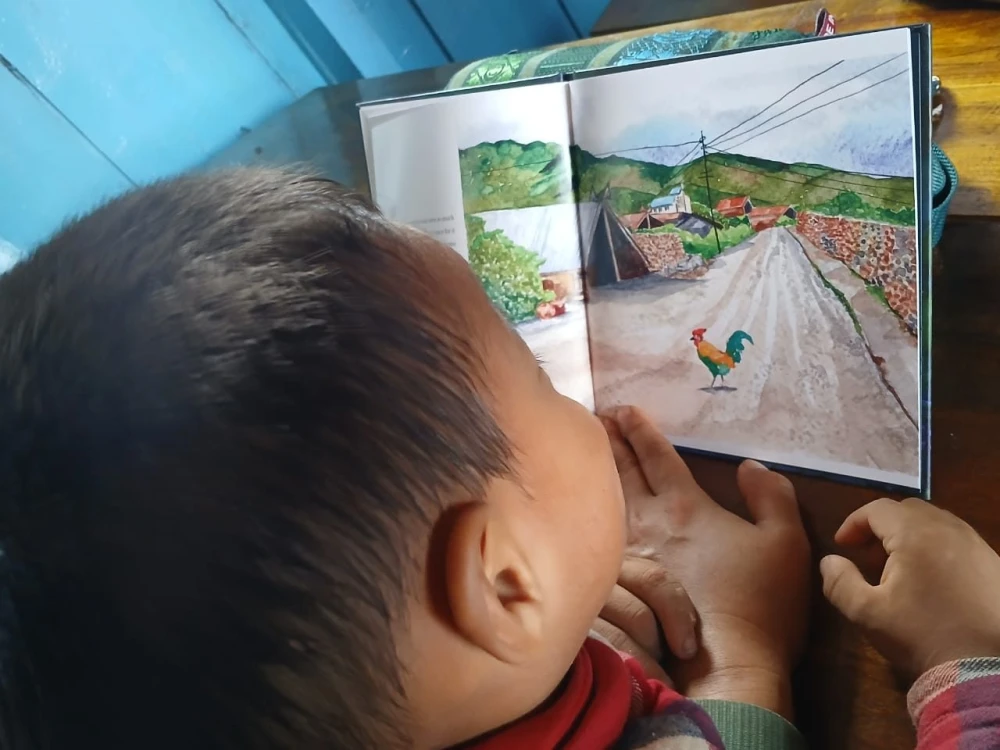
A favorite moment, she recalled, “was with the caretaker’s 2.5-year-old son, who toddled around us all day. When I opened Rita Krocha’s A Bowl of Khaudzii, he pointed at the illustrations in pure wonder, giggling with endless ‘Wow! Wow! Wow!’ and calling out the ‘Fowl’ name in his native tongue.”
Just two days after the launch, she also related how “the Headmistress shared that the Class 6 and 8 students were already reading the books and asking the teacher meanings of the new words they discovered in the storybooks, and they had to make use of the Dictionary.”
“Seeing that spark of curiosity happen so naturally is everything,” she profoundly expressed.
To further give a sense of what this space means, she highlighted the story of a student named Chillio as shared by Shongping. Chillio had joined Class 4 in 2022 after the COVID lockdowns. Coming from a home where both parents are illiterate, he struggled deeply and couldn’t even read simple words like “colour” or “river.” But with quiet determination and steady support from his teachers, he caught up.
Today, she said that, “Chillio is in Class 8 and thriving. His father used to walk to an educated neighbour’s house to read letters and official notices for him. Now, his father proudly says he doesn’t need to walk anywhere anymore - his own son reads to him.”
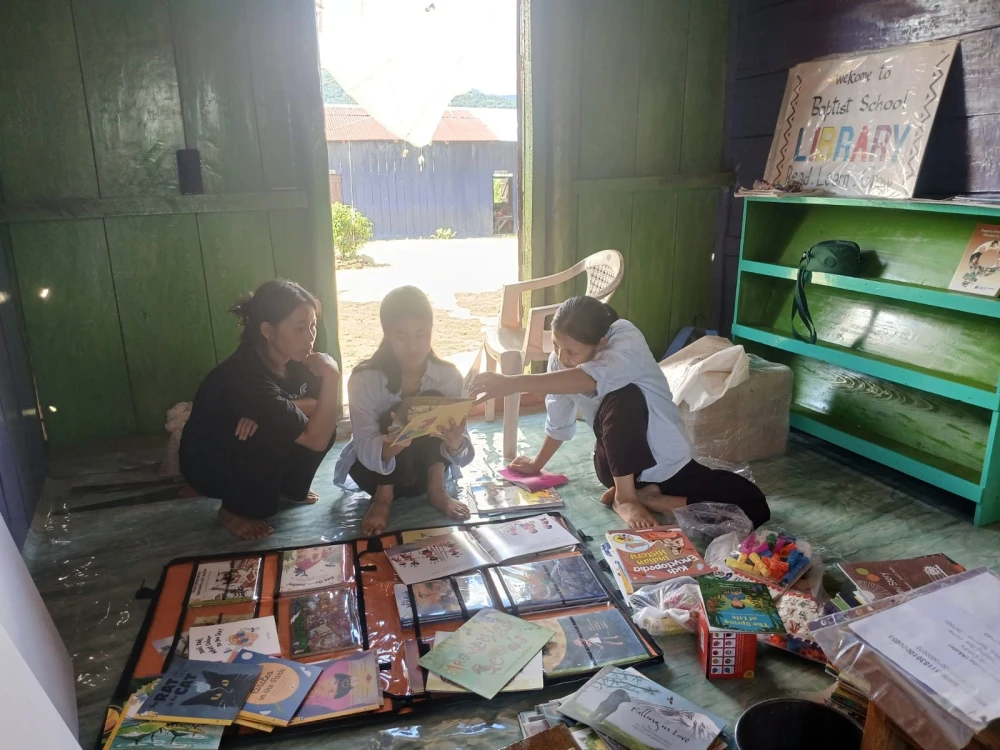
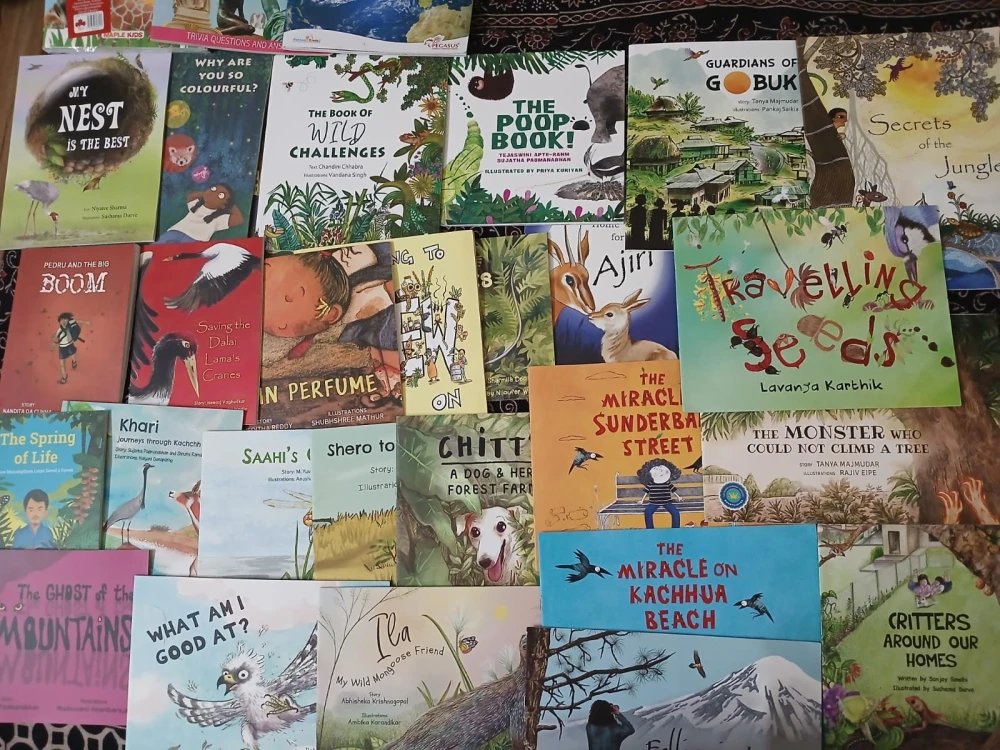
Underlining that stories like Chillio’s remind us why this space matters, she also highlighted that, “we curated books across diverse reading levels - covering ecology, local culture, biographies, and storytelling - so every child can find their own doorway to learning.”
‘A chain of human kindness’
However, the journey involved in making the library a reality wasn’t without challenges even as she articulated that, “transporting boxes of books across rugged terrain with unreliable public transport is expensive and exhausting.”
With the monsoon rains causing constant landslides between Tuensang and Panso, we weren’t even sure if the roads would stay open long enough for us to reach the village, she recalled.
But what actually made it happen, she emphasised, “was a chain of human kindness” while highlighting what she termed ““A Spark of Trust” that began with a small “radical kindness” grant (Rs 47,000), paired with the complete trust of the school founder Mr. Khongo and Shongping.”
There was also ‘A Community of Hands’ where friends stepped in to gather book donations, pack, and ship books. “Local publishers like PenThrill Publishers in Kohima gave us generous discounts, while friends in Bangalore mobilized 40% of our entire collection,” she said.
She further acknowledged people who hosted her along the way, and the support she received to transport the book boxes from Kohima to Tuensang to Shamator to Panso. “And somehow, the skies cleared just in time for us to land safely in Panso,” she expressed.
Maintaining that “logistics are just logistics,” she strongly felt that, “if you have the intent; the way clears.” Kindness, she affirmed is still abundant while articulating that “what built this library wasn’t just money, but social capital, good intentions, and a shared belief in what these children deserve.”
‘No child in Panso should be left behind because they lack resources’
Having seen too many rural libraries turn into silent ‘museums’ where books gather dust on locked shelves, Wekoweu (Akole) Tsuhah also remarked that, “setting up the room is the easy part; the real work is sustaining it through vibrant reading activities and continuous engagement.”
Asserting that children who have never had access to books need gentle guidance to build a reading habit, she exuded hope for the new learning space to remain a living, breathing sanctuary of imagination.
“My biggest hope is that no child in Panso is left behind simply because they lack resources,” she voiced. In the meantime, she underscored that, “reading broadens a child’s worldview, but what they read shapes how they see themselves.”
While gathering books, she also noticed how little children’s literature exists by Naga authors or about our own region. Towards this end, she underlined that, “it is essential for our children to read stories that reflect their own land, language, and indigenous knowledge systems so they can grow up with pride in who they are.”
At the same time, she maintained that “learning doesn’t only live on printed pages,” which is why they also invited village elders to be ‘living libraries’ while explaining that, “by stepping into the school to share oral histories, folk tales, and life experiences, elders help bridge generational wisdom with modern education.”
“Our children need both: books to see the world, and local stories to keep them grounded in their roots,” she maintained.
As a facilitator, she said that, “I feel proud to have helped connect a remote village in rural Nagaland to well-wishers across India and the world” while pointing out that, “it proves that small bridges can span vast distances.”
However, she is also aware that this is just the first step while expressing that, “the library belongs to the children of Panso now, and the real journey of keeping it alive has just begun.”
Putting across that, “we have only just planted the seed, and there is so much more to nurture,” she also stated hope that, “our State education systems take notice of under-resourced, community-driven schools like Baptist School and support them with resources.”
For the rest of us, she said, “I hope this project shows that anyone can offer a small act of kindness. When we join hands, those small acts weave together into a quiet movement of hope.”