Secretary, Ministry of Micro, Small and Medium Enterprises, Government of India, S.C.L. Das, IAS, with other officials during a high-level coordination meeting held on “MSME as Engines of Growth” at the Chief Secretary’s Conference Hall, Nagaland Civil Secretariat, Kohima on March 30. (DIPR Photo)
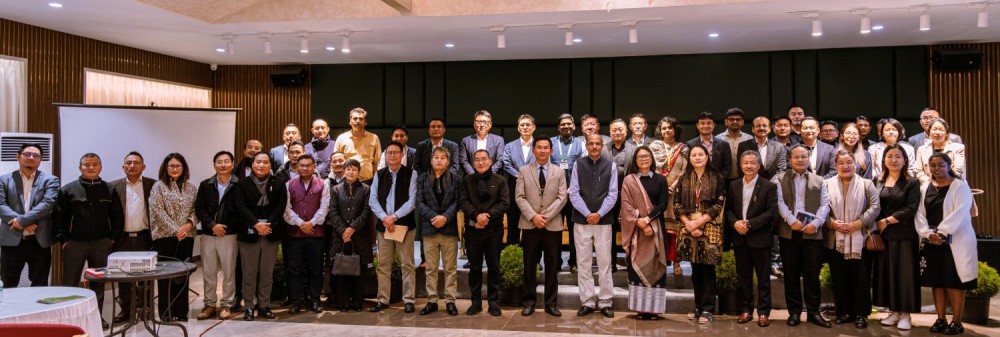
Kohima, March 30 (MExN): A high-level stakeholder consultation on the development of Micro, Small and Medium Enterprises (MSMEs) in Nagaland was convened in Kohima on March 29, bringing together senior officials from the Ministry of Micro, Small and Medium Enterprises (MoMSME), Government of India, along with representatives from the Government of Nagaland, financial institutions, and key industry stakeholders.
The consultation was held in the presence of the Secretary, MoMSME, Government of India, and was attended by the MLA and Advisor for Industries & Commerce, Government of Nagaland, Hekani Jakhalu, stated a press release received here.
Senior officials present included Mercy Epao, Joint Secretary (SME), officials from the Ministry of MSME, the Director of Industries & Commerce, Government of Nagaland, and other senior officers from the State Government.
Representatives from prominent stakeholder organizations, including the Business Association of Nagas (BAN), Women Entrepreneurs Network Nagaland (WENN), State Level Bankers Committee (SLBC), YouthNet Nagaland, and various line departments, banks, implementing agencies, and entrepreneurs, participated in the consultation.
The programme commenced with a welcome address delivered by the Director of Industries & Commerce, who also chaired the session. In her keynote address, Hekani Jakhalu highlighted the significant progress made in the MSME sector in Nagaland, particularly noting the substantial rise in UDYAM registrations, which have reportedly doubled in recent years. She underscored the emergence of a strong entrepreneurial culture among first-generation entrepreneurs in the state and emphasized the importance of continued institutional support.
Referring to the Raising and Accelerating MSME Performance (RAMP) scheme, she noted its distinctive approach in enabling states to design and implement need-based Strategic Investment Plans tailored to local requirements. She expressed optimism for the continuation and expansion of the initiative under a prospective RAMP 2.0 and conveyed appreciation for the Secretary’s visit to Nagaland despite the constraints of the financial year-end period.
A comprehensive presentation was subsequently made by the Deputy Director and Nodal Officer for RAMP and PM Vishwakarma, outlining the current MSME landscape in the state and progress achieved under various central schemes. The presentation highlighted key interventions including energy audits, capacity building programmes for MSMEs, and training initiatives for departmental officials, all of which have contributed to strengthening the ecosystem.
The consultation then transitioned into an interactive session, wherein stakeholders shared field-level experiences, challenges, and recommendations. A key concern that emerged was the limited access to credit, attributed to the absence of regional decision-making mechanisms within banking institutions, resulting in delays in loan approvals. It was observed that decisions taken outside the state often do not adequately reflect Nagaland’s unique socio-economic and geographic context. Participants also emphasized the need for enhanced support for young entrepreneurs, improved industrial infrastructure, reliable power supply, and greater inclusivity, particularly in ensuring accessibility for differently-abled individuals.
In his address, the Secretary, MoMSME, commended the Government of Nagaland for its proactive initiatives and acknowledged the alignment between the State and Central Governments in advancing MSME development. He reiterated that MSMEs remain a cornerstone of India’s economic growth and lauded the entrepreneurial drive among the youth of Nagaland.
Emphasizing the need for greater convergence between academia and industry, he highlighted the importance of research, development, and value addition, particularly in the manufacturing sector.
He further stressed the significance of strengthening value chains and leveraging the existing brand identity of regional products, including horticultural produce such as pineapples, through aggregation, processing, and technology transfer. Drawing references from successful models in other Northeastern states and international practices, he pointed to the potential for rural industrialization in Nagaland.
The Secretary also called upon financial institutions to adopt a more facilitative approach towards MSMEs, noting their relatively low levels of non-performing assets and strong commitment to enterprise growth.