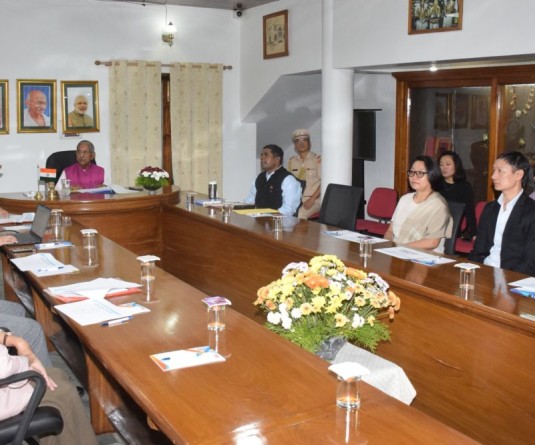
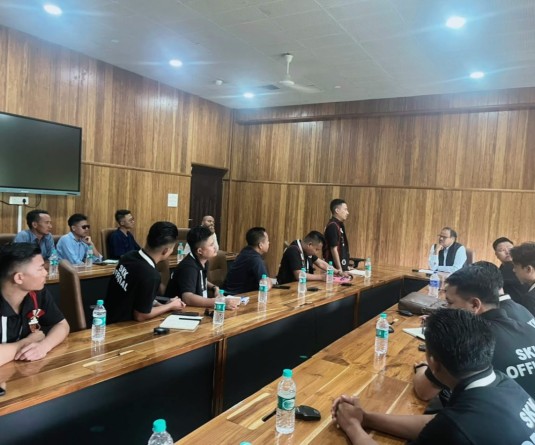
Members of the Dimapur media fraternity with officials from PIB Kohima and resource persons during the media workshop, ‘VARTALAP,’ held at Hotel Saramati, Dimapur, on September 22.

Morung Express News
Dimapur | September 22
Public Prosecutor Temsunaro Jamir on September 22 underscored the need for accuracy, appropriate terminology and sensitivity by media professionals while covering legal matters.
Addressing a media VARTALAP on ‘Cyber Suraksha Bharat’ organised by PIB Kohima at Hotel Saramati, Jamir spoke on the legal perspective on defamation and the responsibilities of journalists in professional reporting.
Dimapur Press Club President Henlly Phom Odyuo was the guest of honour. Jamir and Kihika Chishi, NPS, O/C Cyber Crime Police Station, PHQ, were the resource persons during the technical session.
Jamir, a lawyer of over 20 years, said defamation involves an intentional false statement communicated to a third party that harms a person’s reputation or integrity. It can be both civil and criminal in nature, she said. While civil defamation primarily concerns monetary compensation, criminal defamation is dealt with under Section 356 of BNS, with punishment including imprisonment of up to two years, fine or community service.
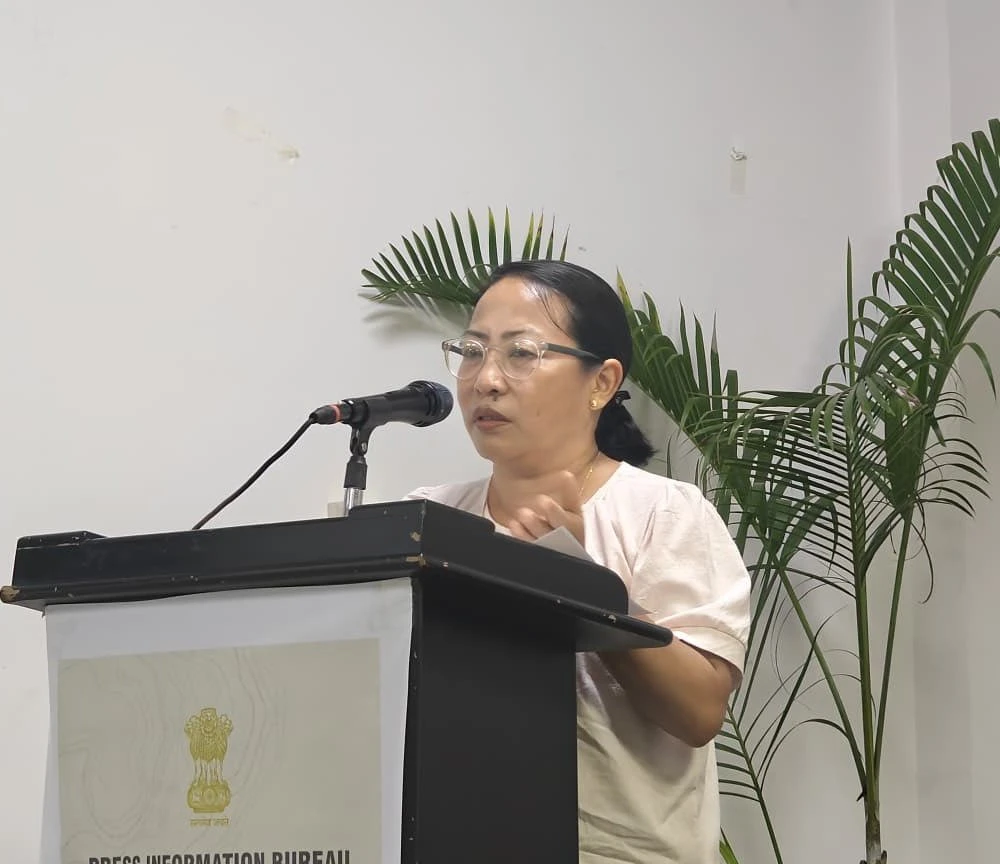
For journalists, Jamir stressed that the foremost responsibility was to “seek the truth” before publishing. She urged reporters to maintain a high degree of accuracy, fairness and impartiality, while treating sources and subjects with due care.
“Yes, there will be defamation suits, no need to worry as long as you’re doing your job,” she said, emphasising that journalists must remain courageous and independent while being accountable to the public.
On reporting criminal cases, she cautioned against “parallel trials” by the media and called for maintaining the presumption of innocence. Journalists, she said, must understand legal terminology and avoid prematurely describing an alleged accused as a “criminal” or “culprit”.
She also highlighted statutory restrictions in cases involving minors, particularly under the POCSO Act, saying absolute anonymity must be maintained and even indirect identification through locality, school or family details should be avoided.
Jamir urged journalists to ensure that “absolute truth published for the public good” remains their strongest defence. She called for clear distinction between fact, allegation, analysis and opinion, careful attribution of information, giving subjects an opportunity to respond, and retaining records and raw materials to demonstrate due diligence.
Awareness, timely reporting key to tackling cyber crime
Kihika Chishi said lack of cyber awareness remains one of the major reasons people fall victim to cybercrime, while urging the public to exercise caution and report incidents without delay.
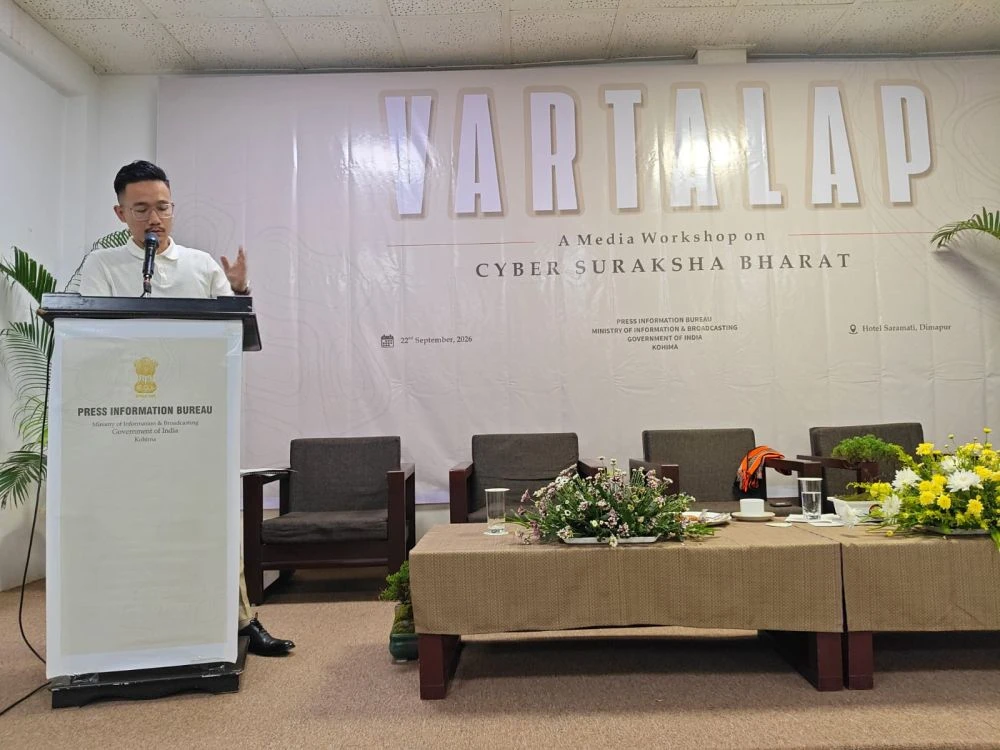
Speaking on the present cyber crime scenario in Nagaland, Chishi said most cases dealt with in the state involve crimes against people, including financial fraud, scams, impersonation and cheating. He noted that in the digital age, the “point of contact” is largely through digital platforms, with scammers using phishing, smishing, vishing, social engineering and fake profiles to target victims.
He said scammers exploit trust in authority, fear, curiosity, emotions and the promise of quick financial gains, while overconfidence also makes some people vulnerable. “The majority of the cases we receive are all because of that financial angle,” he said. Chishi added that anonymity and organised criminal networks further facilitate cybercrime.
He noted the importance of immediate reporting, saying, “One hour in a cyber crime is the golden hour.”
Chishi urged victims of financial fraud to immediately call 1930, report through cybercrime.gov.in, or approach the nearest police station, while preserving screenshots, transaction details and other evidence.
He also advised the public to use available preventive measures, including the Chakshu portal, CEIR, TRAI’s DND service and MHA’s CyberDost platforms.
“Cyber crime does not always begin with sophisticated technology,” he said. “It starts with one careless click or one shared OTP, one weak password.”
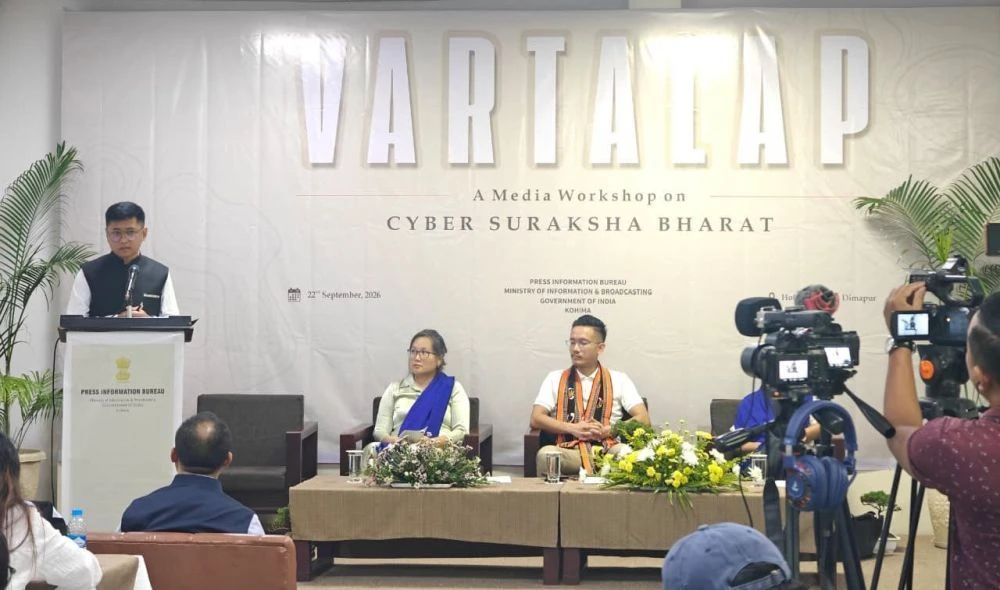
Calling awareness the key to prevention, Chishi urged the media to disseminate cybercrime-related information widely. “Awareness and prevention is perhaps the only, in fact the best tool we have to curb, to mitigate the problem and the menace of cyber crime,” he stated.
Earlier during the event, DPC president Henlly Phom Odyuo called for a streamlined system for smooth dissemination of information and updates from the police to the media.
Speaking at the workshop, Odyuo said cyber crime has become a social issue in Nagaland and not merely a police concern. She said journalists faced the challenge of reporting promptly while ensuring that investigations were not compromised and reports remained legally sound, highlighting the need for closer coordination between the two.
On defamation and journalistic responsibility, she noted that in an age of instant news and social media, the line between reporting, opinion and defamation could blur quickly. “As journalists, we need to understand where freedom of expression ends and where legal liability begins,” she maintained.
She also affirmed the media’s commitment to upholding journalistic ethics and called for the workshop’s discussions to translate into sustained cooperation beyond the event.
P Sophie, IIS, HoO, PIB Kohima, delivered the vote of thanks, while Andrew Lalchhandama, IIS M&CO, PIB Kohima delivered the opening remarks.