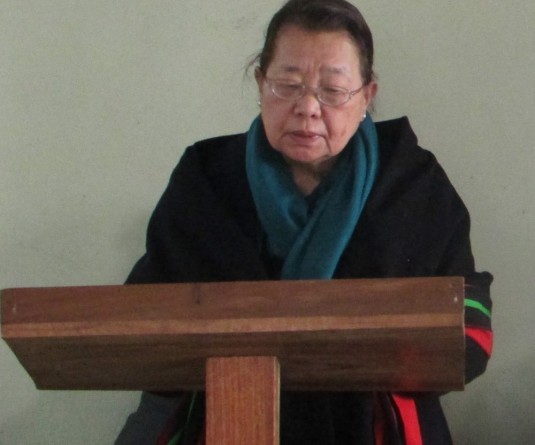
Nagaland Chief Minister Dr Neiphiu Rio virtually inaugurates the Chief Minister’s Yarn Bank Scheme, on the occasion of the 12th National Handloom Day on August 7.
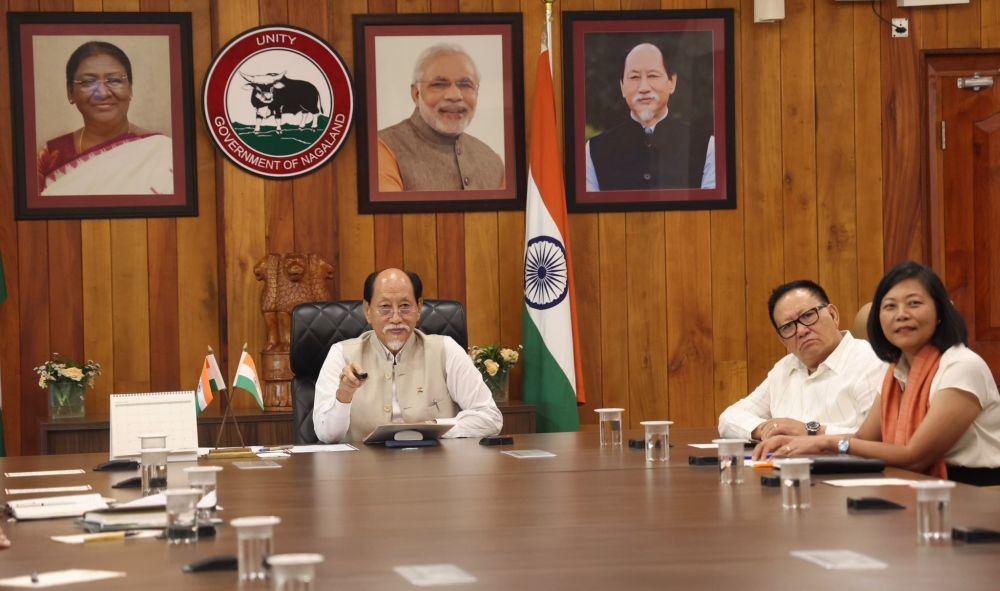
Kohima, August 7 (MExN): Nagaland Chief Minister Dr Neiphiu Rio on Friday virtually inaugurated the Chief Minister’s Yarn Bank Scheme, a flagship initiative aimed at strengthening the state’s handloom sector and providing affordable raw materials to thousands of weavers, on the occasion of the 12th National Handloom Day.
Describing the move as a “landmark step,” Dr Rio said the Yarn Bank, established at the District Industries Centre in the State Industrial Park, Toluvi, Dimapur, will serve as a centralised facility offering high-quality natural yarns including cotton, eri silk, muga silk, bamboo fibre, and other blends at mill-gate prices, with an additional 15% subsidy from the state government.
“Access to good-quality natural yarn at affordable prices has remained a major concern. Many artisans have been forced to travel long distances, bear high transportation costs, and pay inflated prices, affecting productivity and reducing incomes,” Dr Rio said in his address at the Chief Minister’s Residential Complex in Kohima.
The scheme is expected to benefit between 5,000 and 10,000 weavers every year, with eligible artisans holding a Yarn Pass Book able to procure yarn directly through a transparent distribution system, stated a DIPR report.
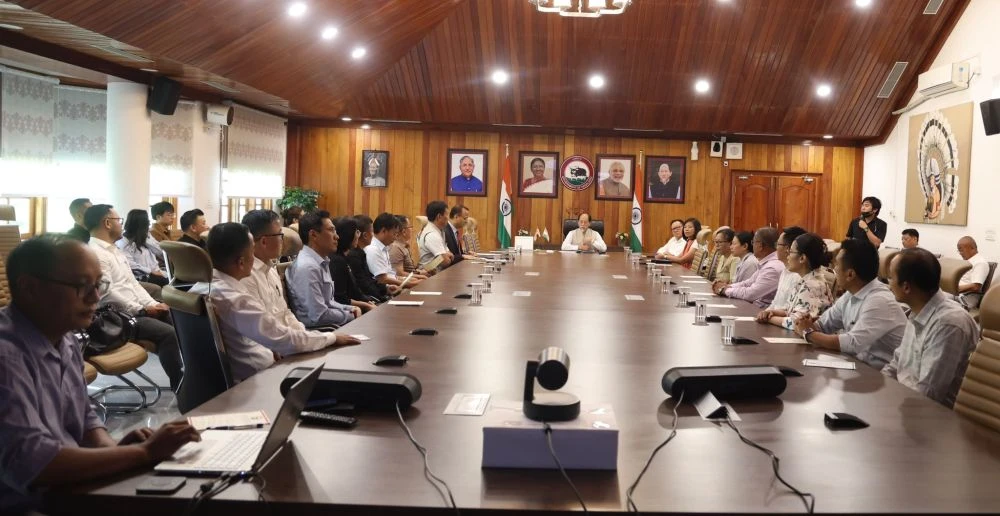
Paying tribute to weavers, particularly women, whom he called the “backbone of the handloom sector,” Rio emphasised that handloom is “not merely a celebration of a traditional craft but a tribute to a living heritage that has shaped the identity, culture and spirit of the Naga people for generations.”
“Every shawl, wrap, and woven motif carries the stories, traditions, and values of the various Naga tribes,” he added, lauding their dedication and craftsmanship in preserving the state’s textile heritage despite changing times.
The CM said the initiative is part of a broader government vision to preserve cultural heritage while creating sustainable economic opportunities, strengthening the rural economy, empowering women, and promoting entrepreneurship.
He called upon all eligible weavers across districts to take full advantage of the scheme and urged government departments, cooperative societies, self-help groups, village institutions, and community leaders to ensure that benefits reach every deserving artisan.
Appealing to the people of Nagaland on National Handloom Day, Dr Rio said, “Renew our collective commitment to protecting, promoting and celebrating the state’s handloom heritage so that traditions passed down through generations continue to inspire future generations.”
He expressed confidence that the Yarn Bank would become a lasting support system for the handloom community and further strengthen Nagaland’s rich weaving tradition.
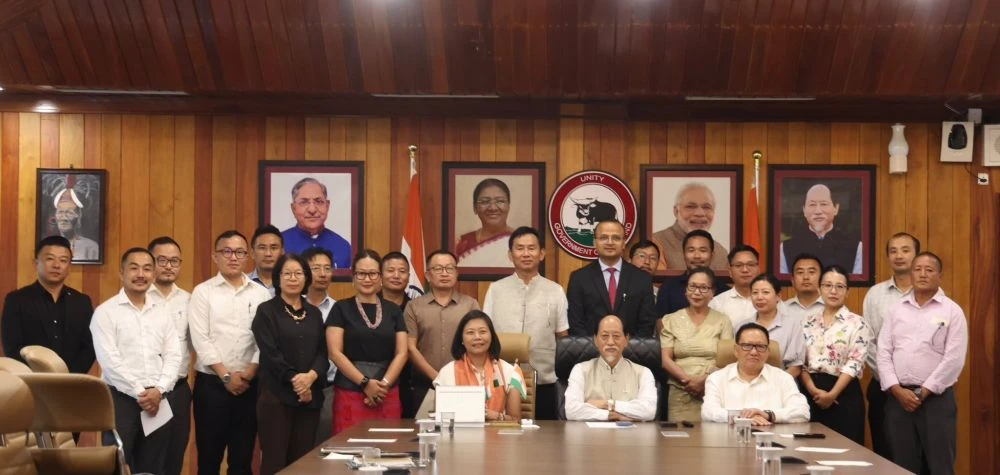
Yarn Bank a ‘transformative’ step for Naga weavers
Advisor for Industries & Commerce, Hekani Jakhalu, described the day as a significant occasion to celebrate India’s rich handloom tradition while honouring the contributions of weavers nationwide.
“The establishment of a Yarn Bank had long been identified as a critical requirement under our textile division. I thank the Chief Minister for consistently supporting this sector,” Jakhalu said.
The Advisor also acknowledged weavers as the custodians of Nagaland’s identity, culture, and heritage, noting that traditional shawls and textiles woven by generations have become symbols through which the Nagas are recognised globally. “Preserving the handloom tradition means preserving the identity of our people,” she stressed.
The Yarn Bank, implemented under the National Handloom Development Programme (NHDP) in line with the Ministry of Textiles’ Raw Material Supply Scheme (RMSS) guidelines, aims to reduce production costs and improve raw material access. Eligible weavers must possess a valid Handloom Mark (HM) Identity Card, be at least 18 years old, and register through a designated mobile application. Verification will be done using the State Handloom Database and census records. Registered cooperative societies with a minimum of ten members are also eligible.
To ensure transparency, the department will set up a real-time digital dashboard for inventory and subsidy tracking, alongside third-party audits, district-level monitoring committees, a toll-free helpline, and a grievance redressal mechanism.
Describing the Yarn Bank as a transformative initiative, Jakhalu expressed confidence that it would positively impact thousands of weavers across Nagaland by improving access to raw materials, enhancing productivity, and strengthening livelihoods. The department is currently updating the state’s weavers’ database to ensure benefits reach genuine artisans.