Nagaland Chief Minister Dr Neiphiu Rio has written to Home Minister urging review of the proposed FCRA amendments. (File Photo)
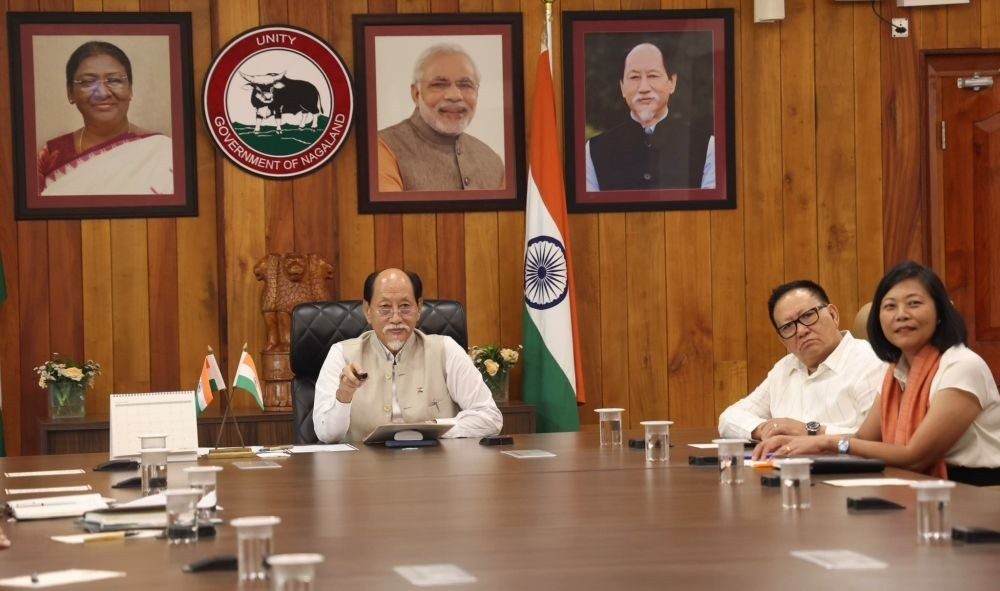
Kohima, August 10 (MExN): Nagaland Chief Minister Dr Neiphiu Rio has urged Union Home Minister Amit Shah to consider with sensitivity the concerns raised by churches and Christian organisations in the State over the proposed amendments to the Foreign Contribution (Regulation) Act (FCRA), warning that the changes could adversely affect welfare, education, healthcare and social-service programmes.
In a letter addressed to Shah, the Nagaland CM said he was writing in connection with the “concerns and apprehensions” expressed by various sections of society, “particularly the Christian community”, regarding the proposed FCRA amendments.
The Chief Minister said the Nagaland Baptist Church Council (NBCC) and the Bishop of Kohima had also made representations to the Union Home Minister, highlighting what he described as “serious difficulties and concerns” faced by churches and associated charitable organisations in the State.
“I would respectfully request that their representations may kindly be considered with due sensitivity and understanding, particularly in the context of the unique social, historical and developmental circumstances prevailing in Nagaland,” Rio stated.
Rio said he had been holding “in-depth discussions and consultations” with Christian leaders to understand the difficulties faced by Christian institutions.
He said another round of deliberations was held on August 9 with the leadership and representatives of the NBCC and the Bishop of Kohima, during which they conveyed concerns over the challenges faced by churches and Christian organisations in carrying out their activities and humanitarian services.
According to Rio, Nagaland has a population of “more than 90 per cent Christians”, and churches have historically played a significant role beyond spiritual and community life.
“Churches have historically played a vital role not only in the spiritual and community life of our people, but also in the fields of education, healthcare, poverty alleviation, social welfare, livelihood support and the upliftment of disadvantaged and vulnerable sections of society,” he stated.
The Chief Minister said a significant number of educational, healthcare, humanitarian and social-service activities undertaken by churches and charitable institutions, particularly in remote and economically weaker areas, had been supported through “legitimate foreign contributions, partnerships and assistance”.
Against this backdrop, he said the increasingly stringent regulatory and compliance requirements under the FCRA had already imposed considerable financial and administrative burdens on churches and charitable organisations.
“The proposed amendments, if implemented in their present form, are likely to further compound these challenges and could adversely impact a number of ongoing welfare, educational, healthcare and social-service programmes in the State,” Rio stated.
He said the impact could be particularly severe on smaller institutions working at the grassroots level.
“The difficulties are particularly acute for smaller institutions working at the grassroots level, many of which operate with limited resources while serving people in remote, underserved and economically disadvantaged communities,” he said.
Concerns over FCRA renewal
Rio also raised concerns over the reported denial of FCRA renewal applications of some church organisations on grounds relating to the alleged utilisation of foreign funds for religious conversion.
He said he had been given to understand that while some church organisations continued to receive foreign contributions, renewal applications of certain others had reportedly been declined on such grounds. In this regard, Rio urged the Centre to take into account Nagaland’s demographic and social context while examining such cases.
“Considering that more than 90 per cent of the population of Nagaland is Christian, such cases may merit careful and sensitive examination in the specific context of the nature and purpose of the activities actually undertaken by the organisations concerned,” he stated.
The Chief Minister cautioned against legitimate charitable and social-service activities being affected by “broad or generalised assumptions”. He further requested that cases where renewal had been denied be reviewed and taken up “with all seriousness”. Rio also called for such cases to be examined individually.
“Given the distinctive social and demographic context of Nagaland, it is important that such cases are examined objectively and on an individual basis, so that genuine charitable, educational, healthcare and social-welfare activities are not adversely affected on account of broad or generalised assessments,” he said.
Role during disasters, COVID-19
The Chief Minister also highlighted the role played by churches and Christian organisations during natural disasters and other emergencies. As an example, Rio pointed to the relief and assistance being provided to people affected by the ongoing floods and landslides.
He also recalled the contribution of churches and Christian institutions during the COVID-19 pandemic, stating that they had mobilised their resources, infrastructure and volunteers in support of affected communities.