Governor of Nagaland and Chairman, NEZCC, Nand Kishore Yadav released two books at the NEZCC Headquarters, Chümoukedima on September 25. (DIPR Photo)
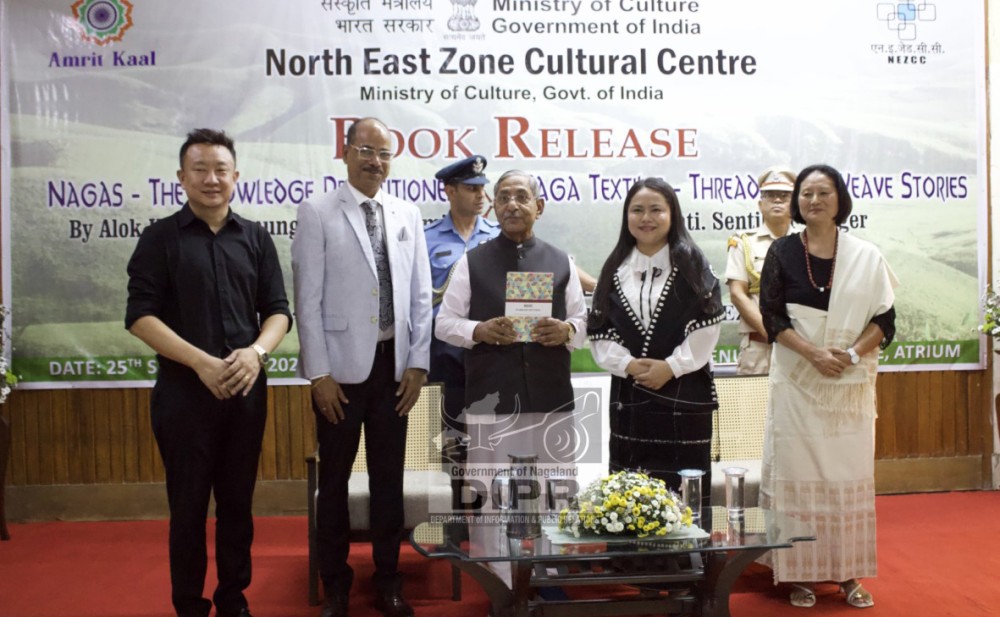
Chümoukedima, September 25 (MExN): Governor of Nagaland and Chairman, North Eastern Zonal Cultural Centre (NEZCC), Nand Kishore Yadav, on Friday released two books, ‘Nagas: The Knowledge Practitioners,’ authored by Alok Kumar Kanungo and Dr Alino Sumi, and ‘Nagaland Textiles- Threads That Weave Stories,’ authored by Sentila T Yanger, at the NEZCC Headquarters, Chümoukedima.
Addressing the gathering, the Governor said the two publications, though dealing with different subjects, brought the rich cultural heritage and knowledge traditions of the Naga people into academic and public focus.
He said both publications conveyed the importance of recognising culture as a body of knowledge created, practised, refined and transmitted across generations, stated a DIPR report.
Speaking on ‘Nagas: The Knowledge Practitioners,’ the Governor said indigenous knowledge should not be viewed merely as folklore, but as knowledge developed through observation, experience, experimentation and adaptation.
He said traditional knowledge relating to agriculture, crafts, technologies, forests, natural resources, rituals and material culture represented valuable knowledge systems developed within communities.
He stated that preservation of Naga heritage should not be limited to preserving physical objects, but should also include preserving the knowledge associated with them.
Referring to the publication on Naga textiles, Yadav said Naga shawls represented more than pieces of cloth and carried identity, memory, social meaning and artistic expression.
He noted that colours, patterns, motifs and weaving techniques reflected knowledge and traditions developed within different communities.
He also stressed the importance of proper documentation of indigenous knowledge, saying that documentation could provide an accessible record for researchers, students, artisans, museums and future generations.
Such documentation should be undertaken with sensitivity to the communities from whom the knowledge originated, with due recognition of their identity, ownership, dignity and intellectual rights, eh stated.
Speaking on the relevance of indigenous knowledge in the present context, he said technological advancement should not lead to cultural amnesia. He encouraged the younger generation to embrace modern education and technology while also understanding the traditional knowledge of their communities.
Traditional knowledge could offer valuable insights into contemporary concerns such as climate change, biodiversity conservation, sustainable agriculture, responsible use of natural resources and sustainable livelihoods, the Governor noted.
He stressed that the challenge was not to choose between tradition and modernity, but to build a meaningful dialogue between the two.
The Governor appreciated the scholars, institutions, researchers, field workers, artisans and elders involved in documenting Naga knowledge and traditions. He encouraged educational institutions in Nagaland to make greater use of such publications and called for more research by young Naga scholars on languages, oral traditions, architecture, agriculture, traditional medicine, music, textiles, craftsmanship and customary institutions.
He stressed the need for village-level documentation of traditional knowledge before it was lost with the passing of its practitioners and called for greater efforts to document, research, teach and transmit Naga traditions to younger generations.
NEZCC Director Alobo Naga, in his welcome address said the two publications were valuable contributions towards documenting and preserving Naga knowledge, traditions, craftsmanship and cultural narratives.
He said NEZCC had been supporting scholars, artists and cultural practitioners in documenting traditional knowledge, folk practices, indigenous art forms and other cultural traditions and stated that such efforts helped preserve aspects of Naga cultural identity and pass them on to future generations.