

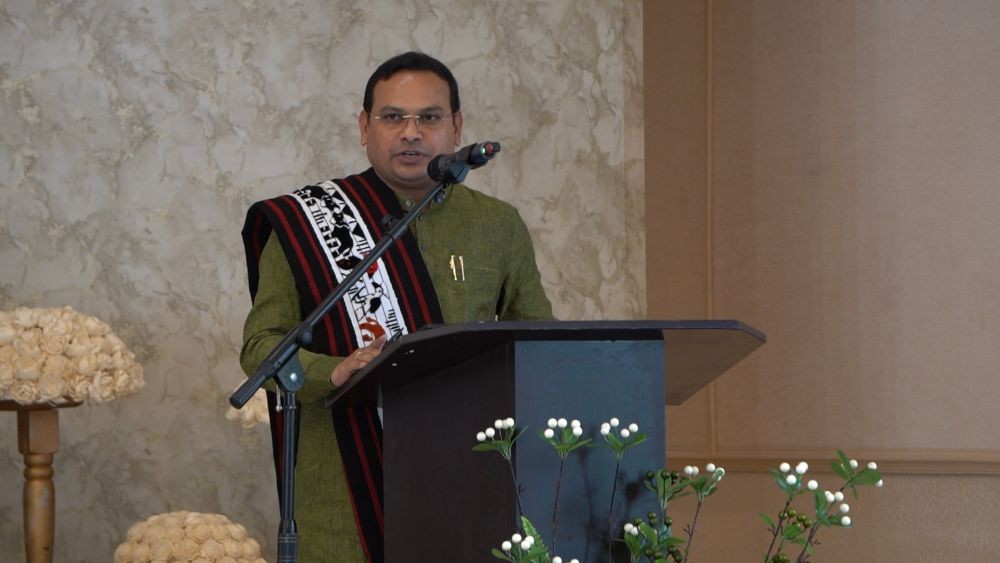
Anandrao V Patel, Additional Secretary, Higher and Technical Education, and Director of Higher Education, Ministry of Education, Government of India. (Morung Photo)
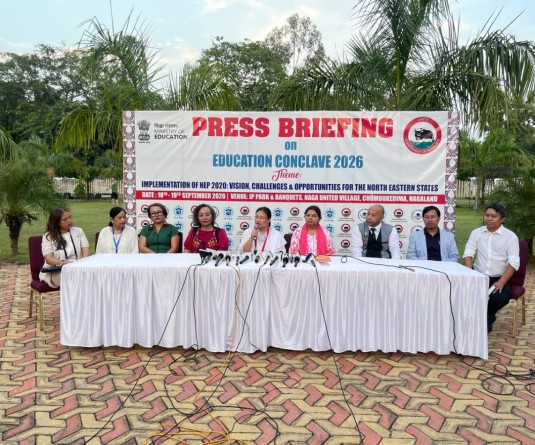
Education Conclave 2026 concludes
Morung Express News
Chümoukedima | September 19
Additional Secretary, Higher and Technical Education, and Director of Higher Education, Ministry of Education, Government of India, Anandrao V Patel stressed the need to move from a degree-centric education system to a “degree plus skills” approach while addressing the challenges of implementing the National Education Policy (NEP) 2020.
Speaking at the valedictory function of the Education Conclave 2026, Patel said the major challenges before the education system include preparing for the demographic dividend, addressing climate change, creating a skilled workforce with multidisciplinary abilities and developing an education system based on the Indian value system.
He said NEP seeks to address these challenges through equitable access, multidisciplinary and holistic education integrated with skills, outstanding research and the development of critical and creative thinking. “Identifying the problem is easy, but solving them is required little more leadership qualities,” he said.
Highlighting the importance of industry-academia collaboration, Patel said students must be equipped with the latest skills being used by industry. Referring to the National Apprenticeship Training Scheme, he said students spending six months to one year in companies are undergoing a “huge transformation”.
He also recalled feedback from students seeking a more dynamic curriculum because industry uses techniques that are not always taught in colleges.
Patel said the target of achieving 50% Gross Enrolment Ratio (GER) by 2035 would require more infrastructure and teachers, along with greater planning. He also called for stronger student mobility among Northeastern states through Multiple Entry and Exit, credit transfer and the Academic Bank of Credits.
He highlighted online and open-distance learning, digital infrastructure, vocational education, research, Indian Knowledge Systems and multilingualism as important components of NEP implementation.
“Teacher and faculty are at the heart of the learning process,” Patel said, while also stressing the need to restore respect for teachers.
He urged institutions in the Northeast to use platforms such as Samarth, SWAYAM and SWAYAM Plus, and strengthen links with industries and institutions across the country to improve skills, research and employment opportunities.
‘True policy success lies only where change is seen in far-flung village'
Tripura Higher Education Minister Kishor Barman, addressing the session as the chief guest said the two-day event should mark “the starting of a new journey for the future of education in the Northeast”, with the focus now shifting from policy to implementation.
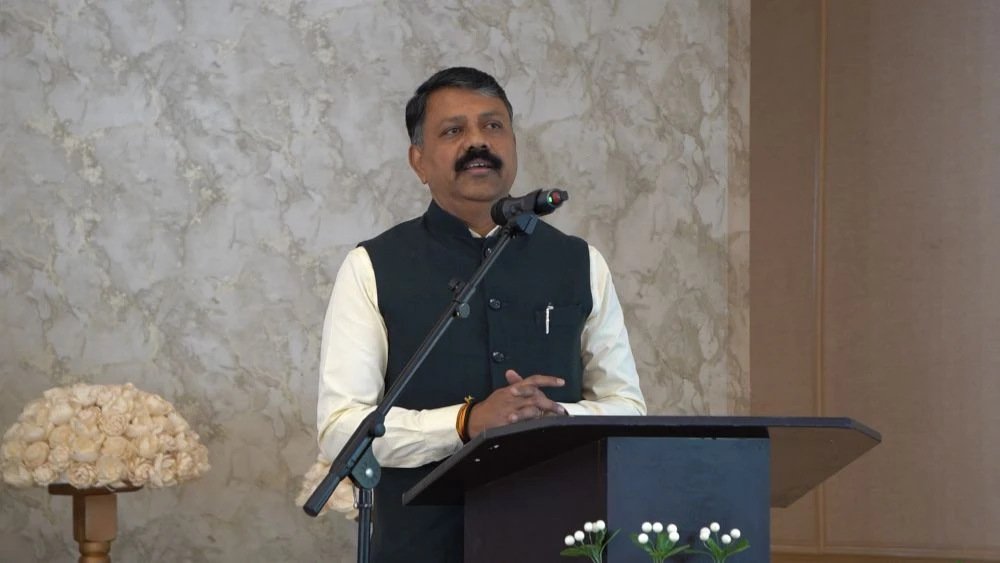
“The true success of a policy lies only when that policy brings a change in the life of a student living in a far-flung village,” Barman said, maintaining that NEP 2020 must go beyond degrees and prepare students to become problem solvers, innovators, entrepreneurs and responsible citizens.
He said the Northeast’s strengths in bamboo, agriculture, horticulture, tourism, sports, biodiversity and traditional knowledge should be linked with education, technology and entrepreneurship. “Bamboo is not just bamboo, bamboo is an industry,” he said, while highlighting opportunities in engineering, product design, architecture, management and digital mapping.
Barman said colleges and universities need to strengthen internships, apprenticeships, skill courses, incubation, entrepreneurship and career counselling. He also stressed on the need for regional faculty networks, shared research infrastructure, student mobility, joint research projects and a common digital platform among Northeastern states.
Barman, who also holds the portfolios of Panchayats and General Administration, outlined five commitments from the conclave—access, quality, skill, research and innovation, and entrepreneurship. He called for turning “brain drain into brain circulation” through alumni networks, research collaboration, investment, mentoring and return-to-region initiatives.
“The Northeast is not the edge of India, the Northeast is a gateway of possibilities for India,” he said, calling for an “Educated Northeast, Skilled Northeast, Innovative Northeast, Entrepreneurial Northeast” and ultimately a Developed India through a Developed Northeast.
“NEP 2020 gives us the policy. This Conclave gives us the direction. Now the responsibility of implementation rests upon all of us,” Barman said.
.jpg)
