

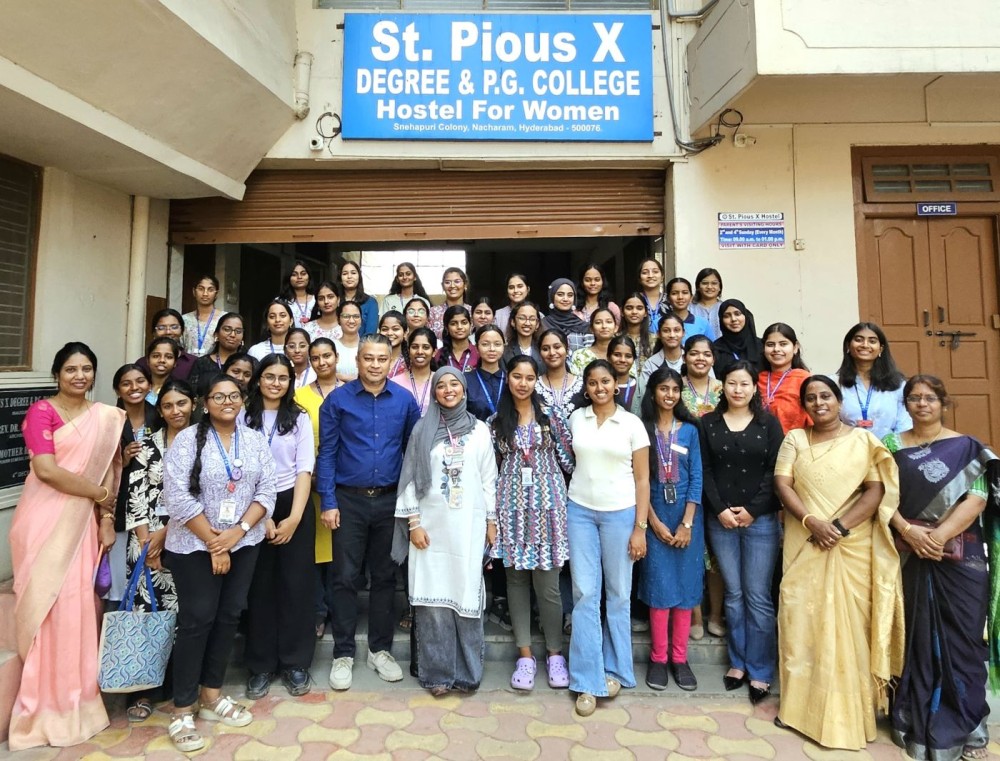
Chümoukedima, February 10 (MExN): A two-day Peacebuilding Training Programme on Peer Mediation was conducted on February 5 and 6 at St Pious X Degree & PG College for Women, Nacharam, Hyderabad.
The event marks step towards institutionalising student-led and peaceful conflict resolution practices in higher education, informed a press release from the Peace Channel.
The programme was jointly organised by St. Pious X Degree & PG College for Women and the North East Institute of Social Sciences and Research (NEISSR) as part of the national peace campaign Peaceful India, Hopeful Youth: Celebrating Diversity, initiated by Peace Channel.
A total of 45 student leaders from colleges across Telangana and Andhra Pradesh participated in the training. Institutions represented included Little Flower Degree College, Loyola Academy, St. Ann’s College for Women (Mehdipatanam), St. Ann’s Degree & PG College for Women (Mallapur), St. Pious X Degree & PG College for Women (Nacharam), and Maris Stella College, Vijayawada.
The programme commenced with an inaugural session featuring a prayer and the lighting of the lamp.
In her welcome address, Sister Dr Velangini Kumari, Principal of St. Pious emphasised g the role of peace-based leadership, ethical values, and social responsibility in contemporary academic settings.
Explaining the rationale behind introducing peer mediation, the release noted that while India’s diversity remains its strength, rising polarisation, intolerance, misinformation, identity-based conflicts, and stress among young people pose growing challenges to social harmony, particularly within educational institutions.
Peer mediation, it added, offers a structured and voluntary process in which trained students assist their peers in resolving conflicts through dialogue, empathy, and mutual understanding rather than punitive approaches.
In the college context, peer mediation was presented as a preventive and inclusive mechanism to address everyday issues such as interpersonal disputes, groupism, classroom conflicts, communication gaps, absenteeism, hostel-related concerns, stress and relationship issues, cultural or identity-related misunderstandings, and minor disciplinary matters.
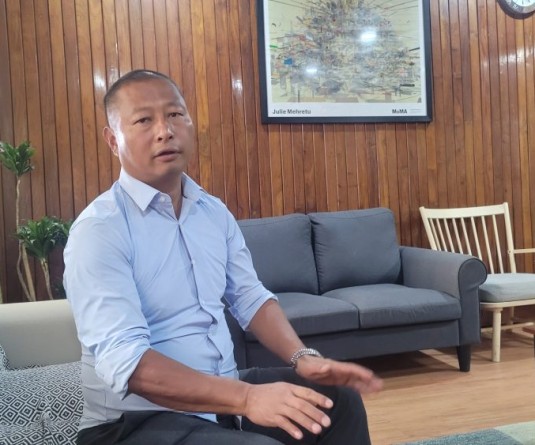
The training sessions were facilitated by Kishor Dass and Saziini Chache, who guided participants through themes including peace and inner peace, tools of peacebuilding, peer mediation, and conflict management, resolution, and transformation. Interactive methods such as group discussions, role plays, and participatory exercises were used to help students engage with real-life conflict scenarios.
A practicum session formed the core of the programme, during which participants identified common campus challenges and demonstrated constructive solutions using the peer mediation process, underscoring its relevance in academic and social environments.
Participants provided positive feedback, describing peer mediation as a timely and necessary intervention for educational institutions. Many noted that the training strengthened their skills in empathy, dialogue, and peaceful problem-solving, while fostering self-reflection, positive behavioural change, and confidence to act as responsible student leaders.
According to the release, the programme aligns with the broader objectives of the Peaceful India, Hopeful Youth campaign, which places young people at the centre of peacebuilding efforts, drawing on Peace Channel’s grassroots experience and NEISSR’s academic expertise in peace and conflict transformation.
.jpg)

.jpg)
