A Anato Swu
Satakha Town
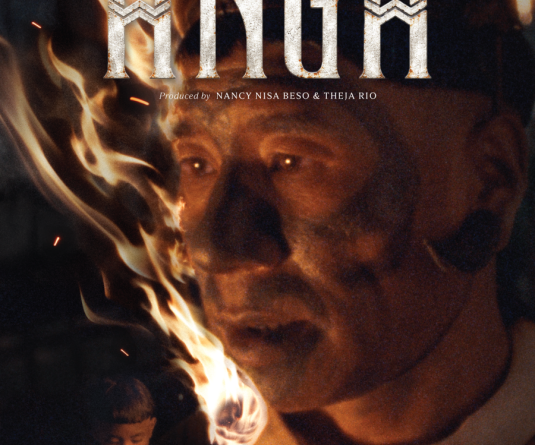
It is time for the Nagas to stoke their own fire—with the wood gathered from the mighty trees that have grown tall and deep-rooted in our political, social and religious landscape, yet have begun to rot from within, infested by the termites of corruption, self-interest, division and moral compromise.
A fire does not die all at once. First, the flames grow smaller. Then the wood begins to smoulder. The warmth gradually disappears, leaving behind only a few glowing embers. Unless someone adds fresh wood and breathes life into the dying fire, darkness eventually takes over.
Perhaps this is where Nagaland finds itself today.
We speak proudly of peace, progress, development, unity and Christian values. We invoke the sacrifices of our forefathers and speak passionately about the future of our children. Yet beneath the speeches, resolutions, political declarations and religious pronouncements, something precious appears to be fading.
The embers of peace are dying. The flames of progress are weakening. And the wood that should be feeding the fire of development is increasingly being consumed by corruption, self-interest, factionalism and division.
This is not an indictment of every Naga. There are countless honest public servants, sincere political leaders, committed church workers, courageous social activists, entrepreneurs, farmers, teachers, students and ordinary citizens who continue to serve Nagaland with integrity. But the question confronting us is whether their good work is being overwhelmed by systems and individuals that have placed personal, factional and institutional interests above the common good.
Nagaland has never been short of schemes, announcements, projects and promises. What we have often lacked is the integrity, efficiency and accountability necessary to turn public resources into lasting public benefit.
The Comptroller and Auditor General (CAG) audit has exposed a deeply troubling picture of financial accountability in Nagaland. As of March 31, 2025, 30 cases involving misappropriation, defalcation, losses and theft, amounting to Rs 1,214.37 crore, remained pending across various Nagaland Government departments. Twenty-five of these cases, involving nearly Rs 1,188 crore, were awaiting departmental and criminal proceedings.
The figures are from the CAG of India's State Finances Audit Report for Nagaland for 2024–25, which was tabled in the Nagaland Legislative Assembly on 3 September 2026. Another CAG finding reported Rs 597.94 crore in excess disbursement over legislative authorisation during 2024–25.
These are not merely abstract figures buried in government reports. Behind every rupee lost, misused or wasted is a road that could have been built, a hospital that could have been equipped, a school that could have been strengthened, a water supply system that could have reached a village, a young person who could have been trained, or a struggling family that could have received assistance.
That is why corruption is not a victimless crime. It steals from the future.
Development money is not political property. It is not a private inheritance. It is not a reward to be distributed among friends, contractors, relatives, supporters or influential intermediaries. It belongs to the people.
When public money is diverted, delayed, squandered or allowed to disappear into administrative darkness, it is not merely the exchequer that suffers. It is the Naga child in a village without adequate healthcare. It is the student without opportunity. It is the unemployed graduate. It is the farmer without infrastructure. It is the elderly person struggling to access basic services.
And this brings us to the question of leadership.
Our political leaders took an oath to serve the people. Many spoke eloquently about sacrifice, justice, development and the welfare of Nagaland when seeking the people's mandate. But leadership cannot end at the ballot box.
A leader who remembers the people only when votes are required has misunderstood the meaning of public service.
Too many political conversations have become centred on power, position, influence, appointments, factions and political survival, while ordinary citizens continue to wrestle with unemployment, rising costs, inadequate infrastructure and limited economic opportunities.
The Naga people deserve leaders who will speak the truth even when the truth is politically inconvenient. Yet our collective voice has sometimes been bartered away—our principles exchanged for the currency of power, patronage, privilege and personal gain.
That is a betrayal not only of the present generation but also of our forebears, who endured hardship and uncertainty while dreaming of a dignified future for the Naga people.
We must therefore ask ourselves some painful questions. What would our forefathers say if they could see what we have done with the inheritance they left us? Would they recognise the unity for which they struggled? Would they recognise the courage with which they confronted adversity? Would they recognise a society where people belonging to the same tribe, community, church and political family can treat one another as enemies simply because they disagree?
These questions become even more important when we look at the unresolved Naga political question, one of the defining issues of our history. After decades of negotiations, the people continue to wait.
The recent appointment of Ajit Lal, former Chairman of the Joint Intelligence Committee, as the new interlocutor for the Indo-Naga political talks, together with the move to bring a Union Minister or a group of Union Ministers into the negotiation framework, has generated renewed hope for progress in the long-running peace process. At the same time, differences over the interpretation and implementation of earlier understandings, particularly the 2015 Framework Agreement and the Agreed Position, continue to pose challenges. The NSCN (IM) has also reiterated its demand for a third-party guarantor for any final political agreement, underscoring the continuing differences over the nature and terms of a political settlement.
The people have heard enough promises. They want a solution that is honourable, inclusive, just and acceptable. They do not want another generation growing up under the shadow of uncertainty. Nor do they want the political question to become an excuse for perpetual division among Naga political groups, parties, tribes, regions and civil society organisations.
Recent calls to rebuild and revitalise the Naga Hoho itself acknowledge how competing tribal and regional interests have weakened one of the institutions intended to represent collective Naga aspirations. If we cannot sit together at one table, how can we expect others to take our collective voice seriously?
The fire of peace cannot be kept alive by political negotiations alone. It must also burn within the conscience of the society that seeks peace.
Nagaland calls itself a Christian state, but Christianity cannot be reduced to the number of church buildings, Sunday services or religious programmes we conduct. The real test of Christianity is found in truth, humility, justice, forgiveness, compassion and integrity.
The Church has an enormous role to play in restoring the dying embers of Naga society. Yet even within the religious sphere, differences of opinion and institutional positions can sometimes become sources of tension rather than opportunities for constructive dialogue.
The current debate over the Nagaland Liquor Total Prohibition Act illustrates this complexity. Civil society groups in Dimapur are again calling for regulated liquor sales, arguing that prohibition has failed in practice, while the Nagaland Baptist Church Council has maintained that violations of the law are not sufficient reason to abandon prohibition and has instead called for stronger enforcement, transparency and accountability.
The debate itself is legitimate. What matters is how we disagree.
A mature society should be able to debate difficult questions without turning disagreement into contempt. Unfortunately, too often, what should be a principled difference becomes a bitter confrontation.
And when spiritual leaders publicly quarrel, undermine one another or allow institutional interests to overshadow the Gospel they preach, the congregation suffers.
Nagas are longing for revival, but revival cannot flourish in an atmosphere poisoned by pride, rivalry, suspicion and unforgiveness.
We need fewer religious power struggles and more spiritual brokenness. Less condemnation and more compassion. Less institutional competition and more kingdom-minded cooperation. Less noise from the pulpit and more truth in our lives.
The same weakening of our collective spirit can be seen in the wider social fabric.
Our forefathers understood the value of community. The village was not merely a collection of houses; it was a living organism where people depended on one another.
Today, tribalism, factionalism, regional interests, personal loyalties and competing institutional agendas increasingly threaten that communal spirit. Even among people who share the same history, language, faith and aspirations, disagreement can quickly become division.
Young Naga voices are increasingly demanding clarity, unity, reconciliation and meaningful democratic engagement on the political question, while also raising concerns about tribalism, economic disparity and opportunities for the younger generation.
This should tell us something important.
The younger generation is watching.
They are watching our leaders. They are watching our churches. They are watching our tribal organisations. They are watching how we handle disagreement. And they are asking whether the Nagaland we are leaving behind is really better than the Nagaland we inherited.
The answer cannot be found in political speeches alone. It must also be reflected in the economic opportunities we create for them.
Economic progress cannot be measured merely by the size of a budget or the number of projects announced. Nagaland's economy has recorded growth, but the state's fiscal position remains under pressure. Rising liabilities, committed expenditure and limited fiscal space continue to make it difficult to devote sufficient resources to productive capital investment.
More troubling still is the employment situation. Too many young people acquire an education only to discover that there are too few meaningful opportunities at home. For them, the natural response is migration. They leave for cities and states where they believe their education and abilities will have greater value.
Migration, in itself, is not necessarily a problem. But when young people leave because they see little hope of building a meaningful future in their own homeland, it should make us pause. It means frustration. It means dependency. It means families spending scarce resources to educate children who eventually leave Nagaland because they see little future here.
Meanwhile, the gap between those who possess wealth, influence and connections and those struggling to survive is becoming increasingly visible.
A society cannot call itself prosperous simply because a few people have become extremely prosperous. Prosperity must reach the hearths of ordinary people.
But political and economic leaders alone cannot carry the blame. Our social leaders, tribal bodies, civil society organisations, intellectuals, professionals and community elders also carry a profound responsibility.
Leadership is not merely about holding a title. It is about having the courage to stand up when something is wrong.
There have been moments when Nagaland desperately needed courageous voices—voices willing to challenge corruption, question injustice, defend the vulnerable, demand transparency and call both politicians and institutions to account.
Too often, however, we have remained silent until an issue affects our own backyard. We speak loudly when our tribe, village, church or organisation is affected, but quietly when injustice is committed against someone else.
That is not justice. That is selective morality.
Nagaland does not need more people who merely occupy leadership positions. It needs people with the moral courage to exercise leadership.
Perhaps this is where the image of the mighty trees becomes relevant.
Every forest eventually needs the clearing of dead and diseased trees if the healthy ones are to survive. The same is true of society.
We cannot keep protecting every “mighty tree” simply because it has grown tall, acquired influence, accumulated wealth or survived for decades. Some trees in our political, social and religious institutions have grown so large that people are afraid to question them. Some have become so deeply rooted in patronage, factionalism, corruption, entitlement and self-interest that ordinary people feel powerless beneath their shade.
But a tree that is diseased from within can eventually infect the entire forest.
The termites of corruption must be exposed. The branches of nepotism must be cut back. The deadwood of hypocrisy must be removed. The roots of tribal hatred, greed and personal ambition must be confronted.
This does not mean destroying people. It means dismantling unhealthy systems, rejecting corrupt practices and refusing to worship personalities.
We must learn to distinguish respect for elders from unquestioning obedience to them. We must distinguish loyalty from blind allegiance. We must distinguish unity from silence. And we must distinguish peace from the mere absence of open conflict.
True peace is not everybody agreeing with everybody else. True peace is the ability to disagree without destroying one another.
Yet, despite all that is troubling around us, the embers are not yet dead.
There are still honest people in Nagaland. There are still courageous young people. There are still principled pastors, priests and church workers. There are still public servants who refuse to compromise their integrity. There are still teachers who believe in their students, farmers who continue to work their land, entrepreneurs who create opportunities, civil society workers who speak truth to power, and ordinary citizens who quietly do extraordinary things.
The fire can still be revived.
But somebody must bring the wood. Somebody must strike the match. And somebody must have the courage to remove the rotten timber that is smothering the flame.
Perhaps that is the task before this generation of Nagas.
Let us gather the courage to confront the diseased giants standing in the way of our collective progress—not out of hatred, revenge or political vendetta, but out of love for Nagaland and concern for generations yet unborn.
Let us replace corruption with accountability, self-interest with public service, tribalism with brotherhood, division with dialogue, arrogance with humility, religious rivalry with spiritual revival, political opportunism with statesmanship, economic dependency with enterprise, and empty promises with measurable action.
The hearth of Naga society must not go cold.
Our forefathers handed us embers purchased with sacrifice. We have no moral right to allow those embers to die because of our greed, division and indifference.
It is time to stoke the fire again.
And if some mighty trees—however powerful, celebrated or deeply rooted—must be felled to keep that fire burning, then let them fall.
Not so that one group may triumph over another, but so that peace, harmony, justice, stability, development, progress and prosperity may once again find a home among the Naga people.
For unless we have the courage to confront the giant trees of corruption, complacency, division and moral decay that now dominate our political, social and religious landscape, we will continue to watch the embers of our collective future fade into darkness.
Nagaland deserves better.
Our children deserve better.
And the Naga people must rise to become the change we have been waiting for.