

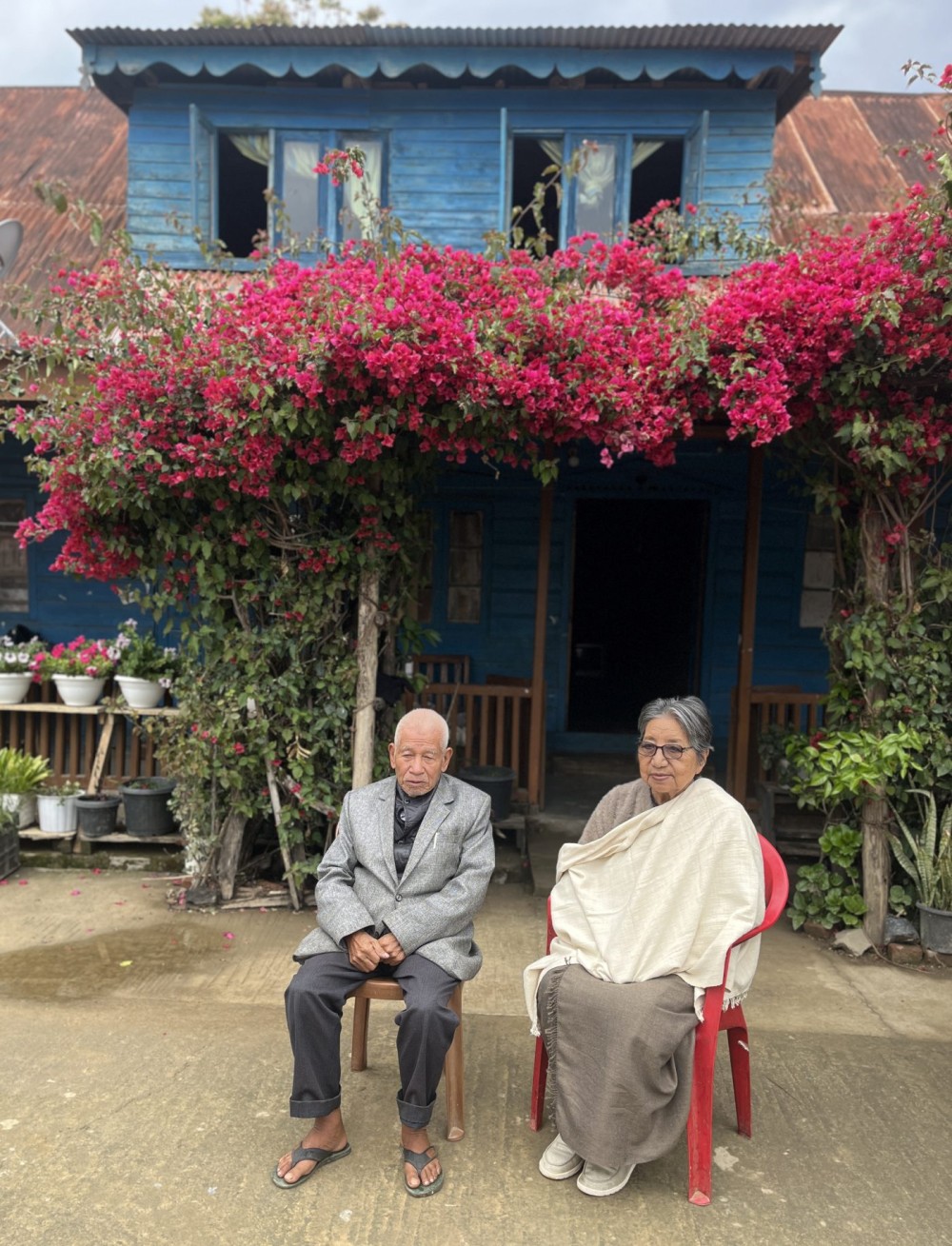
Twenty-seven years after the events of September 6, 1999, Chizami keeps its history alive
N Arhe
The road to Chizami village in Phek district winds through a spectacular canvas of jagged peaks, ancient terraced fields and villages that cling to steep mountain slopes. Beneath this landscape lies a history marked by trauma. The mist over the ridges still recalls the events of September 6, 1999, when the village endured three days that remain vivid for a generation.
In the 1990s, Nagaland was deeply divided. The Naga movement for sovereignty had curdled into a fratricidal nightmare, splintering into armed factions that turned their barrels toward each other. As the factions fought, a different kind of resistance emerged: mothers, elders, and civic leaders who relied on cultural wisdom to maintain peace.
On September 6, 1999, that wisdom faced its greatest test.
About 30 armed members of the National Socialist Council of Nagaland (Isak-Muivah), or NSCN (IM), entered Chizami village and set up a temporary camp. Their arrival caused widespread alarm, prompting residents to abandon the streets, secure their homes, and extinguish their hearths.
The cadres immediately summoned Village Council Chairman K.Z Mero and demanded the collection of a “house tax” from every household.
The chairman, accompanied by the Gaon Buras (village elders), went door to door through the quiet village. They collected cash, recognizing it was the price for the community's safety.
By afternoon, the situation escalated. News spread that a rival faction, the Federal Government of Nagaland (FGN), had arrived and positioned itself in the staff quarters near the Government School on the village ridge.
Chizami was caught between two hostile factions.
Two heavily armed factions occupied opposite ends of the village, monitoring each other's movements. Civilians were trapped between them, anxious and hoping violence would not erupt.
For three days, the Chairman and village elders moved between the two camps, pleading, invoking custom, and urging the commanders to resolve their conflict elsewhere. Each time, they encountered rigid rhetoric and no willingness to compromise.
With each failed negotiation, a sense of paralysis grew in Chizami. The elders felt increasingly helpless, aware that a single mistake could lead to disaster.
As dusk fell on the third day, September 8, a vehicle arrived at Chizami village junction. Three people stepped out: Mülhüpra Vero, President of the Naga Hoho; Neidonuo Angami, President of the Naga Mothers’ Association (NMA) and Vihuto Yepthomi, General Secretary of the Naga Hoho.
The three civil society members were in Phek town addressing another crisis when they learned of Chizami’s situation. They traveled to the village immediately to intervene.
At the main highway junction, they found the village men gathered by the roadside. The women and children, they later learned, had been moved to safety. The three leaders met the anxious crowd and, with Chairman K.Z Mero, went to the village council hall to meet the NSCN (IM) cadres. When the talks stalled, they visited the FGN camp, but that meeting proved equally futile. The three members then returned to the Chairman’s house to reflect on their next steps.
At the Chairman’s house, a messenger delivered a command from the IM camp: the Chairman must report to the NSCN (IM) cadres immediately. Sensing a potential threat, Naga Hoho General Secretary Vihuto Yepthomi stood up. “I'm driving you there,” he insisted, refusing to let the Chairman go alone.
The atmosphere at the IM camp was tense. The cadres suspected Chairman K.Z Mero of colluding with the rival FGN and were wary of the sudden arrival of the three civil society members.
As soon as the car stopped, armed cadres surrounded it and grabbed the Chairman’s arm. Vihuto Yepthomi lunged across the seats, held onto the Chairman, and tried to prevent them from taking him.
For a few seconds, a struggle ensued. Armed cadres pulled one arm while an unarmed elder held the other.
The cadres eventually overpowered Yepthomi. They took the chairman, bound his wrists behind his back with plastic rope, placed him in an empty room, and shut the door.
Back at the Chairman’s house, Mülhüpra Vero and Neidonuo Angami received the news. Armed only with a kerosene lantern, they walked into the dark, unfamiliar road toward the IM camp. They met a shaken Yepthomi on the way and together, approached the NSCN IM makeshift camp.
For five hours, the three civil society leaders requested the Chairman’s immediate release and the withdrawal of the group from the village.
The local commander, growing impatient, stated he could not make such decisions without direct authorization from his “High Command.”
At that moment, Naga Hoho President Mülhüpra Vero stood up. “I am the High Command,” he said, his voice clear and authoritative.
Before the cadres could respond, Neidonuo Angami stepped forward, bringing the moral authority of the Naga Mothers' Association. She looked the young cadres in the eyes and said, “If you will not listen to your father, then listen to your mother.”
By appealing to the deeply held Naga values of respecting community elders and honoring mothers, the cadres' bravado faded.
They withdrew briefly to consult and soon returned with news that the Chairman would be released, on the condition that he would be solely responsible if anything happened to them. Shortly after 2:00 AM, K.Z Mero emerged, his wrists bruised but his life spared. He went home to rest, while the three members were escorted to the church to rest for a few hours.
The next morning, the NSCN (IM) prepared to leave but did not depart quietly. They split into three groups and fired blank shots to assert dominance over the FGN and the villagers.
As they left, some of the retreating men ransacked Chairman K.Z Mero’s home before moving toward the FGN camp. A brief firefight left one FGN member injured; he was taken to the hospital and survived. The IM cadres then pursued the FGN men into the jungle and ate the meal their rivals had left behind.
They remained in the village until sunset before leaving for the next village. As they departed, they demanded fresh rations, rice, and a pig be delivered to them in a neighboring village. As they crossed the village perimeter, a single gunshot marked the end of seventy-two hours in Chizami.
The village men delivered the supplies to the cadres in the next village on September 10. Upon receiving the rations, a final message was sent to the Chairman that “the faction no longer held a grudge against him or his village.”
Chizami began to recover from the ordeal.
Lhikhwerù-u Wezah, an elderly woman from the village, brought a jar of fresh milk to the church where the three civil society members were resting the following morning. She offered it with a quiet blessing, expressing gratitude for their role in protecting the village.
Today, K.Z Mero is ninety-five years old. He still recalls the texture of the plastic rope, the damp smell of the room, and the certainty he would not survive. He knows his life was spared by the actions of three people.
Years later, the elderly Chairman contacted Neidonuo Angami, the only surviving civil society member, to thank her and her team again on behalf of himself and the people of Chizami.
In 2025, on Chizami Village Day, the 95-year-old K.Z Mero addressed a new generation: young people born after the conflict, who have only known peace. He shared the story of September 1999, emphasising that their peace was not accidental. He reminded them that the village was once held hostage and reclaimed by individuals who believed that words, honour, and moral clarity could overcome violence.
Decades after the crises of the nineties, Chizami has transformed. It is now recognised across the state as a model of progressive, inclusive governance. The village has an equal-wage system for all labourers, regardless of gender. Women hold equal positions on governing boards, manage seed banks to preserve biodiversity, lead environmental conservation, and have developed traditional weaving into a global art form.
By choosing conscience over conflict, Chizami serves as a beacon of what a community can achieve when it refuses to be defined by resentment.

