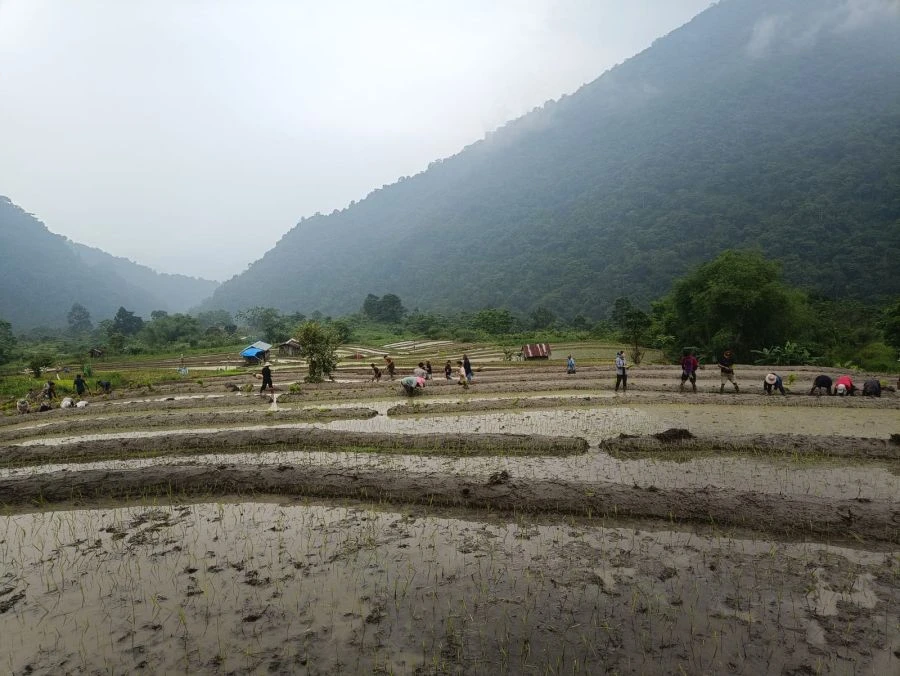
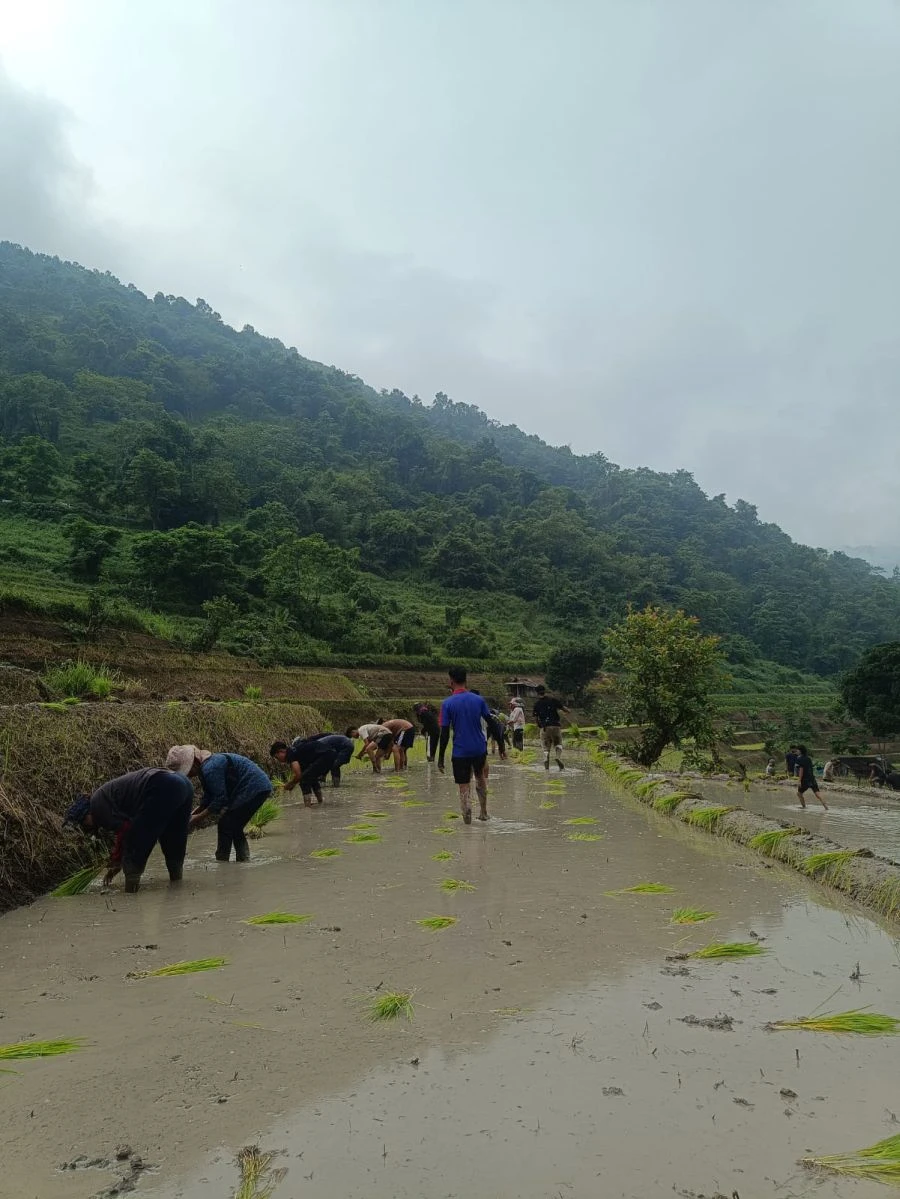
Youth of Kilomi and Khughutomi villages came together to work in the fields to earn wages for hosting Tuluni.
.jpg)
Vitolu Kiho
Kilomi Village, Zunheboto
This year, a quiet but meaningful celebration unfolded. The youth of Kilomi and Khughutomi villages made a collective decision to come together and host Tuluni. It was an event powered entirely by the younger generation.
Celebrating tradition in modern times, however, demands real effort and responsibility. To ensure that the celebration could happen and that all expenses were met, the youth came together to work in the fields to earn the necessary wages. Between 70 to 80 young people from both villages laboured under the summer sun. It was heavy physical work, but the day was carried by constant laughter and a shared warmth that naturally made the long hours feel lighter.
As a part of the festival preparations, the village men set out on to clear the traditional paths, keeping alive the age-old practice of cleansing the community’s roads before Tuluni begins. As the big day drew near, peers from nearby towns migrated back to the village to join the gathering. Registration was taken, ensuring that every expense was proudly self-funded. The youth also dedicated their time to clearing the playground, decorating the main stage, and preparing the venue.
Beyond the vibrant cultural program, this joint effort revived the foundational values of the festival. Tuluni has never been about mere grandeur, its true spirit lies in community care ensuring that the vulnerable, the elderly, and breastfeeding mothers are looked after and never left out. This youth-led initiative carried that exact same heart.
By bringing Kilomi and Khughutomi together, the youth did more than just host a successful event; they honoured an ancestral bond and celebrated a shared migratory history. It proved that culture remains fully alive not through formal staging, but when the next generation is willing to sweat for it, care for one another, and carry the torch forward together.