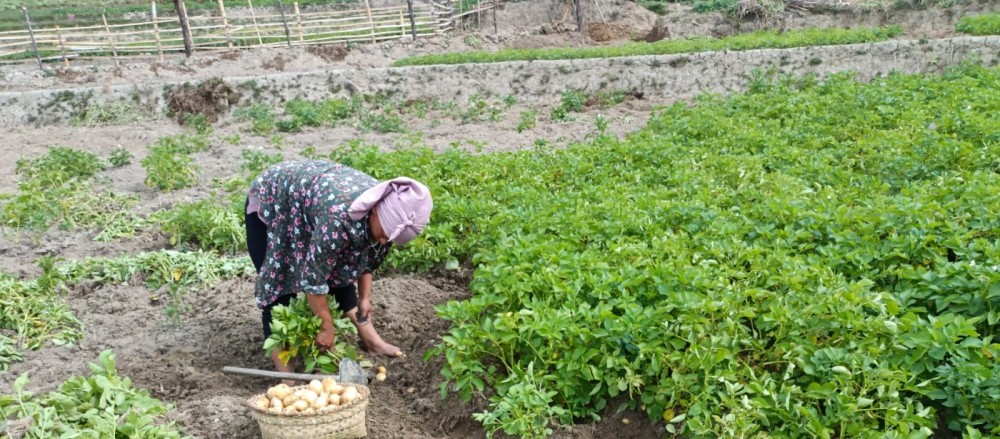
Women farmer harvesting potato in a terrace field. (Photo Courtesy: NU)
Lumami, June 15 (MExN): A study by Nagaland University has found that traditional ecological knowledge continues to serve as the primary driver of terrace farming among the Angami Naga community, offering valuable lessons for sustainable agriculture and food security at a time of growing climate uncertainty.
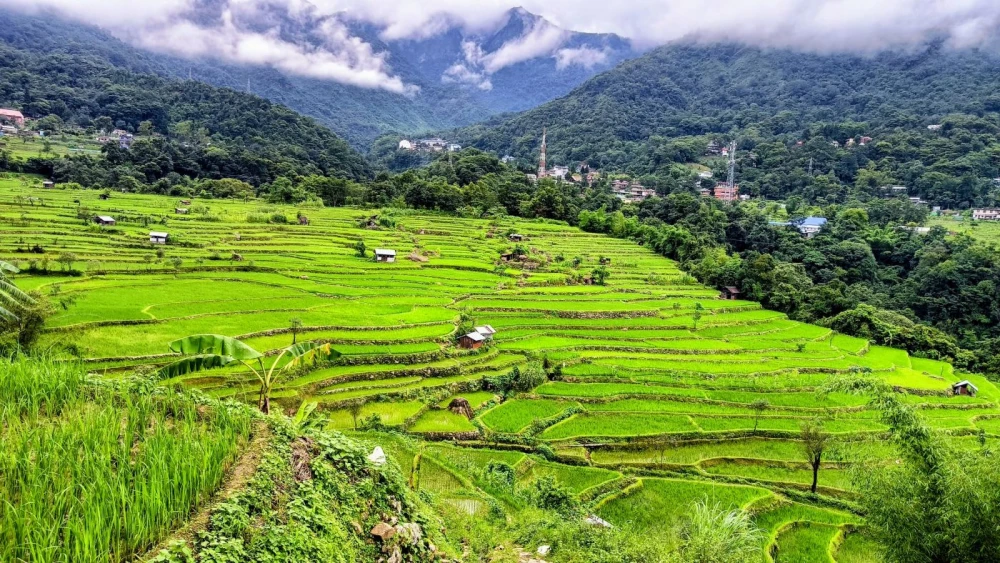
The findings, published in a WoS/Scopus-indexed SAGE journal, reveal that the sustainability of Angami terrace cultivation rests on the integration of ecological practices, social cooperation, and cultural traditions passed down over generations, going well beyond the technical aspects of terrace construction that earlier research had examined.
The study found that Angami Naga farmers continue to schedule planting, transplanting, and harvesting using natural indicators such as plant bloom times, bird behaviour, and insect activity rather than relying on modern agronomic calendars.
Traditional terrace construction methods were found to significantly reduce soil erosion while enabling efficient water utilisation. The sustained use of organic inputs over chemical fertilisers further reflects the community's commitment to environmental protection and human health, the study noted.
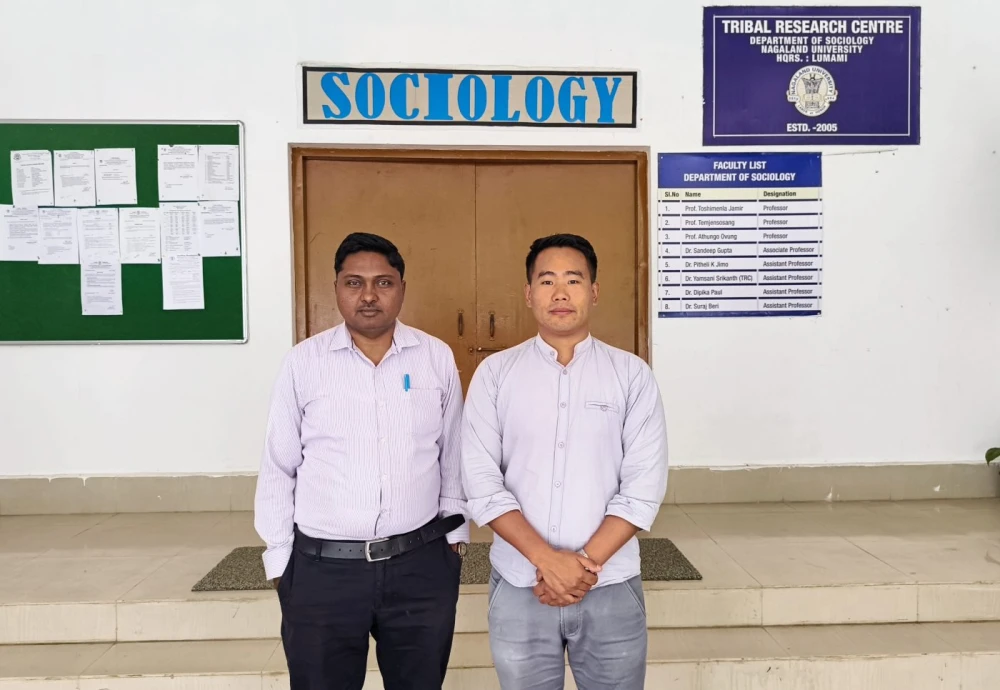
Lead researcher Dr Srikanth Yamsani, Assistant Professor at the Tribal Research Centre, Department of Sociology, Nagaland University, said the study underscores the adaptive capacity of indigenous knowledge systems in the face of modern agricultural challenges.
“Our study found that the Angami Naga population continues to practice farming in close association with cycles and signs of nature,” Dr Yamsani said, adding that emerging challenges such as changing rainfall patterns and climate variability made it all the more important to document and preserve such systems.
Unlike previous research that focused on the technicalities of terrace farming, this study examined the social, cultural, and ecological knowledge systems that underpin the practice, an approach the authors say can inform both policy and development programming.
Nagaland University Vice-Chancellor Prof Jagadish Kumar Patnaik said the research demonstrated that indigenous knowledge is “not merely a legacy of the past but a living system that contributes significantly to sustainable development and environmental stewardship.”
“The findings show that the sustainability of Angami terrace cultivation rests on the harmonious integration of ecological practices, social cooperation, and cultural traditions. At a time when the world is seeking sustainable and climate-resilient agricultural solutions, such research underscores the relevance of indigenous knowledge systems,” Prof Patnaik said.
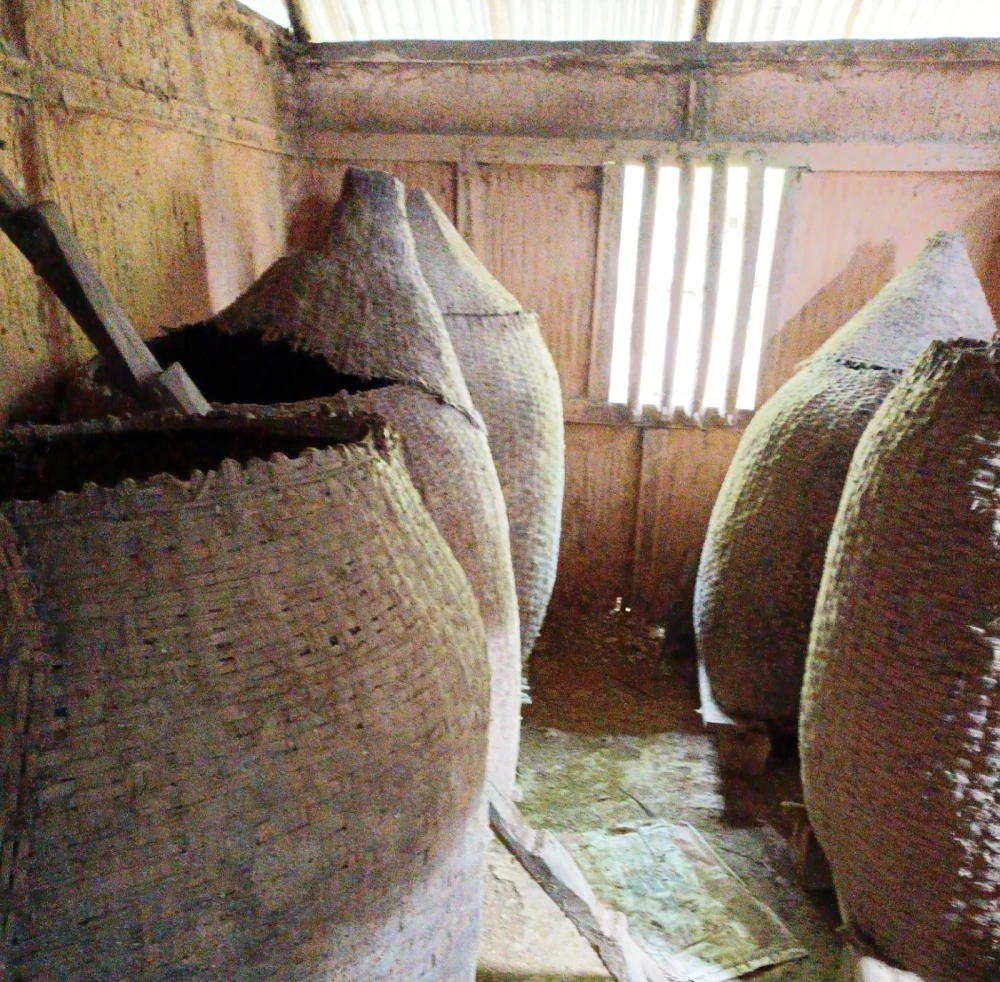
He added that the study offered “valuable insights into the sophisticated methods of soil and water management developed by the Angami community over generations.”
North-East India is characterised by diverse farming practices shaped by varied agro-climatic zones and deeply rooted indigenous traditions. While shifting cultivation remains the predominant farming method in Nagaland due to its undulating topography, the Angami Nagas have practised terrace cultivation for centuries, a tradition this research now links explicitly to an elaborate indigenous knowledge framework.
The research is based on doctoral work conducted by Ketekhoto Neihu under the supervision of Dr Yamsani at the Tribal Research Centre.
The study's findings are expected to support national efforts on food security and sustainable agriculture, while also providing a policy framework to protect indigenous communities' right to use culturally appropriate agricultural methods in development programmes.
The authors argue that the Angami experience presents a replicable model, one where modern science and traditional knowledge systems can converge to address contemporary challenges in food production and environmental management.