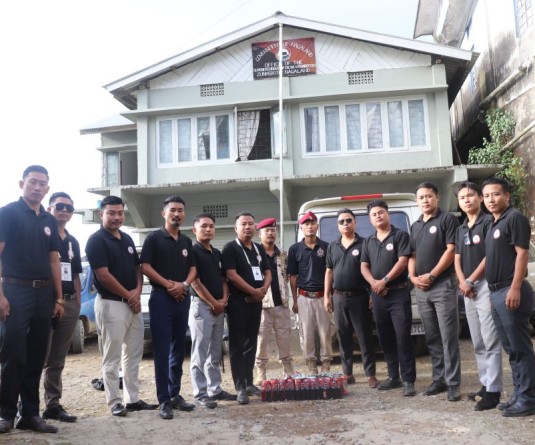
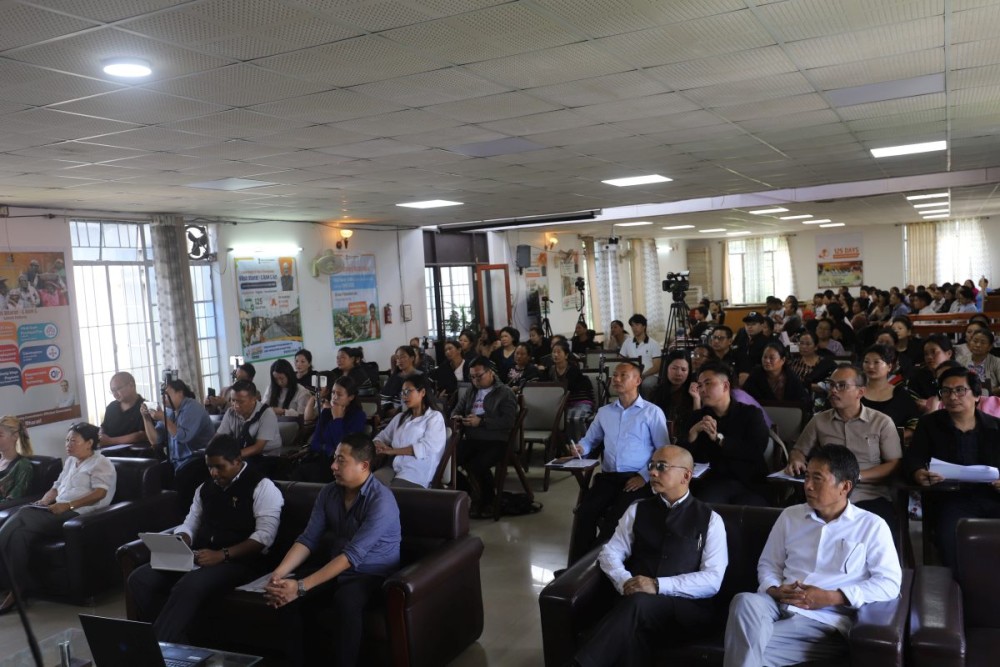
Dignitaries and others joins nationwide launch programme of VB-G RAM G on July 2 in Kohima. (Morung Photo)
• Statutory guaranteed work days increased from 100 to 125 days
• Minimum daily wage set at a baseline of ₹300 nationwide.
Our Correspondent
Kohima | July 2
Nagaland today joined the nationwide launch of Viksit Bharat–Guarantee for Rozgar and Ajeevika Mission (Gramin) (VB-G RAM G) at the conference hall of Rural Development (RD) department, Kohima.
The VB-G RAM G Act, 2025 has come into force across rural India on July 1 with the promise to usher in a strengthened framework for rural employment, livelihood security and sustainable village development.
Marking the national rollout of the Act, Union Minister for Rural Development and Agriculture & Farmers' Welfare Shivraj Singh Chouhan officiated the nationwide formal launching programme from Tirupati, Andhra Pradesh.
The Act enhances the statutory wage employment guarantee from 100 days to 125 days for every eligible rural household and seeks to create durable rural assets while accelerating the vision of Viksit Bharat @2047.
The Government also notified revised wage rates under the VB-G RAM G Act, 2025, for all States and Union Territories.
Under this, no notified daily wage anywhere in the country will be below 300 rupees while the national average notified wage has been enhanced by over 10 per cent from 298.8 rupees per day to Rs 327.4.
‘VB-G RAM G will strengthen rural development in Nagaland’
In keynote address during the virtual launching event, Thavaseelan K, Commissioner & Secretary for Rural Development (RD), Nagaland informed that VB-G RAM G replaced the 2005 MGNREGA framework.
“This launch marks a significant milestone in our collective efforts to strengthen rural livelihoods and realize the vision of a Viksit Bharat through empowered villages, resilient communities, and sustainable economic growth,” he said.
Stating that that Nagaland possesses immense potential in agriculture, horticulture, handicrafts, handloom, bamboo, and other rural enterprises, Thavaseelan said, “By combining our rich traditional knowledge with modern technology, innovation, and stronger market linkages, we can create sustainable livelihoods opportunities.”
VB-G RAM G is also founded on the principles of digital governance and evidence-based planning.
This includes GIS Mapping and Geo-tagging of public assets and development works to enable location-based planning, transparent monitoring, and effective asset management; Mobile-based Data Collection, including e-KYC; the National Mobile Monitoring System (NMMS), enabling field functionaries to capture real-time information directly from villages; and Participatory Planning, empowering Village Development Boards (VDBs), Village Councils (VCs) , Self-Help Groups SHGs), and local communities to identify priorities, prepare development plans, and monitor outcomes.
Thavaseelan highlighted that the VB-G RAM G scheme places focus on four thematic layers of work.
It includes Water Security through irrigation, groundwater recharge, water conservation, and watershed development; Core Rural Infrastructure by improving roads and connectivity to enhance access to markets and essential services; Livelihood Infrastructure through the creation of storage facilities, markets, and productive community assets that support rural enterprises; and Climate Resilience by undertaking works that mitigate the impacts of extreme weather events and strengthen the adaptive capacity of rural communities.
The contribution of the SHGs under VB-G RAM G, will become even more significant as they promote livelihood opportunities, strengthen community institutions, and support inclusive rural development, the Commissioner & Secretary noted.
He urge all District-level officers, Block Development Officers, VDBs, Village Councils, Village functionaries, and every stakeholder to embrace the initiative with commitment and a spirit of collaboration.
Thavaseelan further expressed hope that the VB-G RAM G scheme will significantly strengthen rural development in Nagaland, create sustainable livelihood opportunities, and improve the quality of life.
‘Follow the Ministry guidelines’
“This initiative is not just a scheme, but commitment to strengthening rural livelihood, creating employment opportunities, and improving the overall qualities of life in our villages,” maintained State RD Director M Mongna Konyak.
She was optimistic that VB-G RAM G will bring transformative change in the lives of community and contribute significantly to the nation's development.
“The success of this scheme depends on our collective efforts, dedication, and sincerity in its implementation,” Konyak held, reminding all the concerned officers and stakeholders to follow the Ministry guidelines and ensure that the benefits of this program reach every deserving household.
“Let us work together with a sense of responsibility and purpose to make this initiative a true success. Let us move forward with determination and commitment for the welfare of the people we serve,” the Director added.
RD Deputy Director Jenny Kath, meanwhile, said that the launch marked a new beginning and a new chapter for collective effort towards sustainable rural development, employment generation and improved livelihood.
Earlier, RD Deputy Director John Wesley Magh presented an overview of VB-G RAM G scheme and Viksit Gram Panchayat Plan.