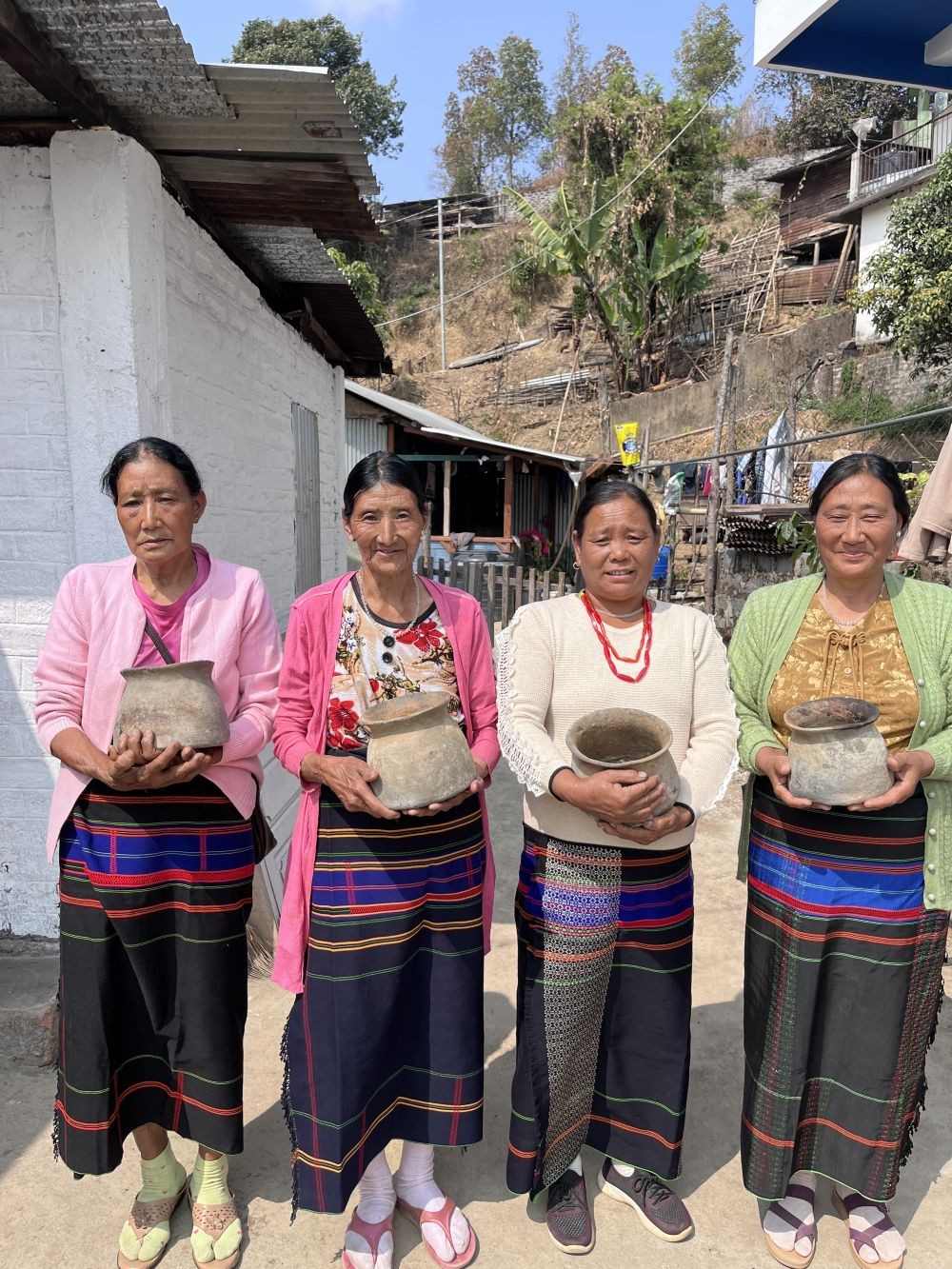
From left to right: Khonbano Murry (67), Lobeno Murry (69), Thungbeni Murry (56) and Yachilo Murry (63). (Morung Photo)
Meribeni T Kikon
Wokha | March 3
At an age when many have long set down their tools, four sisters belonging to the same family lineage from Wokha village in Nagaland continue to shape the earth with their bare hands, preserving a craft passed down through generations.
Early morning, Khonbano Murry (67), Lobeno Murry (69), Thungbeni Murry (56), and Yachilo Murry (63) start their day with baskets onto their backs and walking sticks in hand. They embark on a nearly two-hour trek to Chonhantchu, a site rich in clay essential to their work.
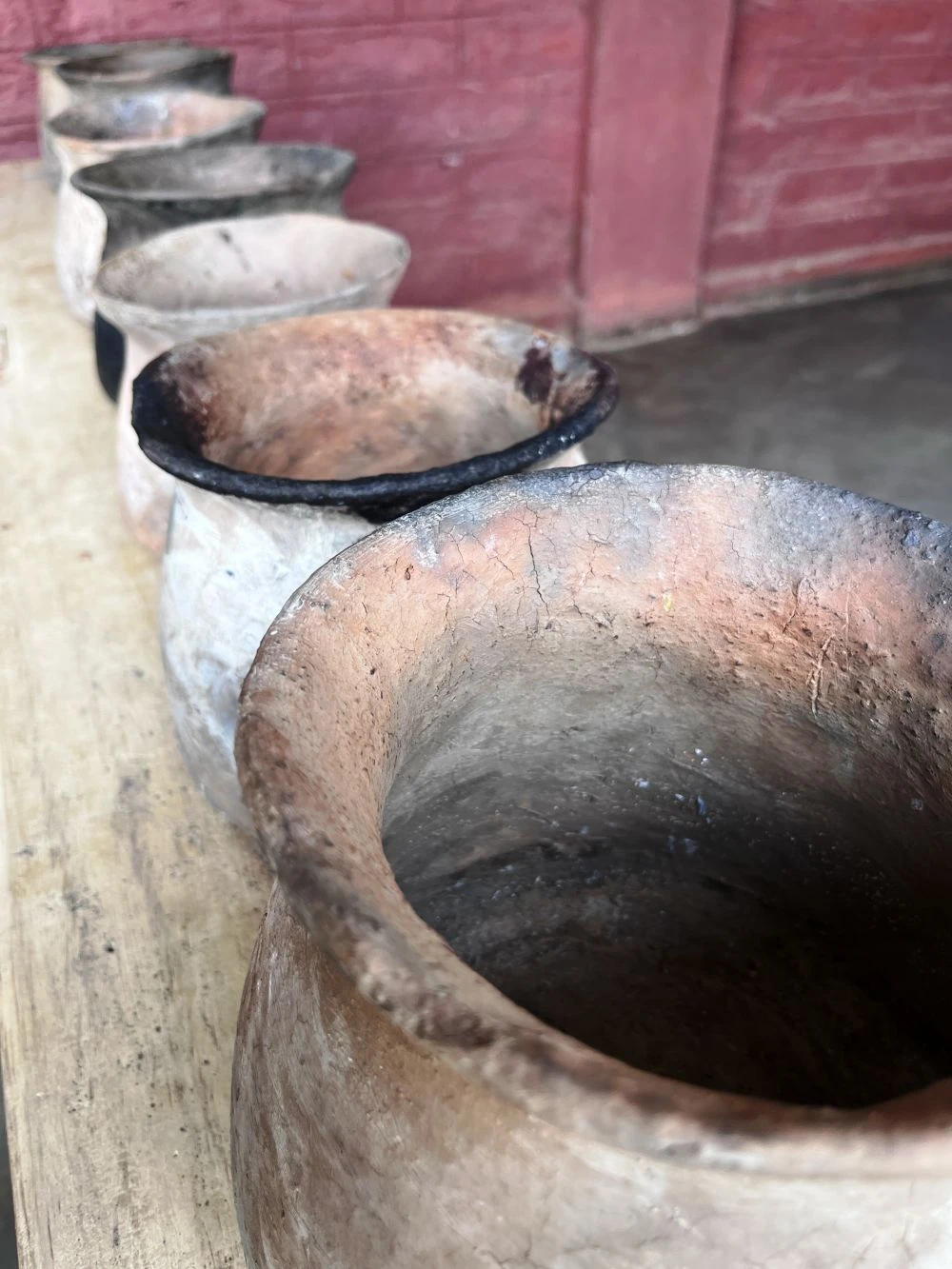
For the sisters, the arduous journey is not merely a routine. It is a lifelong commitment to their heritage: the creation of the Chonpfü, a traditional earthen pot used by the Lotha community.
The four women received little formal education, only two studied beyond primary school, reaching Classes 5 and 8 respectively. What they lack in classroom learning, however, they make up for with decades of lived experience. None underwent formal training. Instead, they grew up watching their parents shape clay with bare hands, learning through observation and practice.
“It is something we have seen since childhood,” they said. “We learned by doing.”
Around 25 years ago, driven by personal passion and a desire to preserve their heritage, the sisters began making pottery together in a more organized manner. According to them, ‘Wokha village is now the only place where this particular traditional earthen pot is still produced.’
From forest soil to fire
The process of making a Chonpfü is labour-intensive and entirely handmade. Their day begins at 6:30 a.m. By the time they reach Chonhantchu, dig for clay, carefully sift out stones, and collect only the softest soil, it is already past noon. The return journey with heavy loads often brings them home around 2:00 or 2:30 pm.
“The clay cannot be found easily,” they explain. “We have to dig and dig until we find the right one.”
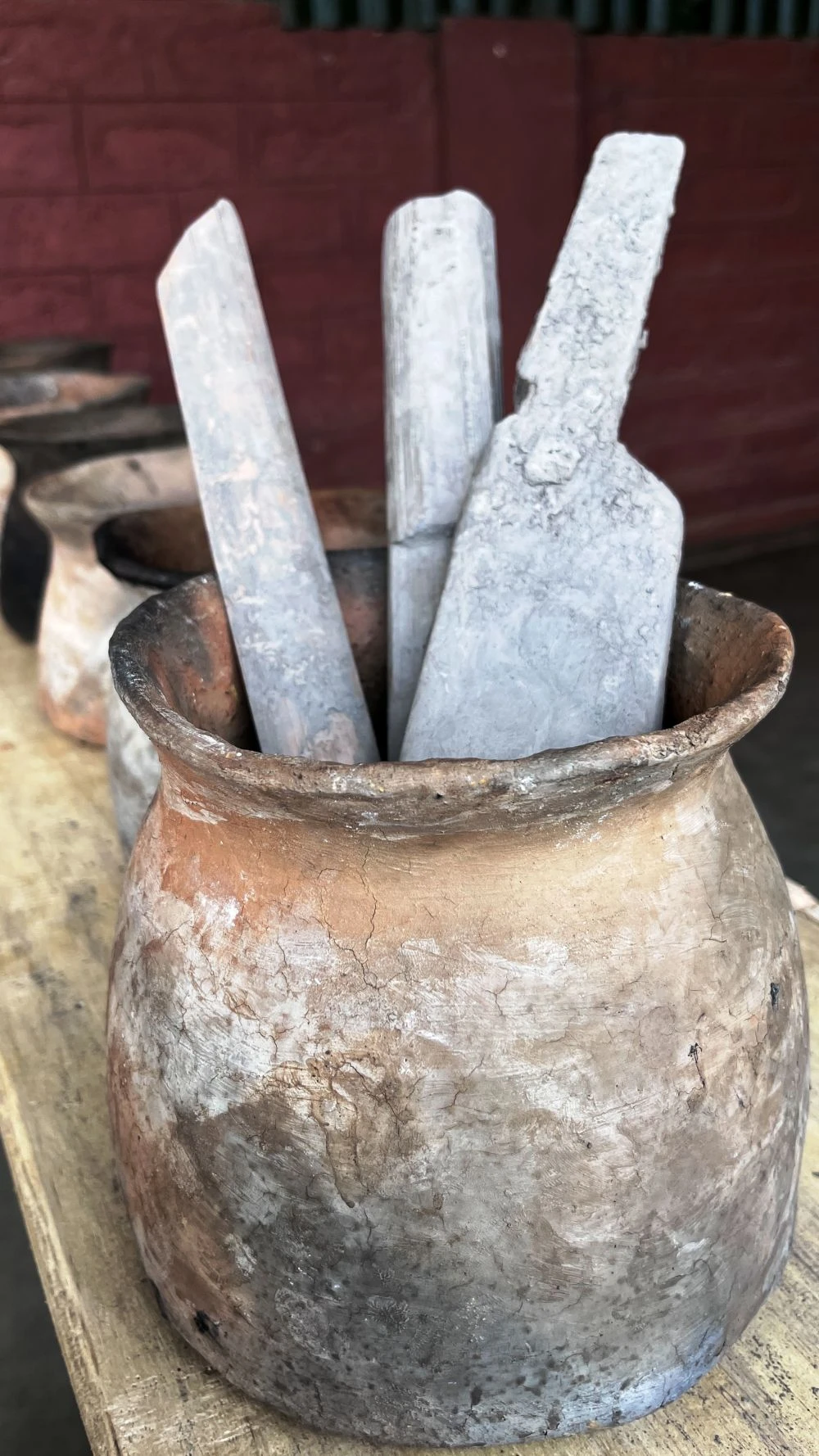
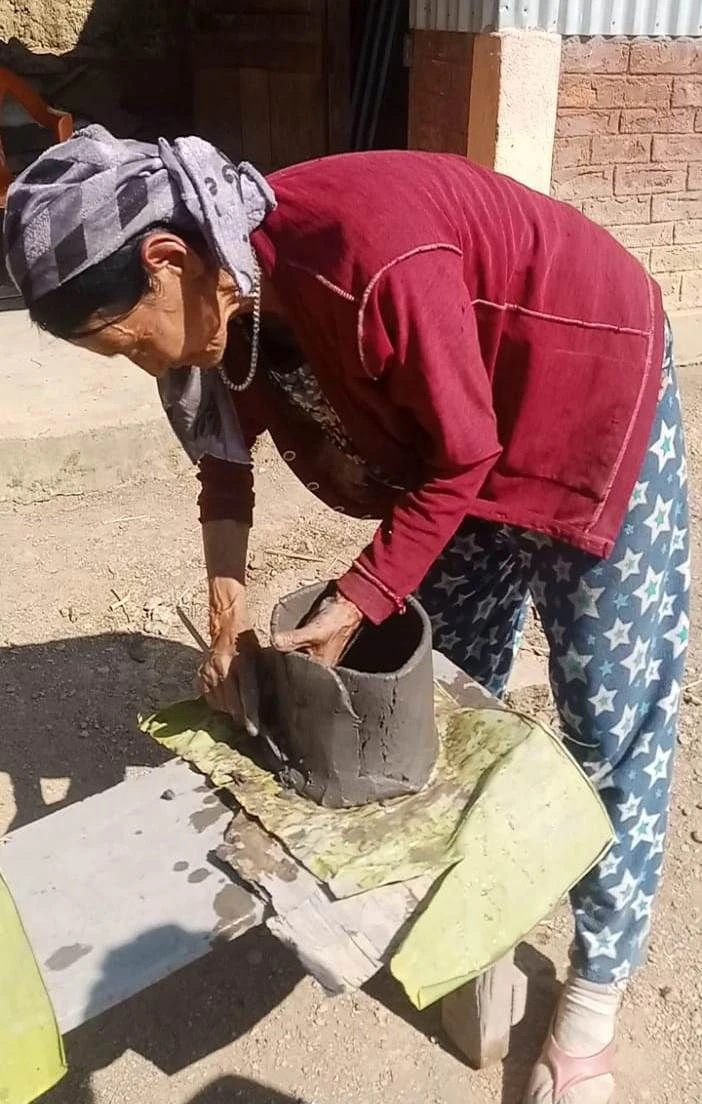
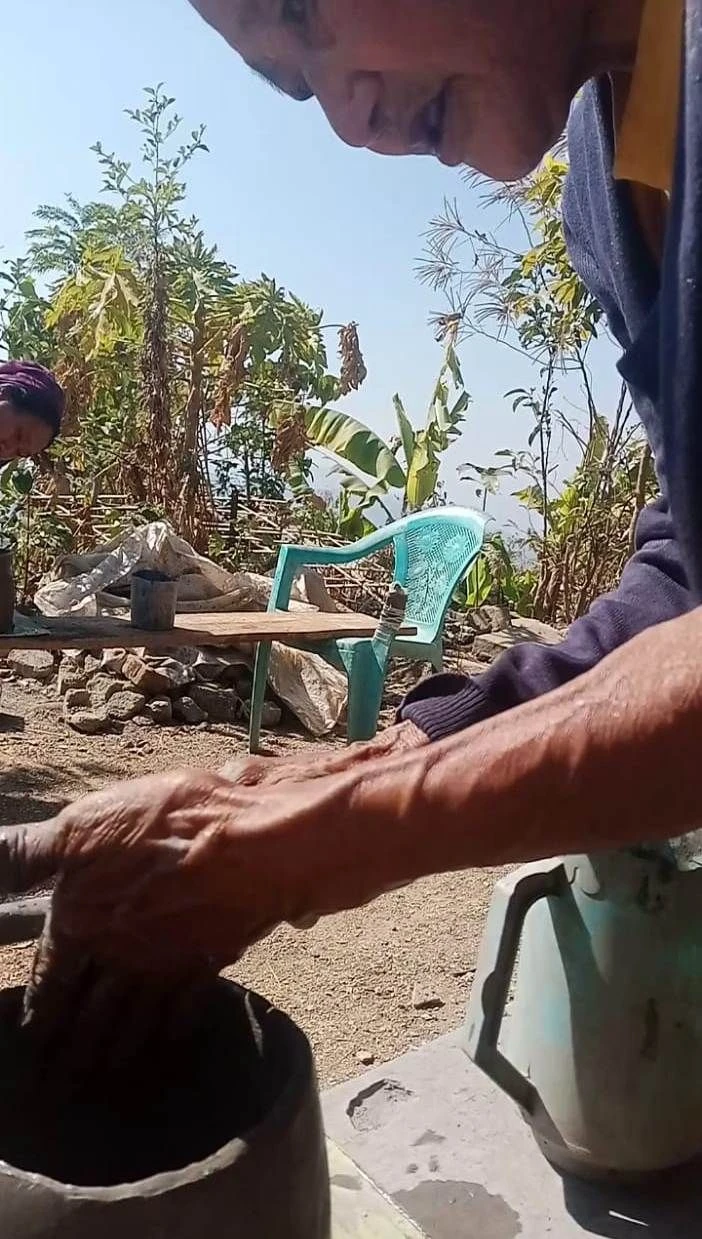
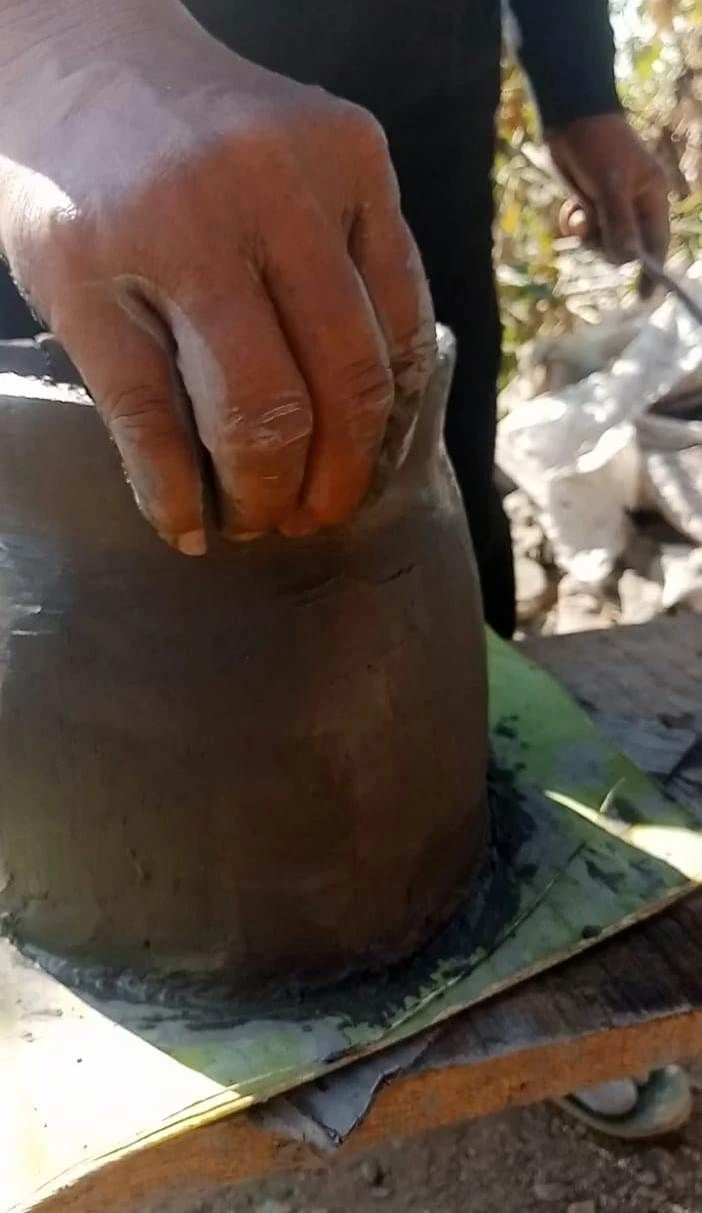
Once home, the clay is ground and kneaded into a dough-like consistency, then covered with banana leaves before being shaped by hand. They use traditional tools such as Laza, a wooden plank passed down from their forefathers, for beating and kneading the clay. The pots are later fired using firewood and leaves in a traditional open-air method, without modern kilns or machinery.
Pottery-making is seasonal, limited to February and March, as the rainy season makes the process nearly impossible. In a good season, they produce around 50 to 55 pieces; in slower periods, about 30.
A taste of the past
For the sisters, the Chonpfü is more than just a pot, —it carries memory. They recall their childhood days when rice and curry were cooked in these very earthen vessels.
“The taste was something else,” they say, comparing it to food prepared in modern utensils.
In earlier years, the family depended on pottery for their livelihood, travelling from village to village to sell the pots. At that time, prices ranged around Rs 150 rupees, depending on size. Today, the pots start at Rs 500 rupees, again varying by size.
Growing demand, fading strength
In recent months, interest in their work has grown. A video recorded by a woman from their village went viral online, bringing overwhelming appreciation and a surge in orders from Wokha as well as from Dimapur and Kohima.
Yet behind the renewed attention lies a harsh reality “age.”
The most difficult part of sustaining their work, they admit, is collecting clay from the forest. Carrying heavy loads over long distances has become increasingly exhausting. After each clay-collecting trip, they often need days of rest before resuming work.
“We are not as strong as before,” they say.
They have received no government or NGO support. All expenses and labour are borne by themselves. As they grow older, they express hope that the government might step in, not only to support them but to ensure that this cultural skill survives in the hands of younger generations.
Moulding the next generation
Despite the challenges, the sisters remain generous custodians of their craft. Young people have approached them to learn, and they provide training free of cost, even offering simple refreshments during trainings.
“If any youth are willing to learn, they are always welcome,” they say.
For them, pottery is more than a livelihood. It is identity. It is memory shaped in clay, hardened by fire, and sustained by love for their heritage.
As modern utensils fill kitchens across Nagaland, four sisters in Wokha village continue to shape the earth as their ancestors once did—quietly, patiently, and with hope that the younger generation will carry forward the warmth of the Chonpfü long after their own hands have laid down the clay.