“History despite its wrenching pain, cannot be unlived;
But if faced with courage, need not be lived again’ - Maya Angelou.
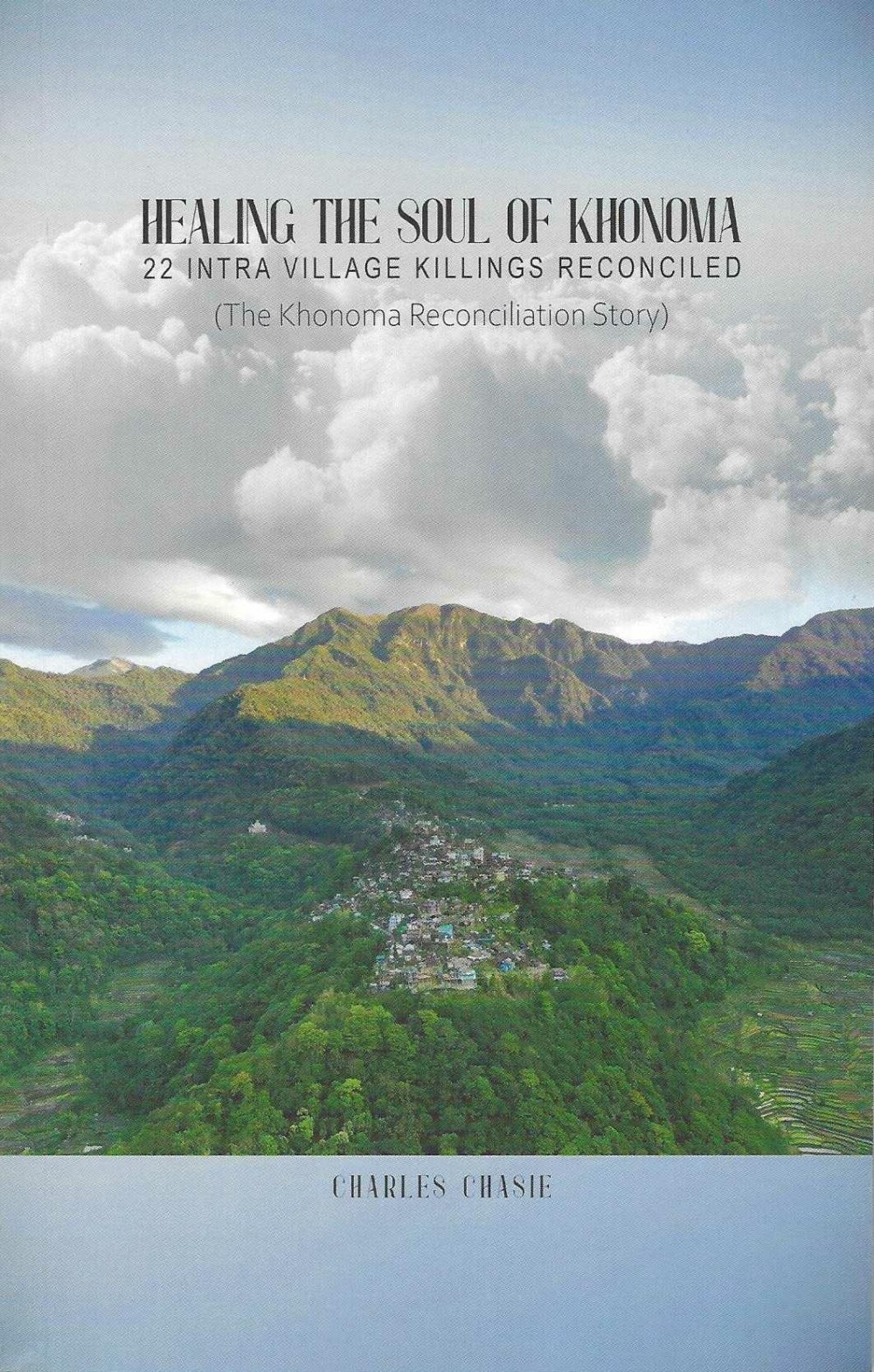
Prefaced by the words of beloved poet Maya Angelou who belonged to a broken community, Charles Chasie dedicates his latest book to the Naga people – ‘May they once more become a people in search of their souls.’
The author Charles Chasie describes this booklet as a standalone publication. He clarifies that it is a chapter from a bigger forthcoming book on Niketu Iralu which will be published at a later stage. The main book will focus on reconciliation, both at the individual, ‘as well as intra and inter village reconciliation.’
Chasie writes a very difficult story. Mainly because it Is non-fiction and focuses on possibly the most injurious chapters of village history. He says that the ‘painful and heart-breaking’ work of reconciliation in Khonoma took more than ten years. A section of people were fearful of consequences that could ensue from opening old wounds. But the great ‘goodwill for the village and determination to save future generations from continued hate’ received God’s blessings and reconciliation took place, reaching deep within to heal bitter wounds.

In the writer’s own words, ‘Those wronged and those who committed wrongs met for the first time in an atmosphere of humility before God and prayed together. They told one another their stories, sometimes only from what they have been told. The victims got the opportunity to tell their stories of hurt for the first time. Restitution followed wherever possible. Forgiving and being forgiven took place in ordinary homes, by people whose traditions have only known vengeance as a filial duty. At the end they shared food and drinks to signify that the past is past, and blessed each other for the future. In many cases they exchanged Bibles.’
This is a hard story to write, a gut wrenching account of deep, unhealed wounds finally finding forgiveness and closure. Only a member of the village could have written it, that too only a person who is of the party affected. Chasie comes from a clan that was profoundly involved in the process.
In ‘Healing the Soul of Khonoma,’ Chasie has given a brilliant introduction to Angami culture and the place of the practice of vengeance in Angami culture. He shows that it was an honourable and traditionally observed custom to avenge a slain clansman or kinsman. This meticulous documenting of cultural practice helps the reader understand the intricacies of actions considered criminal and the counter actions taken by the clan to address them. Against this background, he shows the great mental and psychological difficulty that forgiveness and reconciliation would present to the mind raised on the rightness of avenging one’s clansman. The beautiful practice of community education via the ‘thehu’ is included in the book. The thehu acted as the fount of village wisdom. Chasie’s notes show the importance of this institution in framing the village mind to accept certain actions as good and honourable and others as dishonourable and to be shunned. The institution taught young males their duty in life and each of them would know what to do if a clansman was murdered. This is the background provided by the writer against which the story of betrayal and clan killing is narrated. The near impossibility of reconciliation can be understood better when we understand the culture in which the people have grown up. Reconciliation with an enemy, a killer of one’s kith and kin, would appear as cowardice and traitorous in their view. It was against such odds that the work of reconciliation began.
Following the pledge by Naga leaders at a Naga Reconciliation Forum meeting in 2001 - “We will go beyond seeing only where others have hurt us and be ready to see where we too may have provoked them to hurt us so that forgiving and being forgiven will become possible,” as well as the2003 conference, ‘ Healing the Soul of Khonoma’ the young members spearheaded the difficult journey of putting past enmities to rest in the village once and for all. It was not an easy journey, plagued as it was by great apprehension. The group was known as the Khonoma Public Commission (KPC), and they led the way forward facilitating the villagers to look back on their history and set right wrongs in a lasting manner. This is the story that Chasie has shared. It is the story of a painful and complicated journey. A necessary journey for the sake of spiritual growth and true healing. Yet there were moments when they were rewarded: ‘The pleas for forgiveness arising from genuine sorrows, which were reciprocated by the spirit of forgiveness and expressing good wishes and blessings to the other party could not be more rewarding’ (Chairman KPC).
This is a testament to the fact that reconciliation worked in Khonoma. Throughout the journey, Niketu Iralu was the senior member of the commission, mentoring and guiding it. His genuine love for people and desire to understand the other even if they disagreed was an example to emulate. Niketu recommended certain points that moved opposing groups towards reconciliation: meeting, listening to each other, asking God/your conscience for guidance, obeying what guidance you were given – faithfully following these steps lead you from the problem to become a problem solver.
This is a simply told account of a not very simple situation that has taken years to resolve. It is relevant not only to the people affected but to the wider family of the Naga people. Charles Chasie is the most eligible person to tell it and we are privileged to read it.
The most telling review of the book is from a school principal who was seen reading the book all morning. By afternoon he confessed, ‘I cannot stop reading this book!’ It is a story of grace, a story where the impossible is made possible with some help from above.