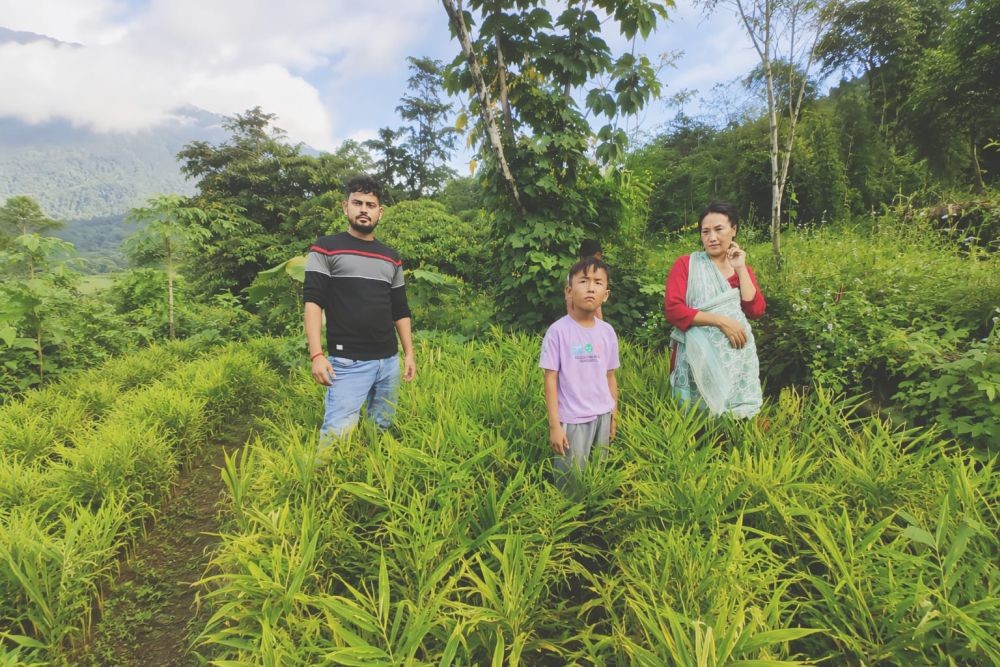
Photo Courtesy: ICAR-KVK
Longleng, June 6 (MExN): An integrated biological disease management technology developed by the ICAR Research Complex for NEH Region has demonstrated promising results in controlling rhizome rot disease in ginger cultivation in Nagaland's Longleng district, significantly improving crop health and productivity.
Ginger (Zingiber officinale), one of Nagaland's major cash crops, is a key source of livelihood for farmers in the district. However, rhizome rot caused by Pythium species has remained a persistent problem, leading to poor plant growth, rhizome decay and substantial yield losses.
To address the issue, Subject Matter Specialist (Plant Pathology) at ICAR-Krishi Vigyan Kendra (KVK), Longleng, Shubhendu Kumar Behera, conducted a Front Line Demonstration (FLD) to showcase an eco-friendly integrated disease management technology among local farmers.
The demonstration was carried out on the farm of progressive ginger grower D. Lochumlo (39) of Orangkong village, who volunteered to adopt the recommended package developed by the ICAR Research Complex for NEH Region, Sikkim Centre.
The technology comprised rhizome treatment with Trichoderma harzianum at 50 grams per kilogram of seed rhizome, soil application of Trichoderma harzianum at 2.5 kilograms mixed with 50 kilograms of farmyard manure 10 to 15 days before sowing, and foliar application of Pseudomonas fluorescens at five grams per litre of water at 15-day intervals.
In comparison, the conventional practice followed by local farmers generally involved only seed treatment with Trichoderma harzianum at 10 grams per kilogram of rhizome, providing limited protection against soil-borne pathogens.
Throughout the cropping season, Behera, along with scientists Dr Kalu Ram and Dr Avaneesh Kumar, conducted regular field visits and provided technical supervision and scientific guidance to ensure proper implementation of the recommended practices.
According to the demonstration findings, the crop under the improved technology exhibited vigorous growth, better tillering and healthier foliage with minimal disease symptoms. The integrated application of beneficial microorganisms enhanced soil microbial activity and effectively suppressed disease-causing pathogens, resulting in significantly lower disease incidence than in fields managed under traditional practices.
At harvest, the demonstration plot produced healthier and larger rhizomes with reduced rotting and a higher proportion of marketable produce. The farmer observed that the crop remained greener and healthier throughout the season, leading to improved productivity and profitability.
The reduction in disease incidence not only protected the crop but also enhanced overall economic returns from ginger cultivation, demonstrating the superiority of the integrated disease management approach over conventional farmer practices.
Expressing satisfaction with the outcome, Lochumlo said the technology and continuous technical support provided by Behera played a crucial role in successfully managing rhizome rot disease. Encouraged by the results, he has decided to continue the practice in future seasons and promote the technology among fellow farmers.
The success of the demonstration highlights the potential of ICAR-developed technologies in addressing key production constraints and underscores the role of Krishi Vigyan Kendras in improving the productivity, sustainability and profitability of ginger cultivation in Longleng district.