

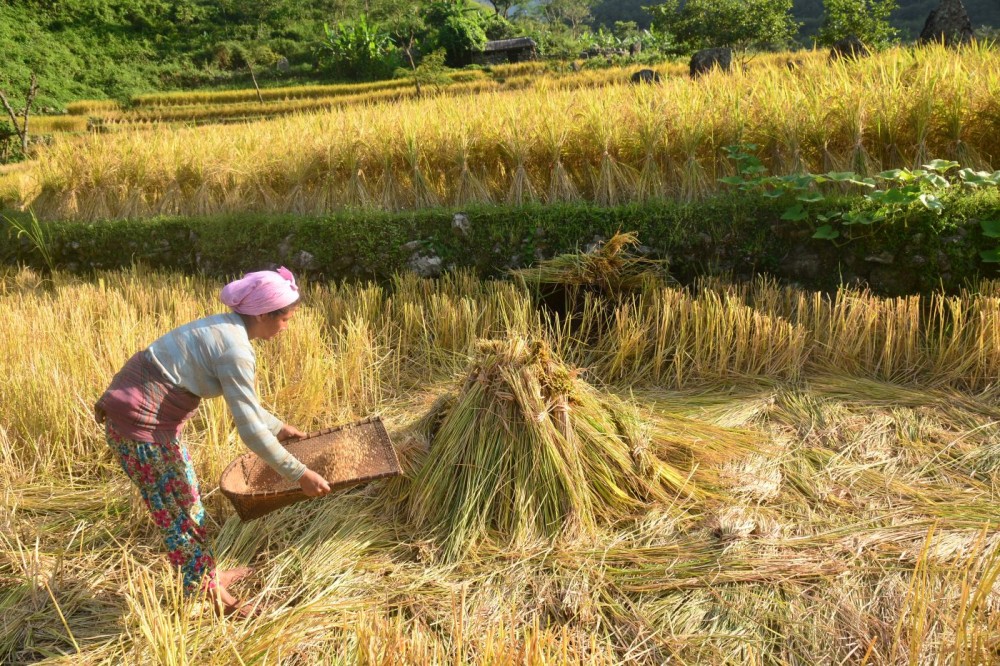
A woman working in her field somewhere in Nagaland. (Morung file Photo)
Our Correspondent
Kohima | March 9
Nagaland Chief Minister Dr Neiphiu Rio tabled Nagaland Agriculture Policy 2025 at the 8th session of the 14th Nagaland Legislative Assembly (NLA) in Kohima on March 9.
The policy brought out by the Department of Agriculture, stated that Government of Nagaland is committed to fostering a vibrant and sustainable agricultural sector that ensures food security, drives economic growth, and protects the state’s rich natural resources.
Agriculture is central to Nagaland’s identity, culture, and economy, with approximately 70% of the population relying on it for their livelihoods and the sector contributing significantly to the Gross State Domestic Product (GSDP).
Nagaland’s diverse agricultural landscape, encompassing shifting cultivation, terrace farming, horticulture, and livestock rearing, holds immense potential for growth. However, realizing this potential requires addressing key challenges and capitalizing on opportunities, the Policy stated.
This Nagaland Agriculture Policy provides a strategic framework for developing a resilient, productive, and market-oriented agricultural sector, integrating agroecological principles and empowering farmers to thrive in a changing world.
The policy aims to enhance agricultural productivity and diversification, promote sustainable and climate-smart practices, empower farmers, strengthen market linkages, and leverage technology and innovation to build a prosperous and inclusive agricultural system for Nagaland.
The policy serves as a guiding framework to address the state’s unique agricultural challenges and opportunities.
It aims to enhance agricultural productivity, ensure food security, integrate climate resilience, and create sustainable livelihood opportunities while preserving indigenous knowledge and biodiversity.
The policy is aligned with national agricultural strategies, Sustainable Development Goals (SDGs), and Nagaland Vision 2030.
The Policy aim to build a thriving and sustainable agricultural and food system in Nagaland that empowers farmers, increases productivity, enhances food and nutrition security, protects biodiversity and traditional knowledge, and drives inclusive economic growth through resilient, market-oriented, and ecologically sound practices.
POLICY OBJECTIVES
Enhanced Food and Nutrition Security: Increase the availability, accessibility, and affordability of safe, nutritious, and culturally appropriate food for all residents of Nagaland by promoting sustainable and climate-resilient agricultural practices, strengthening local food systems, and reducing reliance on external food sources.
Empowered and Prosperous Farming Communities: Empower farmers, particularly smallholders, women, and youth, to achieve sustainable and improved livelihoods through enhanced access to resources (land, water, credit, services), knowledge (traditional and modern), technology, markets, and financial services, enabling them to contribute to rural prosperity.
Resilient and Sustainable Agricultural Systems based on Agroecological Principles: Build resilient and sustainable agricultural systems based on agroecological principles and integrating traditional knowledge, enhancing biodiversity (including local landraces and breeds), conserving natural resources (soil, water, genetic resources), minimizing environmental impact (reducing chemical use), and adapting to climate change.
Thriving Agricultural Markets and Value Chains: Develop efficient and inclusive agricultural markets and value chains that connect farmers to profitable markets (local and beyond), reduce post-harvest losses, promote value addition (including processing of local products), and drive sustainable economic growth in rural areas.
Innovation and Knowledge-Driven Agricultural Development: Foster innovation and knowledge-driven agricultural development by integrating traditional knowledge with modern scientific advancements, promoting participatory research aligned with farmers’ needs, strengthening agricultural extension services, and improving agricultural data management systems for effective policy-making and targeted interventions.
Phased Transition to a Sustainable and Ecologically Sound Agricultural System: Implement a phased and strategic approach to transitioning Nagaland’s agriculture towards a more vibrant, sustainable, ecologically and economically sound system, prioritizing the expansion of organic farming, reducing chemical use, and promoting agroecological practices, with the long-term vision o a "clean, green, and progressive" agricultural sector.
Strengthened Governance and Collaboration: Establish participatory and collaborative governance mechanisms that engage farmers, communities, civil society, the private sector, and government agencies in the development and implementation of agricultural policies and programs, fostering information exchange and coordinated action.
CORE POLICY PRINCIPLES
Food and Nutrition Security: Ensure access to safe, nutritious, and culturally appropriate food for all Nagaland’s residents through sustainable and climate-resilient agricultural practices.
Empowered and Prosperous Farmers: Empower farmers, particularly smallholders, women, and youth, through access to resources, knowledge, technology, markets, and financial services, enabling them to achieve sustainable livelihoods and contribute to rural prosperity.
Ecological Sustainability: Promote agroecological principles and practices that enhance biodiversity, conserve natural resources (soil, water, genetic resources), minimize environmental impact, and build climate resilience.
Market-Driven and Inclusive Growth: Foster a market-oriented agricultural sector that provides fair and equitable access to markets, strengthens value chains, reduces post-harvest losses, and drives inclusive economic growth in rural areas.
Innovation and Knowledge-Based Agriculture: Integrate traditional knowledge with modern scientific advancements, promoting research, technology transfer, and data-driven decision-making to enhance agricultural productivity, efficiency, and resilience.
Collaborative Governance: Foster participatory and collaborative governance, engaging farmers, communities, civil society, the private sector, and government agencies in the development and implementation of agricultural policies and programs.

.jpg)
.jpg)
.jpg)
