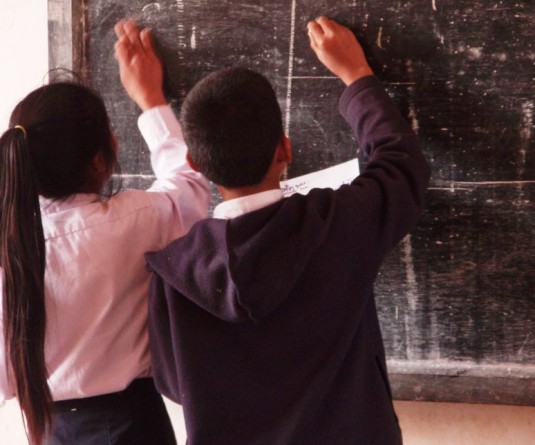
Government school children participating in the Reading Program, an initiative of the Bumblebee Society.
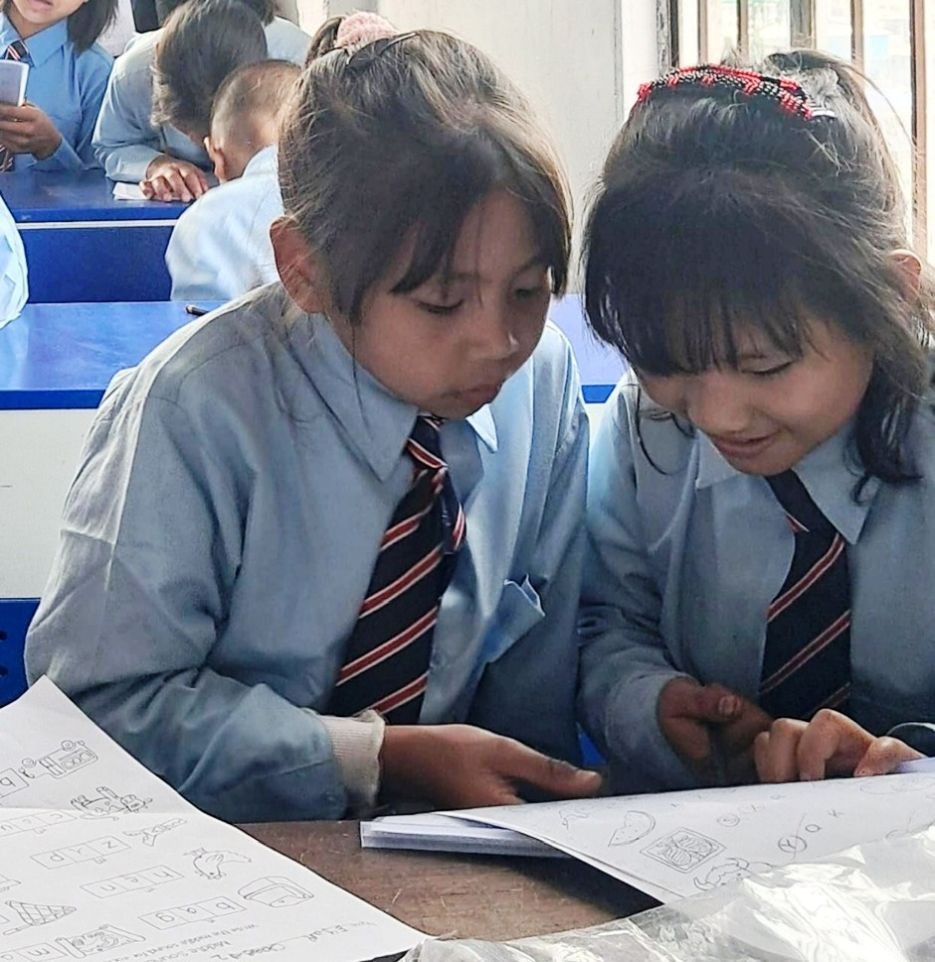
Bumblebee Reading Program: Raising literacy standards among underprivileged children in Nagaland
Vishü Rita Krocha
Kohima | December 22
According to the National Achievement Survey (NAS) 2021, in Kohima alone, 54.6% children studying in Class 3 and 73.3% studying in Class 5 are below the curriculum standard who have not achieved the required knowledge and skill to be considered minimally successful regarding curriculum demands.
Further findings show that most of the children studying in government schools are unable to read even until the age of 14. In the context of Nagaland state, it has also been observed that most of the children are domestic helpers who spend more time working for their employer, leading them to lack behind in schools. Moreover, these children who come from interior villages face significant challenges to read and comprehend English, causing them to drop out early from school.
Against this backdrop, the “Reading Program for the underprivileged and out of school children” was initiated by the Bumblebee Society even as it observed that its involvement in the field of education for over a decade, has brought about a better understanding about the importance of inculcating reading skills early on in life.
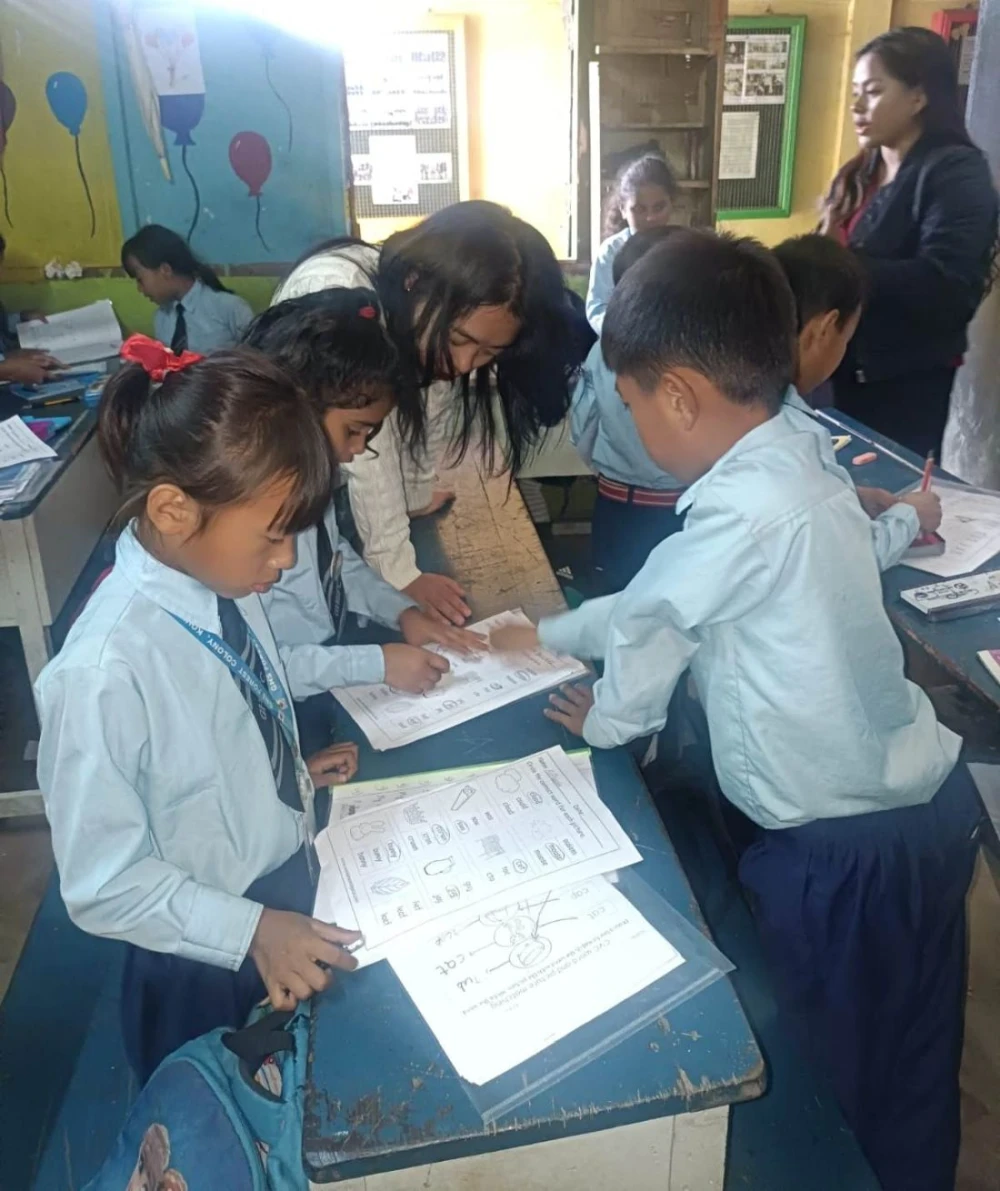
Overcoming barriers to quality education
In this regard, Kopele V Tepa, founder of Bumblebee Inclusive School Kohima related to The Morung Express that, “Children who are effective readers have a higher chance of performing better in schools” while stating that children at Bumblebee have developed early reading skills with the help of Phonics, and proper emphasis on foundational reading skills.
With students from various schools around Kohima and Dimapur continuing to avail these classes throughout the year, she said that, “identifying our strengths in developing reading and writing fluency amongst children has encouraged us to take our reading program further and extend it to children in Government schools.”
Even as the disparity in the quality of education between Private and Government schools continues, she highlighted that, although there are few government schools coming up, it would take a significant amount of time to revamp the whole system.
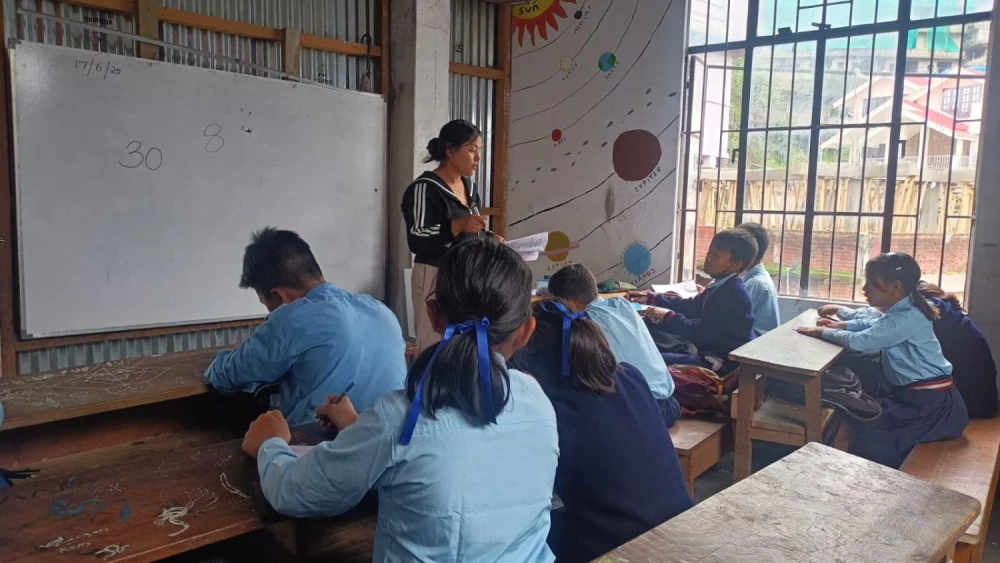
She further observed that the majority of the students lack access to quality education due to absence of teachers in school, lack of a stimulating learning environment and also the learning time a child is exposed to at home and at school.
“The constant need to use the local dialects to explain concepts to children in schools also slows down learning the English language,” she noted.
Towards this end, Bumblebee Inclusive School has been conducting regular Phonics and Reading programs for children in Kohima. Currently, about 20 children are availing the program after school. In July 2024, a 10-day Reading Program was organised in collaboration with The White Owl, Dimapur, wherein about 15 children from various schools in Dimapur took part.
Mention may be made here that the first phase of the 6-month Reading Program was initiated for the underprivileged students in October 2023 with the participation of about 15 students. The current second phase of the Program, which commenced in July 2024 also extended to children from Government Schools in Kohima with an enrollment of 55 students.
Building minds
Kopele V Tepa firmly believes that, “Reading enhances the children's imagination and creativity, helping them to acquire new knowledge and pathways to better critical thinking skills, memory retention, concentration and comprehension.”
On the other hand, she underlined that “writing preserves our ideas and memories, it clarifies and organizes a student's thoughts enabling them to express themselves in different contexts such as academic, technical, entertainment or personal.”
The Phonics classes at Bumblebee Inclusive school are designed with student's engagement in mind. As an extension of this initiative, its Reading Program continues to inspire and nurture more young readers and writers, allowing many other students to take keen interest in writing journals and maintaining diaries.
Despite significant resources being invested in Government High Schools educational system by the government, she also stated concern that the outcome is not on par with their private counterparts. It was also noted that the students lacked a strong grasp in reading; a skill crucial for enhancing memory, comprehension, creativity and the desire to acquire more knowledge.
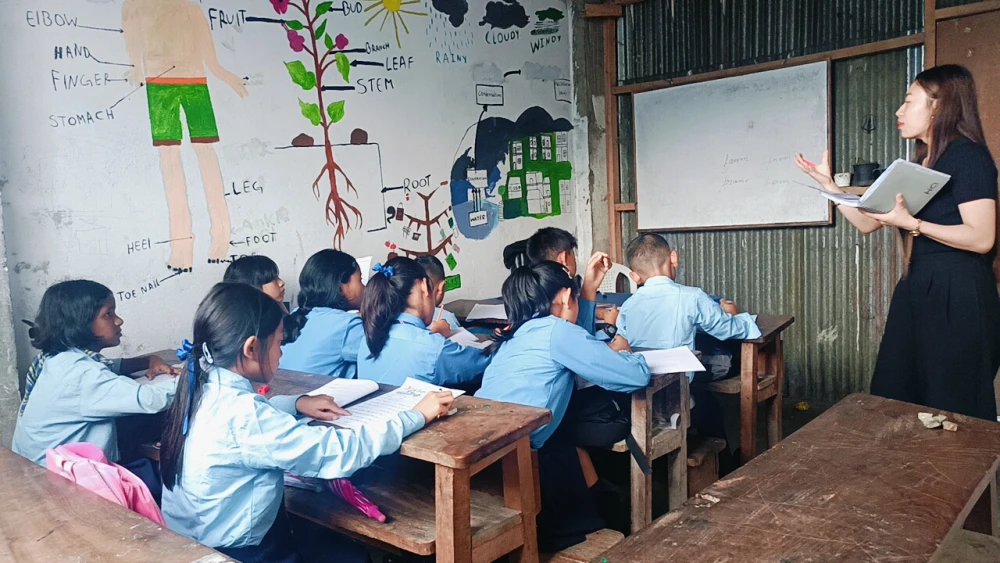
“The Reading Program” aims to develop these fundamental traits, which is essential for a student's overall progress, she articulated. Tepa further underscored that “Reading, a basic trait to advance if not developed properly at an early age can cause delay in certain milestones amongst students and this has been the case in Nagaland's education system for quite some time now in the Government run schools.”
Concerning gap in foundational skills
The Annual Status of Education Report (ASER) 2022 for Nagaland’s government-run schools also highlighted significant areas for improvement, particularly in basic reading and arithmetic skills. According to the data, only 34.3% of students in Standards 3 to 5 can read at a Standard 2 level, indicating that the majority are not meeting the expected reading benchmarks.
Ideally, Kopele V Tepa pointed out that, “students in these grades should be reading at or above their grade level, but this data suggests a concerning gap in literacy development.”
The report further showed that 76.8% of students in Standards 6 to 8 can read a Standard 2 level text. “While this suggests that most students in these grades possess basic reading skills, they should ideally be reading at a much higher level appropriate to their grade,” she added.
Stating that the fact that many students are not reaching the expected literacy standards for their grade highlights the need for targeted interventions, she impressed upon that the 'Reading Program' implemented at Bumblebee Inclusive School is one of the remedial programs to address the literacy gap.
“The report underscores the urgent need to address these gaps in literacy development to ensure that all students can achieve the educational standards required for their academic and future success,” she put across.