Officials and participants during the free oral health screening camp conducted at NEISSR, Chümoukedima on March 28. (Photo Courtesy: NEISSR)
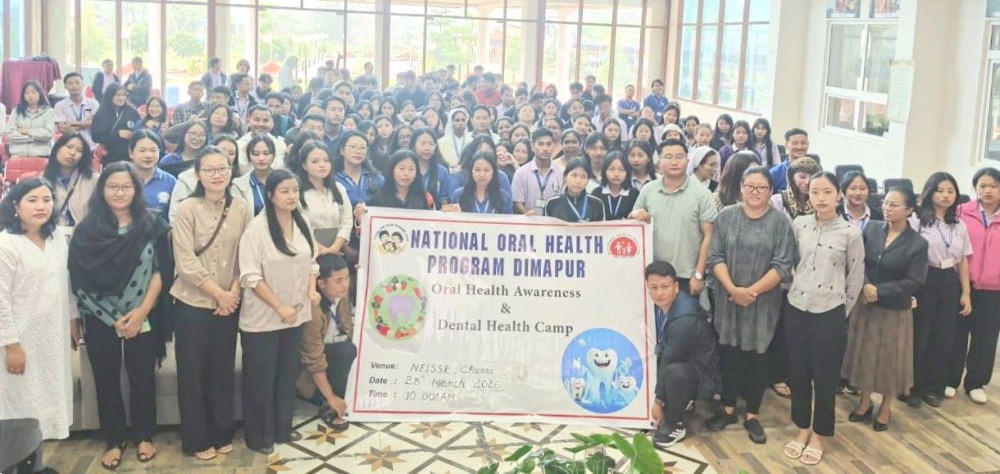
Chümoukedima, March 29 (MExN): In what is described as a significant step towards promoting preventive healthcare and raising awareness on tobacco-related risks, a free oral health screening camp was conducted at North East Institute of Social Sciences and Research (NEISSR), Chümoukedima on March 28.
The initiative brought together students, health professionals, and other stakeholders, reflecting a collective commitment to building a healthier and tobacco-free society.
The programme was organised by Community Development (CD) Specialisation, NEISSR in collaboration with the District Tobacco Control Cell (DTCC), Dimapur.
It aimed not only to create awareness on the harmful effects of tobacco but also to provide practical exposure through oral health screening and professional consultation, informed a press release.
Imkumla Aier, Psychologist, DTCC Dimapur, the resource person, highlighted tobacco consumption as a major public health concern, noting that globally “one person dies every six seconds” due to tobacco-related diseases, while in India approximately 3,500 deaths occur daily. She emphasised that tobacco is a leading cause of oral cancer, contributing to nearly 85% of head and neck cancer cases, and expressed concern over the high prevalence of smokeless tobacco use, particularly among youth.
She further elaborated on the wide-ranging health impacts of tobacco, including its link to cancers of the esophagus and stomach, cardiovascular diseases such as heart attacks and stroke, and its harmful effects on oral health. The risks associated with first-hand, second-hand, and third-hand smoke were also underscored, especially their impact on children and non-smokers. Additionally, she highlighted its adverse effects on reproductive health and its association with conditions such as Type 2 diabetes and weakened bones.
Addressing the socio-economic dimension, she pointed out that tobacco use often leads to financial strain on families. She also discussed emerging challenges in tobacco control, including attractive packaging, flavoured products, and indirect promotion targeting young people, despite regulatory measures.
The session included an overview of the legal framework under the Cigarettes and Other Tobacco Products Act (COTPA), 2003, and the National Tobacco Control Programme (NTCP), which focus on awareness generation and enforcement. Practical strategies for quitting tobacco were shared, including setting a quit date, avoiding triggers, seeking professional support, and using nicotine replacement therapies. Information on tobacco cessation services and the National Tobacco Quitline (1800-112-356) was also provided.
The programme commenced with a welcome address by Dr Toli H Kiba, Head of the Department of Social Work, NEISSR. The session was moderated by Atheli Hollohon, and the vote of thanks was delivered by Lumgaiguong.
Following the awareness session, a free oral health screening camp was conducted by dental surgeons from District Hospital Dimapur—Dr Japhet, Dr Sophia, and Dr Lele—who provided screening and expert guidance to participants. Medo, Social Worker at DTCC Dimapur, also contributed to the programme.