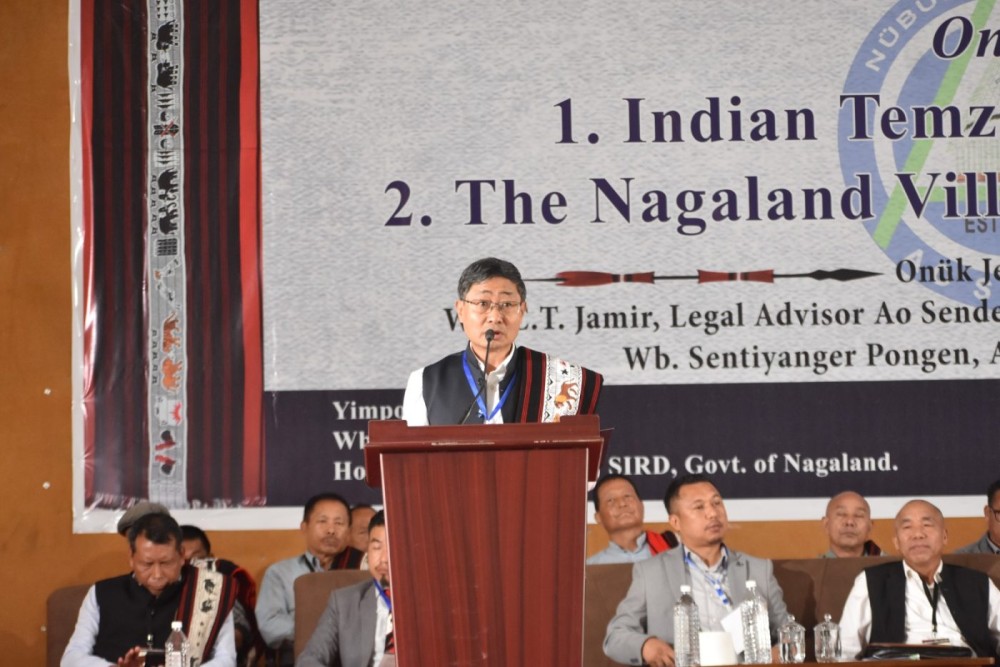
Sentiyanger Imchen, IAS, Chief Secretary of Nagaland.
Morung Express News
Mokokchung | May 12
Nagaland Minister for Rural Development & SIRD, Metsübo Jamir has stressed that the responsibility of protecting Article 371(A) and the Village Council Act lies primarily with village councils. He cautioned that failure to safeguard these provisions could eventually lead to their repeal, potentially opening the door for large-scale influx of outsiders and threatening indigenous ownership over land and resources.
Speaking at a seminar on Article 371(A) of the Indian Constitution and Nagaland Village Council Act, 1978 held in Mokokchung, Jamir expressed concern that many Nagas do not fully appreciate the significance of the state’s statehood attained on December 1, 1963, and the constitutional protections that came with it.
He noted that statehood came with constitutional safeguards such as Article 371(A), the Bengal Eastern Frontier Regulation, and income tax exemptions, “all intended to protect the interests of the Naga people, their land and resources.”
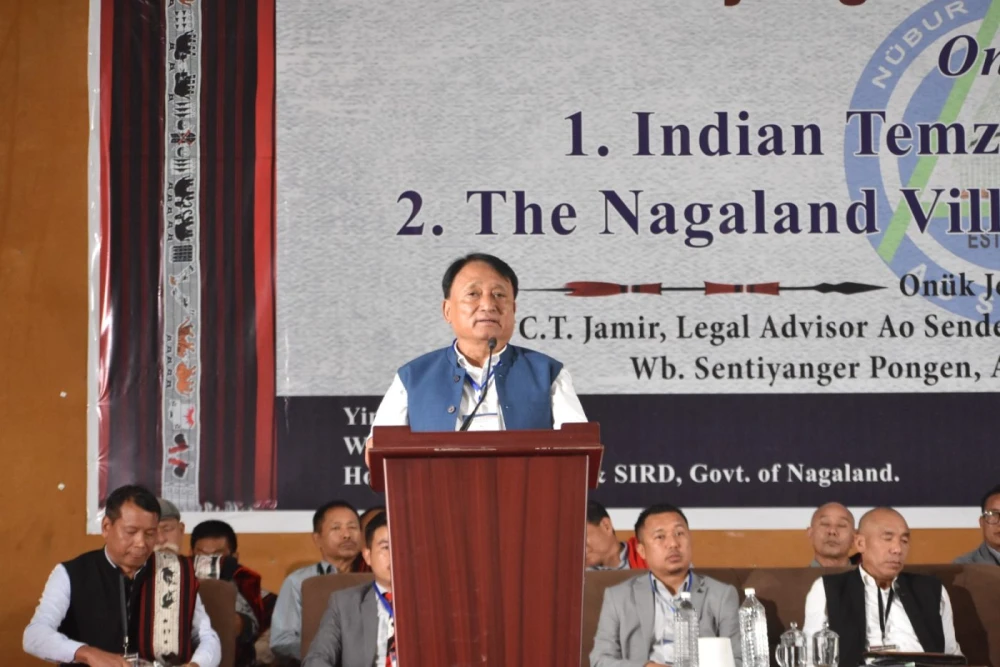
Jamir lamented that despite the sacrifices and foresight of earlier generations, many today fail to value these protections. Referring to land issues, he criticised the reluctance to part with land for developmental projects, stating that development was often stalled because of hesitation in making land available.
On the issue of income tax exemption, the Minister remarked that while Nagaland benefits from taxpayer funds collected across the country, the state frequently complains about inadequate central assistance. He urged the Ao community to “move away from dependency and work towards self-reliance and self-sustenance.”
The Chief Secretary of Nagaland, Sentiyanger Imchen, IAS, described Article 371(A) as a constitutional safeguard designed to protect the traditional and customary identity of the Naga people.
However, he regretted that many people continue to misunderstand and misinterpret the provision. While acknowledging that Article 371(A) was conceived as a transitional provision, Imchen stressed the need to “adapt to changing societal realities and evolving legal frameworks.”
Describing laws as instruments of social transformation, he called for progressive legislation suited to the needs of modern society.
“Good governance depends not just on having good laws, but on their fair and judicious implementation for the welfare of the people,” he said, adding that even the best laws would remain ineffective unless implemented impartially by leaders.