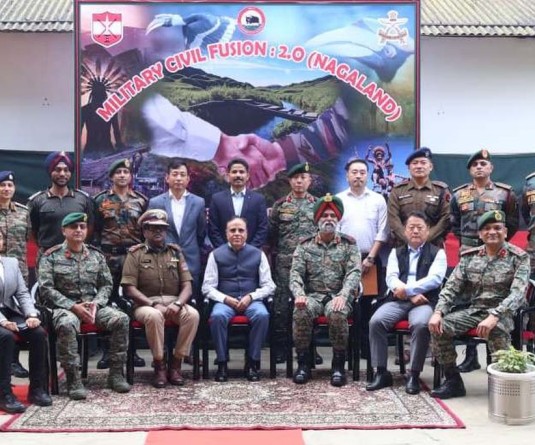
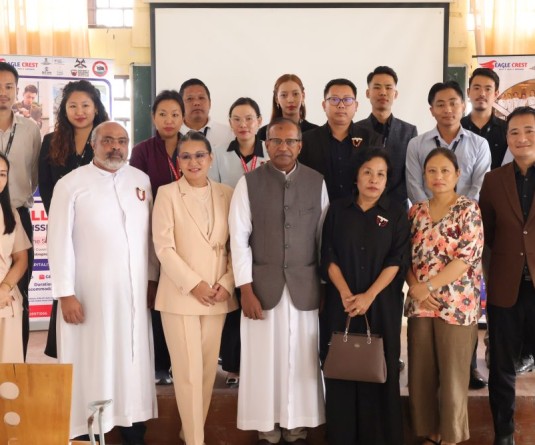
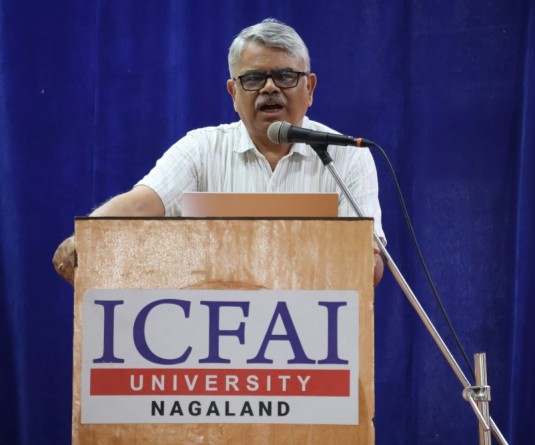
DC Dharam Raj along with other officials during a review meeting held at the DC’s Conference Hall in Zunheboto on October 8.
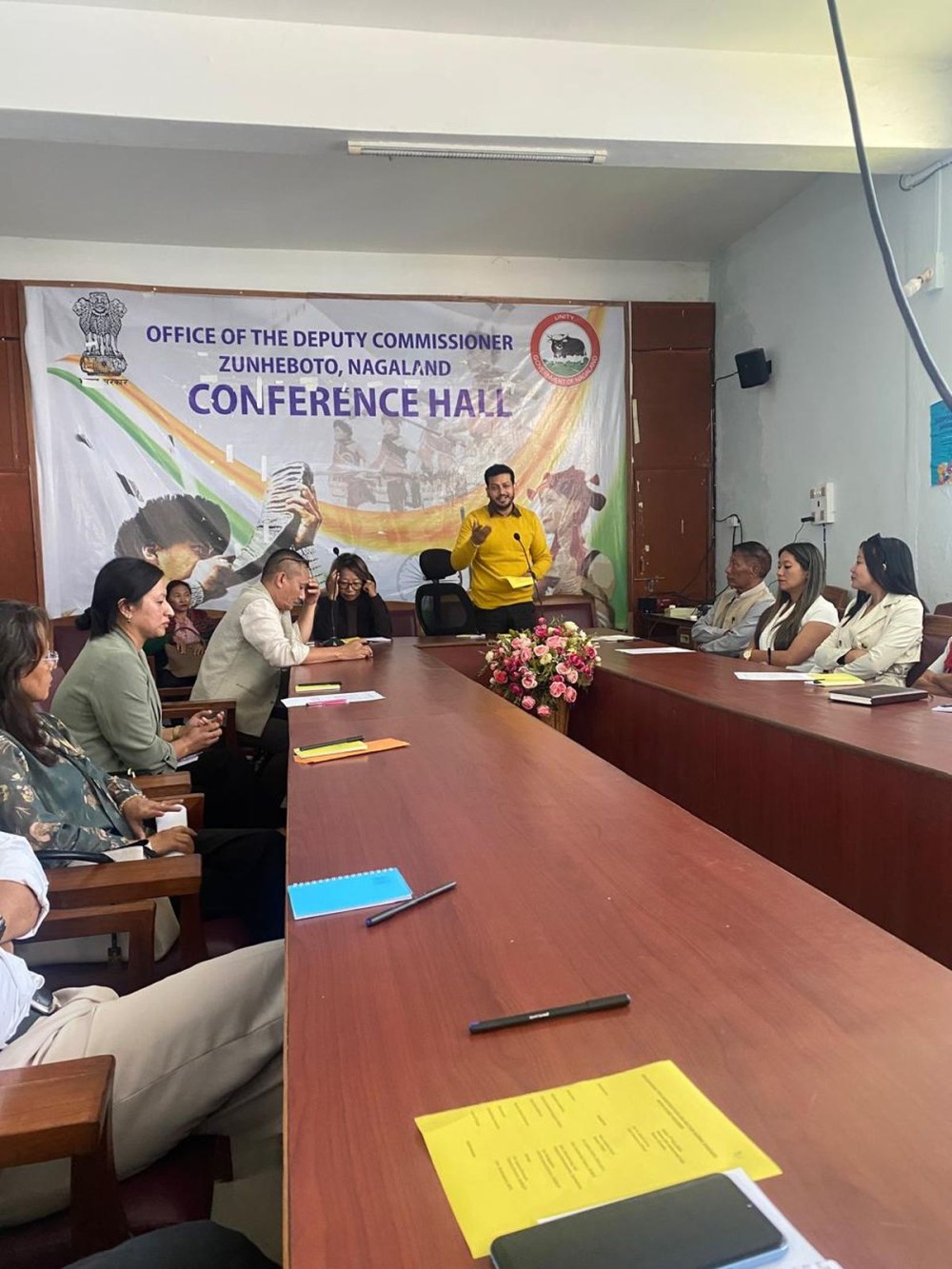
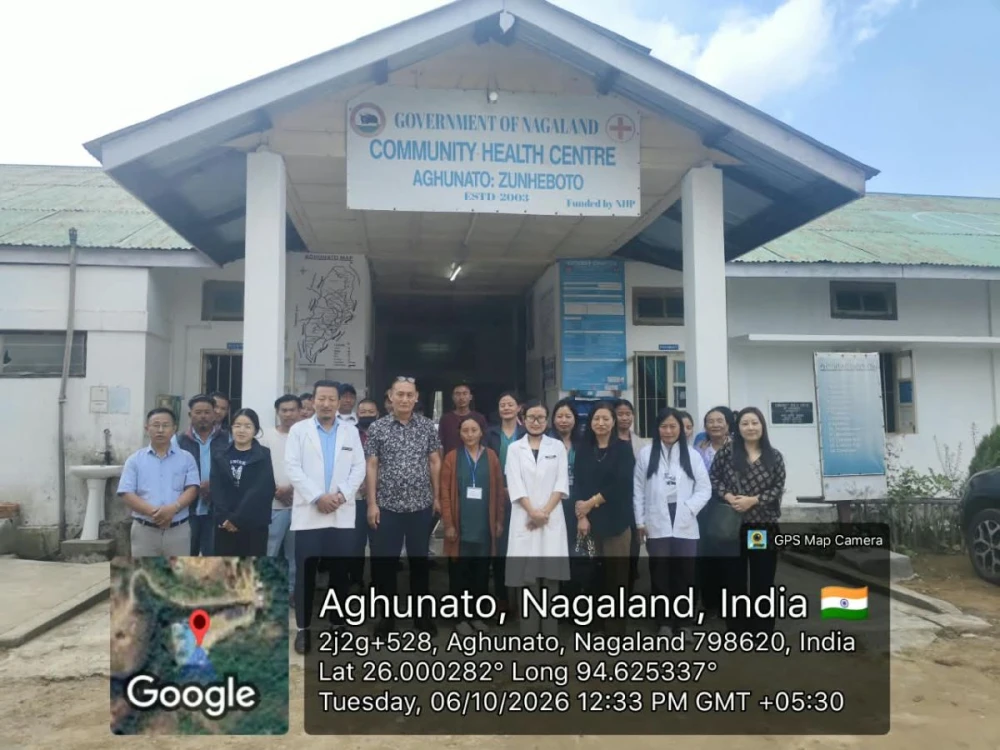
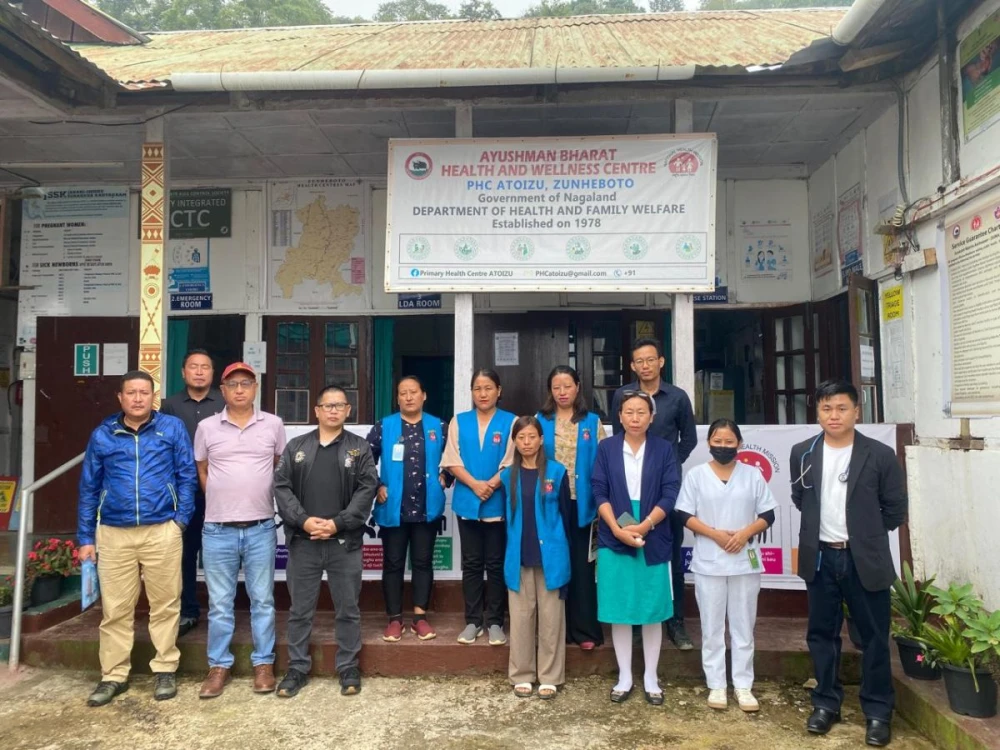
Zunheboto, October 8 (MExN): An official team of the National Vector Borne Disease Control Programme (NVBDCP), Department of Health and Family Welfare (DHFW), undertook a three-day tour of Zunheboto district from October 5 to 7 to review and strengthen ongoing vector-borne disease prevention and control activities.
The team was led by Dr Imnapokim, State Programme Officer (SPO), NVBDCP, along with Dr Kavito Zhimomi, Deputy Director, NVBDCP, and other members of the State team.
A sensitisation programme on prevention and control of vector-borne diseases was also held at the DC Conference Hall, Zunheboto, with the participation of officials from various government departments, district authorities, churches, civil society organisations and other stakeholders.
The programme was chaired by Dr G Viholi Sema, Chief Medical Officer (CMO), Zunheboto, who welcomed the State team and participants and acknowledged the support and cooperation extended by the Deputy Commissioner, Zunheboto, towards strengthening vector-borne disease prevention and control activities in the district.
In her welcome address, Dr Esther Kath, DPO-CDI, welcomed the State team, government officials and stakeholders and highlighted the importance of collective efforts in addressing vector-borne diseases at the district level.
An epidemiological report was presented by Mudosayi Hurie, Consultant, DVBDC, providing an overview of the vector-borne disease situation in the district. The presentation covered the implementation and coverage of the NVBDCP programme across villages and health units, along with trends and analysis of malaria from 2018 to 2026 and dengue from 2023 to 2026.
Delivering the keynote address, Dharam Raj, IAS, Deputy Commissioner, Zunheboto, welcomed the State officials and participating stakeholders and emphasised the need for sustained and coordinated efforts to address the district's vulnerability to vector-borne diseases.
The Deputy Commissioner stressed the importance of preparedness, community participation and inter-departmental coordination in preventing and controlling diseases such as malaria and dengue. He called for regular vector-control measures, timely diagnosis and treatment, and effective utilisation of available resources to strengthen prevention and control activities across the district.
The State NVBDCP team highlighted the practical importance of strengthening preventive measures at the grassroots level. It elaborated on the structure and functioning of the District Task Force and District Elimination Committee and provided an overview of the major vector-borne diseases prevalent in the State, with particular emphasis on malaria.
The dengue and Japanese Encephalitis (JE) situation in the district was also presented based on information collected and compiled by the State Entomology team.
Participants were sensitised on key prevention and control measures, including the correct and effective use of Long-Lasting Insecticidal Nets (LLINs), Indoor Residual Spraying (IRS), sanitation and environmental management, awareness generation in schools and churches, and focal spraying wherever required.
The Deputy Commissioner further stressed that vector-borne disease control activities should be implemented through a coordinated and multi-sectoral approach involving all relevant departments and stakeholders. He also encouraged effective utilisation of available resources and funds to ensure that prevention and control measures reach vulnerable communities.
Delivering the concluding remarks, Dr Kavito Zhimomi, Deputy Director, NVBDCP, highlighted the key points emerging from the sensitisation programme and emphasised the importance of the 3Ts — Testing, Treatment and Tracking — in the effective management and elimination of malaria.