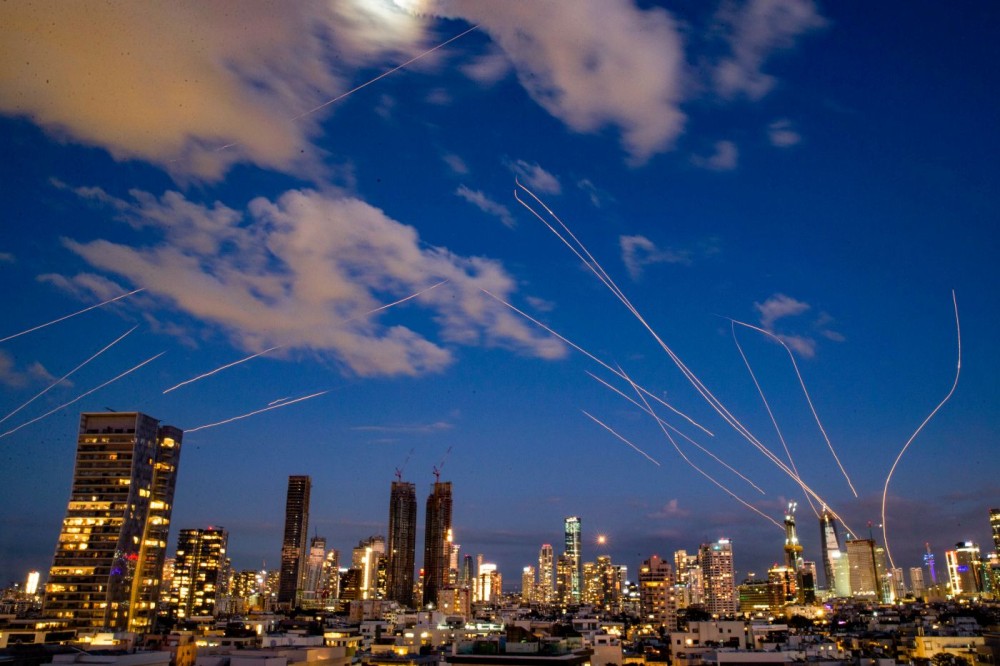
Tel Aviv: This long exposure photo taken on Feb. 28, 2026 shows flare trails of the interceptor missiles launched from Israeli air defense systems in Tel Aviv, Israel. The United States and Israel on Saturday launched "major combat operations" against Iran, plunging the war-torn Middle East into a new round of violent conflicts. Iran has retaliated with a series of counterattacks against Israel and U.S. targets across the region, with explosions reported in Bahrain, Qatar, Kuwait, Jordan, the United Arab Emirates (UAE), and Saudi Arabia, among other countries. At least two buildings in the greater Tel Aviv region have been hit by Iranian missiles, according to Israel's Ynet news website. So far no fatalities have been reported. (Xinhua via IANS)
New Delhi, March 1 (IANS) Prime Minister Narendra Modi will chair a high-level meeting of the Cabinet Committee on Security (CCS) upon his return to the national capital on Sunday night, government sources said.
The meeting of the Cabinet committee, the apex decision-making body on security and strategic matters of India, comes against the backdrop of a rapidly deteriorating geopolitical situation in the Middle East following coordinated US-Israeli airstrikes on Iran, which have intensified regional conflict and raised global security concerns.
According to official sources, PM Modi is expected to land in Delhi around 9:30 pm after concluding a two-day tour across several states, including Rajasthan, Gujarat, Tamil Nadu, and Puducherry. During the visit, the Prime Minister inaugurated development projects, flagged off new train services like Amrit Bharat Express trains connecting southern cities, and reviewed key infrastructure initiatives worth thousands of crores.
"The Prime Minister will chair a meeting of the CCS on returning to Delhi tonight from his two-day tour of the states. He is expected to land here at around 9.30 pm," a government source said.
The CCS, India's apex body for national security decisions, comprises the Prime Minister and the Ministers of Defence, Home, External Affairs, and Finance.
The urgent convening of the CCS is widely seen as a response to the latest developments in West Asia, including US-Israel strikes on Iranian targets and subsequent retaliatory actions.
Reports indicate the killing of Iranian Supreme Leader Ayatollah Ali Khamenei in related escalations, heightening fears of broader conflict.
The meeting is expected to review the implications for India's strategic interests, including the safety of Indian nationals in the region, particularly in the UAE and other Gulf countries, energy security, maritime routes, and diplomatic positioning.
India has maintained a balanced stance in the Middle East crisis, advocating de-escalation while protecting its citizens and economic ties.
Sources suggest the discussions may cover contingency plans for evacuations if needed, impact on oil prices, and coordination with international partners.
This is the latest in a series of high-stakes security reviews as global tensions mount.
PM Modi's prompt return and immediate CCS engagement underscore the government's proactive approach to safeguarding national security amid volatile international developments.